My Album Rankings – George Harrison

Criteria for this list and all my rankings going forward include but are not limited to:

  • May include “Best Of” compilations
  • May include albums produced by the artist, even if their playing or singing on the album is minimal
  • May include live albums
  • May include box sets
  • Number of albums listed may vary depending on catalog
  • I reserve the right to change my mind about the order down the line
  • In short, my silly subjective rankings, my silly subjective rules, so let’s get to it…

My inaugural album ranking covers my favorite member of my favorite band, George Harrison, a.k.a. The Quiet One, a.k.a. Hari Georgeson, a.k.a. Carl Harrison, a.k.a. Nelson Wilbury.  While the OCD in me prefers lists such as these in multiples of five, I simply can’t bring myself to leave any of these out.  Not even #16…

16.  Gone Troppo (1982)

This album is probably at or near the bottom of most Harrison album lists, including George’s.  Tired of the music biz game on the heels of Somewhere in England, his heart really wasn’t into making this album.  However, I now look at this record like Dylan’s Shot of Love and Saved – much maligned albums that are actually pretty good if not for the production.  If this album had been recorded prior to 1980 or after ’87, it might be looked at differently.  Not great, but possibly better.  That’s the Way it Goes, Wake Up My Love, Mystical One, and Circles are keepers for me.

220px-GoneTroppo.jpg

15.  Best of Dark Horse:  1976-1989 (1989)

This is a good compilation of album tracks, but its inclusion here is due to the addition of three strong songs previously unreleased on Harrison albums:  Cheer Down (from the Lethal Weapon 2 soundtrack), Poor Little Girl, and Cockamamie Business.

51R3TDQXT5L._SY355_ (1).jpg

14.  Live in Japan (1992)

This is the document of George’s brief 1991 concert tour of Japan when he was backed by Eric Clapton and his band.  It was his only solo tour other than his North American tour of 1974.  Whereas the ’74 tour was marred by George’s laryngitis and lively but uneven performances (among other issues),  the negative elements of the ’91 tour were on the opposite end of the spectrum:  The performances were sterile and George seemed like he didn’t really want to be there.  His backing vocalists with their shoo-wop shoo-wop nonsense were an unfortunate addition to classics like While My Guitar Gently Weeps and Something.  But despite all that it’s not a bad album, and because it’s the only official live release we have of Harrison,  it’s worth owning despite its imperfections which nerds like me might nitpick about.

268x0w.jpg

13.  Extra Texture (Read All About It) (1975)

Recorded during Harrison’s “naughty period,” this album is uneven to say the least.  The tracks I dislike I skip or run the vacuum during if I’m cleaning house, whereas the tracks I like, I really like.  The like column:  You, The Answer’s At the End, This Guitar (Can’t Keep from Crying), and Tired of Midnight Blue.

download (1).jpg

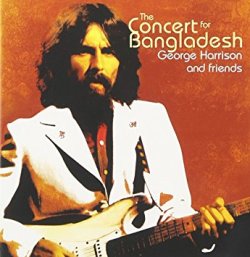
12.  The Concert for Bangladesh (1971)

I tend to listen to this music more when watching the film as opposed to playing the album.  It’s a historic album for numerous reasons which perhaps I’ll delve into at a later time, but just knowing what Harrison undertook by himself and what it meant for him as the featured performer among some great musicians makes it an enjoyable listen.  This was not easy for him to pull off.  There are some what if’s and if only’s attached to the concert (two concerts, actually), but what’s here is greatness.
715ePNT0rkL._SY355_.jpg

11.  Collaborations (w/ Ravi Shankar) (2010)

This set includes three Ravi Shankar albums produced by George:  Shankar Family and Friends (which George plays guitars and autoharp on – 1974),  Ravi Shankar’s Music Festival from India (’76), Chants of India (which George also plays on – 1997), plus a Shankar concert DVD, Ravi Shankar’s Music Festival from India (1974 – the album by the same name is a studio recording done two years later).  It also includes a beautiful hard cover book, and in true Shankar style, an illustrated glossary of Indian instruments.  Simply stated, I love this music and cherish this box set.  And I, like so many others, have George Harrison to thank for it.

This is a limited edition set given to me by my wife.  Mine is numbered 08668, and it’s possibly my favorite birthday gift I’ve ever received.

91RsbQvEKyL._SL1500_.jpg

10.  Somewhere in England (1981)

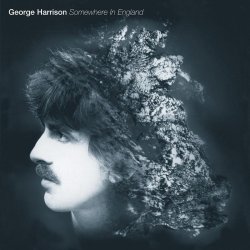
Harrison’s disenchantment with the music business and his 1980’s swoon began with this release.  His initial submission was rejected by Warner Bros. for being not commercial enough.  Warner Bros. also declined his original album cover with his profile next to a map of Great Britain in favor of the one of Harrison in front of the Tate Gallery in London (the original was reinstated with the 2004 remaster).

He then dropped four songs – three of which turned out to be fan favorites – and added four others including All Those Years Ago, which of course turned out to be the anchor song.  That track originally had different lyrics and was written for Ringo to use on his album, but it was too high an octave for him to sing.  As the well-known story goes, Harrison re-wrote it with lyrics paying tribute to John Lennon, who was murdered during the album’s recording.  The album would be best, in my opinion, as originally intended plus All Those Years Ago.

MI0001786901.jpg

71qB7zIuqAL._SL1300_.jpg

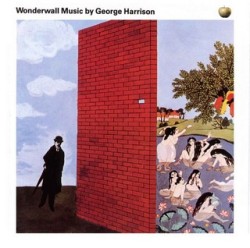
9.  Wonderwall Music (1968)

This funky collection of music is the soundtrack to an even funkier Swingin’ London movie, Wonderwall.  It is the first solo album by a member of the Beatles, and the first album to be released on their Apple label.  In addition to Indian music, there’s psychedelic, country, and even ragtime music in these grooves.  Harrison produced the record and played on many of the tracks, most of which are instrumentals.  Eric Clapton and Ringo made guest appearances.  I can’t explain why I like it so much.  I just do.  Watch the movie if you haven’t seen it for perspective.
Wonderwall_Music_(George_Harrison_album_-_cover_art).jpg

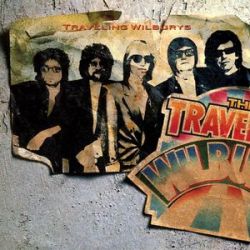
8.  The Traveling Wilburys Vol. 1 (1988)

George, a.k.a. Nelson Wilbury, co-produced this fantastic album.  As with Cloud Nine the year before, this release seemed as spontaneous as it was.  It was as if a herd of dinosaurs had appeared to announce that rumors of their extinction had been greatly exaggerated.  Handle With Care, Heading for the Light, and End of the Line are George’s featured songs, and I love them all as I do the rest of the album.  Had there been more George-centric songs (not that there should’ve been) this record would probably be in my top five or six.
https_%2F%2Fimages.genius.com%2F2fc2f4cede100eb4ca01afcb40e338c4.1000x1000x1.jpg

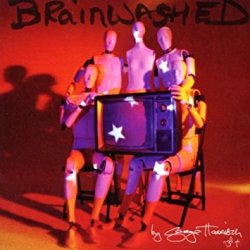
7.  Brainwashed (2002)

George’s final album and first studio release in 15 years is a strong rounding out of his catalog.  Some of its tracks go back as far as 1988, with Harrison focusing more on the album in 2000 after recovering from the attack in his home in December of 1999.  As his health subsequently deteriorated from cancer, he left specific instructions for his son Dhani and friend Jeff Lynne on how he wanted the album completed after his passing, which came on November 29, 2001.  There are some very good moments on this recording, with the moving instrumental Marwa Blues leading the way (all the way to a posthumous Grammy).  His lyric in Pisces Fish, “I’m living proof of all life’s contradictions, one half’s going where the other half’s just been,” strikes a nerve with a Pisces like myself.  And the title track which closes the album, with its inclusion of the Namah Parvati chant done in unison by George and Dhani, is a perfect ending to his swan song.
51S34QLUpgL._SY355_.jpg

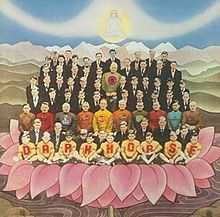
6.  Dark Horse (1974)

Yep, I’ve got Dark Horse at number six.  I like it for pretty much all the reasons others dislike it.  It shows George being vulnerable and susceptible to the evils of the ego which he made such an effort to overcome in his lifetime.  He’d been steeped in his work with his label Dark Horse Records, which included producing albums by Ravi Shankar and the group Splinter.  The stress of the business surrounding the Beatles’ divorce was perhaps topped only by the demise of his marriage to Pattie at the same time.  His voice gave way to laryngitis while scrambling to finish the album by its deadline, and rehearsing for his highly anticipated North American tour.  And with his “naughty period” in full swing, booze and cocaine exacerbated the whole thing.  And it’s all here in this biographical album, like Peyton Place as George described it.  Simply Shady, Dark Horse, and Far East Man are a few of my favorites.
220px-DarkHorseCover.jpg

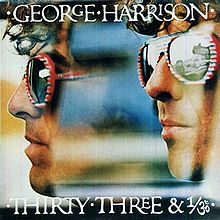
5.  Thirty Three & 1/3 (1976)

By the mid-70’s George’s music was taking on a contemporary feel, and with this album (as opposed to Extra Texture the year before) it worked all the way through.  While its best known song is probably the humorous ode to his estate at Friar Park,  Crackerbox Palace, it’s not even in the top five for me.  Woman Don’t You Cry for Me, Dear One (dedicated to Paramahansa Yogananda), Beautiful Girl, See Yourself, and Pure Smokey (dedicated to Smokey Robinson) are my favorites.  I’m going to find a pair of shades like the ones he’s wearing on the album cover, and by God I will wear them.
220px-3313Cover.jpg

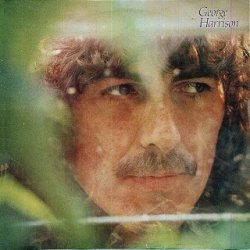
4.  George Harrison (1979)

To my ears, this self-titled album shows Harrison at his most relaxed.  He and Olivia had married the year before and had their first and only child, Dhani.  Most of the Beatles business was behind him, the four of them mostly settled in their own domestic corners.  It was his first album in three years, and along with his new family he had the freedom to indulge his passions for gardening, Formula One racing, and producing a Monty Python film, The Life of Brian.  There isn’t a poor track here to me; a couple of favorites are his updated version of Not Guilty (which coulda-shoulda-woulda been on the White Album), and Here Comes the Moon, a song I played nightly 20 years ago as a lullaby for my first-born child.
GHCover.jpg

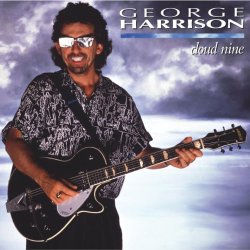
3.  Cloud Nine (1987)

At a time when the pop scene was dominated by the likes of Madonna, George Michael, and Janet Jackson, George reappeared seemingly out of nowhere to show that he could still record hits – when he felt the urge.  The cool thing about this record to me is that, along with co-producer Jeff Lynne, he still managed to do it on his own terms.  I like all 11 of the songs originally released on this album, though if I never hear his version of Rudy Clark’s Got My Mind Set on You again, I’d be o.k. with it.  Standouts include Just for Today, When We Was Fab (which I remember hearing for the first time as a junior in high school on the radio while eating a bag of Tato Skins in the school cafeteria), Devil’s Radio, Someplace Else, and the title track.
51UjE9fUigL.jpg

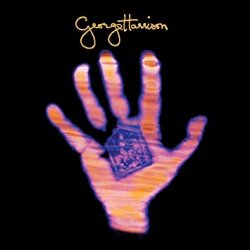
2.  Living in the Material World (1973)

I imagine it’s tough for most artists in any genre to follow-up a previous work that was (and continues to be) received as well as George Harrison’s post-Beatles debut, but he managed to create something very good with 1973’s Living in the Material World.  Some of the recording took place in Apple Studios in London, while most of the album was done at George’s home studio, FPSHOT (Friar Park Studios, Henley-on-Thames).  The album’s hit is of course Give Me Love (Give Me Peace on Earth) – a timeless classic that still gives me chills whenever I hear it – but there’s plenty to chew on with the rest of the tracks, from a jab at his old band mates (Sue Me, Sue You Blues), to an empathetic reference to those same guys in the title track.  A song that has emerged as one of my favorites on the record is Be Here Now, a very quiet meditation inspired by the Ram Dass-authored book of the same title.  Some folks are put off by George’s spiritual beliefs which he often sang about, but I’m pretty much in alignment with his views so to me he’s just preaching to the choir.
619vywTWRkL._SY355_.jpg

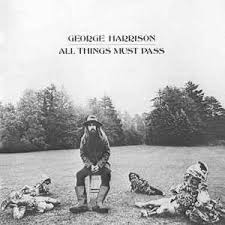
1.  All Things Must Pass (1970)

George’s triple album masterpiece, and quite possibly my favorite album of all time by anyone.  George stated during the 30th anniversary of its release that he didn’t like Phil Spector’s production of the album at first, but that he grew to like it.  And produced it is, heavily.  While I tend to favor more stripped down production, the big sound works here and I wouldn’t change any of it, including the third album of jam sessions.  This album is an emotional roller coaster, and I can’t pick one song over all the others.  I will say that the subtle-but-loaded reference to Hey Jude at the end of Isn’t It a Pity, which I hadn’t noticed until it was accentuated when performed during the Concert for George, has choked me up more than once.  And for those who would prefer to hear these songs sans Spector’s production, they do exist in the Friar Park vault (and on boots).  Maybe the estate will get around to releasing them some day.
download.jpg

Whew!  I didn’t set out to write as much as I did about these albums, but there you go.  Album ranking installment #1 is in the books.  Or on the blog.  Or whatever.

https://en.wikipedia.org/wiki/Brainwashed_(George_Harrison_album)

https://en.wikipedia.org/wiki/Living_in_the_Material_World

-Stephen
 

Album Rankings – Why Mine Are So Correct…(Hint: They’re Not)

There was a day when I would accept as fact any “Top Ten Albums by ___” or “Best Albums from the Year ___” list in any esteemed bastion of music knowledge such as Rolling Stone or MOJO.  Album reviews by the likes of Lester Bangs, Robert Christgau, or Greil Marcus were facts, not subjective opinions from writers who have had good and bad experiences with artists they’d spent time with in the past.  The Rock and Roll Hall of Fame is another subjective (ongoing) list made by individuals with their own prejudices.  Garbage.  If we accepted as gospel what the music scribes say, then there would be about five albums worth listening to.

Rarely do I look at such lists anymore, and when I do I don’t take them seriously.  The only instances when they are useful to me is when I learn of a recording I wasn’t familiar with beforehand.  One example of this is the Richard Thompson album Henry the Human Fly.  This nugget was somehow included on a MOJO Magazine list of the best ever guitar-oriented albums.  I don’t think of that album as being any more guitar-oriented than any other rock album from the early 1970’s, but it is a good record I most likely wouldn’t have heard of had I not reviewed the list.  Various top 50 or 100 jazz album lists have also been good resources for me as I continue to educate myself about the genre.

But my preferences?  My lists?  Well yeah!  Duh…

As the core theme of my blog is 50th music anniversaries, one of my new blogosphere friends, hanspostcard, suggested I come up with a “Best Albums of 1968” list and rank them, and we would compare notes.  Wow!  Somebody actually wants to know what I would list and how I would rank them?  Cool!  No way am I going to deny such a request.  However, as we’re not quite halfway through the year, I’ve decided to hold off until December to rank 1968 albums and singles.  So far this year I’ve discovered for myself a couple of recordings from that year that I was previously unaware of, and there just might be more in the coming months, so I’ll wait to pontificate.  However, hanspostcard has me thinking of other lists I’d like to share sporadically in the coming months, and as I do, I’d like to know what you think and how you would arrange them.

Your preferences?  Your lists?  Well yeah!  Duh…

-Stephen


Closing Out May 1968 in Music, Pt. 3


Hugh Masekela – Single:  Grazing in the Grass

Let’s round out May with a few of my favorite singles released 50 years ago this month, beginning with Hugh Masekela’s version of Grazing in the Grass.  Masekela, considered by many the “father of South African jazz,” scored a #1 hit with this peppy tune on the Billboard Hot 100.  The multi-instrumentalist passed away this past January 23rd in Johannesburg at the age of 78.

Masekela is also known in the rock music world for his trumpet contribution to the 1967 Byrds song So You Want to Be a Rock ‘n’ Roll Star:


Eric Burdon and the Animals – Single:  Sky Pilot

This anti-war song, released in January in the UK and in May in the US, was the last hit record for the Animals in the US where it reached #14 on the US pop charts.  Due to the song’s length, it was spread out over both sides of the single.  It’s always been one of my favorite songs from the era.

https://www.youtube.com/watch?v=WOs3uIEyHaY


The Amboy Dukes – Single:  Journey to the Center of the Mind

It’s odd to use the words “psychedelic” and “Ted Nugent” in the same sentence, but the melody of this psychedelic song by the Detroit-based Amboy Dukes was in fact written by the future Loincloth Legend himself.  This is one of those songs that used to be played on classic rock radio in the first decade or so of the format, but has unfortunately been squeezed out in favor of extra plays of Hotel California and Stairway to Heaven.  For a number of years – probably into my 20’s – I thought it was the Moody Blues (in the vein of Ride My See-Saw).  

The Amboy Dukes went their own ways in 1975, with Ted Nugent going on to become one of the worst people in the history of ever.  Good song, though.


5/10/68  The US and North Vietnam peace talks

The Tet Offensive and the siege at Khe Sanh earlier in the year brought the two main parties together for talks in Paris over the war in Vietnam.  You know, the war both the current Don’t-you-dare-disrespect-the-military-by-kneeling-for-the-Anthem US Bully in Chief, and the aforementioned ultra-patriotic, pro-military, far right-wing, gun loving Ted Nugent dodged.  Funny how that works.  Anyway, neither side could agree on the other’s demands just to get talks rolling, and proceedings stalled for another five months.

1968_1216_cover.jpg

Temps here in North Texas USA are creeping into triple digits, which means June is soon.  See you then!

https://en.wikipedia.org/wiki/Hugh_Masekela

https://en.wikipedia.org/wiki/Grazing_in_the_Grass

https://en.wikipedia.org/wiki/So_You_Want_to_Be_a_Rock_%27n%27_Roll_Star

https://en.wikipedia.org/wiki/Sky_Pilot_(song)

https://en.wikipedia.org/wiki/Journey_to_the_Center_of_the_Mind_(song)

https://en.wikipedia.org/wiki/The_Amboy_Dukes

https://thevietnamwar.info/what-was-paris-peace-accords/

-Stephen

May, Fading, Pt. 2

5/17/68:  The Pentangle 

May brought the outstanding self-titled debut release of the influential British folk-jazz group, The Pentangle, consisting of vocalist Jacqui McShee, guitarist/vocalist John Renbourn, guitarist/vocalist Bert Jansch, bassist Danny Thompson, and drummer Terry Cox – all of whom were accomplished musicians prior to the formation of this unit.

2603427.jpg

I find The Pentangle and British folk music in general from the mid-late 60’s, including  Fairport Convention, Nick Drake, and Davey Graham, to be the perfect tonic when I want that 60’s vibe but from a different angle than the electric scene we know so well.  This is a timeless musical stew of folk, jazz, blues and rock.

Tracklist:

Side One:

  1. Let No Man Steal Your Thyme
  2. Bells
  3. Hear My Call
  4. Pentangling

Side Two:

  1. Mirage
  2. Way Behind the Sun
  3. Bruton Town
  4. Waltz


5/30:  The Beatles White Album sessions commence

It’s hard to say any one year in the Beatles’ existence was more of a whirlwind than the others, but 1968 was packed with activity and notable moments in the band’s lore.  The four spent varying lengths of time in India in February, where in addition to taking the Maharishi’s meditation course John and Paul wrote most of the songs that would wind up on the group’s eponymous release later in the year.  The film Wonderwall, with its Harrison-produced soundtrack, premiered at Cannes on May 17, and in the midst of all the recording activity during the year, the Fabs would appear in psychedelic cartoon form in Yellow Submarine, though their actual contribution (other than the music) was limited to a cameo at the end of the film.

images.jpg

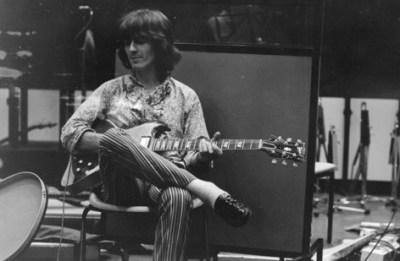
John and Paul returned from their US publicity tour for the introduction of the group’s new company, Apple Corps, Ltd., in mid-May, and on an unspecified date later in the month, the Beatles assembled at George’s house in Esher to record demos of the songs they’d written in India.  Finally, on this date 50 years ago, recording sessions began in earnest at Abbey Road Studios and would continue until October 14.  Some sessions would take place at Trident Studios.

maxresdefault.jpg

While traces of the Beatles’ demise can be seen as far back as the final concert tour in ’66 (and even earlier when taking into account some of George’s comments), the sessions for this double album marked the beginning of a definite acceleration of their split two years later.  Engineer Geoff Emerick quit, and producer George Martin took a hiatus during recording, as did Ringo in a story recounted in the Anthology documentary and George Harrison:  Living in the Material World.  

bd0cf8ce0c00d981ebf5f7256cfa8ca0.jpg

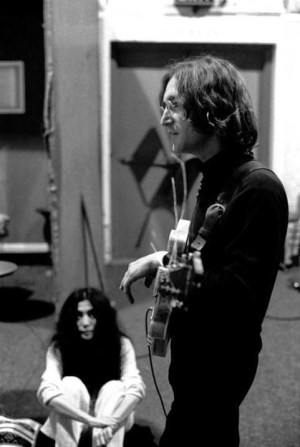
Personal issues and resentments began to foment, as Yoko became a permanent presence in the studio.  For that matter, Pattie, Maureen, and Paul’s girlfriend Francie were also present at times, breaking the group’s rule up until then of not allowing wives and girlfriends in the studio.  George was growing rapidly as a songwriter, yet was still alloted minimal room for his songs on the album (a couple of his tunes, Not Guilty and Sour Milk Sea, would’ve been among my favorites had they been included on the album).

tumblr_ohd1pr2ZSr1rg1rnvo1_500.jpg

As we’ll see in August, the sessions would also yield another monumental non-album, double A-sided single with accompanying promotional films.  When all was said and done, a glorious mish-mash of songs and sound experiments – “very varied” as Paul refers to it in the Anthology – would be released as a self-titled double album in November.  A common argument among fans is whether the album is too long, too short, or just right.  Perhaps we’ll discuss this debate further down the line on the release anniversary date, but for now I’ll just mention that hopefully those of us in the “More please!” crowd will be satiated with the anticipated 50th anniversary White Album reissue later this year.

download

Among the recordings many of us would like to see cleaned up for a deluxe anniversary White Album reissue are the above-mentioned Esher Demos linked below:

https://www.youtube.com/watch?v=2Y1DrUoTuAQ

https://en.wikipedia.org/wiki/The_Pentangle_(album)

https://en.wikipedia.org/wiki/The_Beatles_(album)

https://www.beatlesbible.com/1968/05/24/demo-recordings-for-the-white-album/

https://en.wikipedia.org/wiki/Wonderwall_(film)

-Stephen

As May Fades Away, Pt. 1

It’s time to begin wrapping up another month of 50th anniversaries in the music world (with a couple of diversions) by tying up some loose ends.  I’ll spread this out over the next few days.

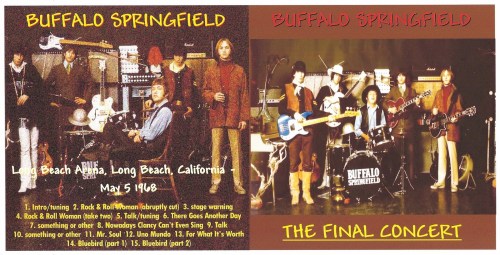
5/5/68:  Buffalo Springfield perform live for the final time

By the spring of 1968, the short-lived Springfield had had enough.  Artistic differences, drugs, etc., etc., had taken their toll, and after their gig at Long Beach Arena on the 5th, they split.  Richie Furay and Jim Messina subsequently compiled some tunes from ’67 and early ’68 into what became the third and final Buffalo Springfield album, Last Time Around.  Stills, Furay, and Young reunited as Buffalo Springfield for a few shows in 2010 and 2011, but plans for a tour in 2012 sputtered away with Neil being Neil.  A recording of the Long Beach Show from ’68 is available on YouTube, but the sound is so bad I’m not going to bother adding it here.

BuffaloSpringfield5-5-68front.jpg

Rhino Records will release a box set of the three studio albums at the end of next month which will include new stereo mixes of all three and mono mixes of the first two.  The mastering of this set was under Neil’s supervision, but so was the original Springfield box when he chose not to include Last Time Around (which he wasn’t around for when originally compiled in ’68).  I won’t be re-purchasing all this music, but I love this band.

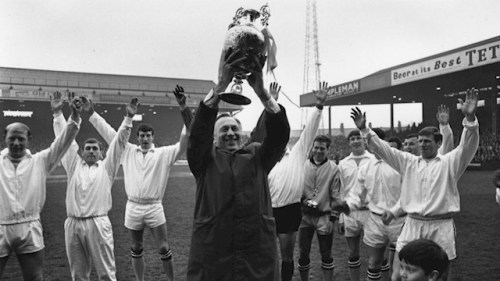
5/13/68:    Manchester City wins the Football League First Division over Manchester United 

Fifty-year history repeated itself with the recently concluded English Premier League season, with Manchester City taking the top spot by an astonishing 19 points over second place Manchester United.  But in 1968, prior to the establishment of the Premier League when it was simply called the First Division, the title wasn’t decided until the final match of the season.  City won at Newcastle while United lost to Sunderland, giving City the title.  Coincidentally, City had a player named Neil Young who scored a couple of goals in that game (my apologies to my more knowledgeable friends who might read this if Young is a famous footballer).  United went on to win the European title a couple of weeks later.

1968 league win.jpg

There was a day when sports were just as important to me as music.  While I’m still generally aware of what’s happening in American sports, I don’t bother to watch or pay close attention unless one of the teams I’ve traditionally followed is playing well.  I don’t think I even qualify as a fair weather fan anymore.

However, as my interest in American sports has dramatically declined, I’ve found a new sports outlet over the past ten years or so:  English Premier League Football and its associated leagues and cups, including the Champions League.  I think one of the main reasons I enjoy following the EPL is because I can do so while ignoring all the off-pitch drama of the modern athlete armed with social media.  I realize controversies and drama exist with Euro footballers, but we’re just not bombarded with it in the states the way we are with contract disputes and legal issues of American athletes.  If that ever changes, I’ll be off sports completely.

5/14/68:  Lennon and McCartney formally introduce Apple Corps, Ltd.

John and Paul made their first stateside visit together since the Beatles’ final US tour in ’66 to introduce their new umbrella business organization, which they founded after the death of manager Brian Epstein.  A typically acerbic Lennon, now firmly under the yolk-of-Ono,  explained what the new company was all about at the press conference:

It’s a business concerning records, films, and electronics. And as a sideline, whatever it’s called… manufacturing, or whatever. But we want to set up a system whereby people who just want to make a film about (pause) anything, don’t have to go on their knees in somebody’s office. Probably yours.

Gosh, with such a concise business model and pleasant spokesman, it’s hard to understand why Apple was such a failure while they were still together!  Whatever.  Apple was a great idea, ahead of its time.  Unfortunately there were too many lunatics running the asylum.

68applePC1.jpg

That same day, they appeared on The Tonight Show, only it was guest-hosted that day by former baseball player (and one of my favorite baseball announcers of all time) Joe Garagiola instead of Johnny Carson.  It just didn’t work, and the boys (especially John) were visibly and audibly uncomfortable being interviewed by someone not exactly showbiz savvy.  An apparently drunk Tallulah Bankhead was the other guest, and she had plenty to say while John and Paul were on stage.  Unfortunately for recorded history, NBC had a practice of erasing their tapes after a period of time, thus the only recording we have is by fans.  There is a clip taken from a Super 8 camera on one YouTube posting, but the sound is awful.  Here’s the cleaner audio for posterity:

https://www.youtube.com/watch?v=J-fprFK62dY

http://ultimateclassicrock.com/buffalo-springfield-final-concert/

https://en.wikipedia.org/wiki/Buffalo_Springfield

Buffalo Springfield remaster complete discography for new box set

https://www.google.com/search?q=Manchester+City+Football+League+Cup+1968&oq=Manchester+City+Football+League+Cup+1968&aqs=chrome..69i57.8667j0j8&sourceid=chrome&ie=UTF-8

http://www.beatlesinterviews.org/db1968.0514pc.beatles.html

-Stephen


May 24 – The Stones’ Return to the Nitty Gritty


The Rolling Stones – Single:  Jumpin’ Jack Flash

With most of the 1960’s and 70’s bands whose hits are played on classic rock and oldies radio stations ad nauseam, I’ve grown to take much of it for granted.  But there are always exceptions to the rule, and Jumpin’ Jack Flash, released as a single in the UK on this day 50 years ago (!), is one of them.  Despite the song’s ubiquitous airplay and its status as the song played live the most number of times by the Stones, it is probably my favorite Rolling Stones song if I were forced to pick one.  Keith Richards’ famous guitar riff is one of my favorites by any guitarist, ever.

https://www.youtube.com/watch?v=zKXa1VmQglA

Jumpin’ Jack Flash was the first song the band recorded at the outset of the Beggars Banquet sessions in the spring of ’68, and is another example of a powerful single released as an appetizer to the main course (though it subsequently appeared on numerous compilations).  It also marked a return to their blues roots after dabbling in Baroque pop and kitschy (for them) psychedelia the previous couple of years.  Regarding the aforementioned guitar riff, Bill Wyman claims to have come up with it on piano but was not given credit.  The song reached #1 on the UK Singles Chart, as well as the US Cashbox Top Singles Chart.  It made it to #3 on the Billboard Chart.

And the only possible way to equal the original studio recording?  Add Mick Taylor on lead guitar in a live performance…

Side A:  Jumpin’ Jack Flash

Side B:  Child of the Moon

https://en.wikipedia.org/wiki/Jumpin%27_Jack_Flash

-Stephen

May 24 – Small Faces Get Heavy Before Checking Out

Small Faces – Ogden’s Nut Gone Flake

Today marks the 5-0 anniversary of the Small Faces album Ogden’s Nut Gone Flake.  It is the fourth and also the final album released with the original group intact.  Their next release came posthumously as its members were splintering into the groups Humble Pie and Faces.  The album peaked at #1 on the UK Album Charts.

Small-Faces-resize-1-1280x620.jpg
Ian McLagan, Ronnie Lane, Kenney Jones, and Steve Marriott (L-R)

The album’s recording took approximately five months, with the majority of the work completed during the spring of 1968.  Side one of the album contains a collection of heavy rock songs which sound very 1968, i.e., still psychedelic but moving away from the dayglow flower power pop rock of the prior year – a common theme which runs throughout rock releases from ’68.  Side two is a concept recording based on a fairy tale with narration provided by South African comedian, actor and writer “Professor” Stanley Unwin.

hqdefault-528120253-1510074588441.jpg
The Small Faces performing in 1968.

The LP, with its replica of an old-time tobacco tin for a cover, was received very well from the time of its release, and is widely considered to be the band’s peak.  Unfortunately, the recording also precipitated the band’s demise.  As with other albums from the era, enhanced studio techniques and experiments rendered it difficult if not impossible to replicate Ogden’s on stage at the time.  The album never was performed live, and a frustrated Steve Marriott quit the band during a New Year’s Eve gig at the end of the year.  Drummer Kenney Jones said of the breakup in 2001:

I wish we had been a little bit more grown up at the time, if we had played Ogdens’ live it would have boosted our confidence so much, we were labelled as a pop band, which definitely got up Steve’s nose more than we realised. I wish we had been more like The Who in the fact that when they have problems they stick together until they’ve overcome them, Steve just thought well how do we top Ogdens’ and he was off. Ogdens’ was a masterpiece if we had played it live we would have gone on to even greater things, I reckon we were on the verge of crossing the great divide and becoming a heavier band.

Heavier – as in Humble Pie and Faces.

https://www.youtube.com/watch?v=qBOFm96rTsg

Tracklist:

Side One:

  1. Ogden’s Nut Gone Flake
  2. Afterglow of Your Love
  3. Long Agos and Worlds Apart
  4. Rene
  5. Song of a Baker
  6. Lazy Sunday

Side Two:

  1. Happiness Stan
  2. Rollin’ Over
  3. The Hungry Intruder
  4. The Journey
  5. Mad John
  6. Happy Days Toy Town

https://en.wikipedia.org/wiki/Ogdens%27_Nut_Gone_Flake

https://en.wikipedia.org/wiki/Small_Faces

-Stephen

May 1968 – Johnny Cash Goes to Prison

Johnny Cash – At Folsom Prison

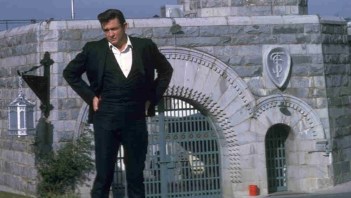
The Man in Black’s landmark live album, recorded January 13, 1968, was released 50 years ago this month.  At Folsom Prison signified a number of things for Cash, including the realization of his desire to perform for a Folsom Prison audience, which he first thought of 13 years prior with his recording of Folsom Prison Blues.  Additionally, it was the beginning of a series of prison performances, as well as a return to commercial success after years of battling substance abuse.

biggest-seller-iconic-photo-john-in-front-of-towerxx-1515801715.jpg

Johnny and soon-to-be wife June Carter arrived in Sacramento on January 10, followed by Carl Perkins, the Statler Bros., and the Tennessee Three.  One of main reasons for the early arrival was so that the group could learn a new song, Greystone Chapel, written by inmate Glen Sherley.  The troupe performed two shows on the 13th, one at 9:40 a.m. and the other at 12:40 p.m., with Cash ending both shows with Sherley’s song.

2041.jpg
Cash, shaking the hand of inmate and songwriter Glen Sherley.

Perkins opened each show with Blue Suede Shoes before the Statlers performed two songs, then Cash took the stage as the inmates – instructed to do so by the MC – withheld their applause until they heard “Hello, I’m Johnny Cash…”  June joined him for a couple of duets, as well as the recitation of a poem while Johnny took a breather.  On the original release, all songs except Give My Love to Rose and I Got Stripes are from the first performance that morning.

d93fdf5345e50c01b330b1823d2c1be351634_large.jpg

The album performed well in the charts despite relatively little investment by Columbia Records, who was more focused on rock and pop recordings at the time.  The album and its single, Folsom Prison Blues, were climbing the charts when, on June 5, Robert Kennedy was assassinated in Los Angeles.  Radio stations immediately ceased playing the single due to the line about shooting a man in Reno “just to watch him die” after RFK’s murder, but the song was edited with the line removed – against Johnny’s wishes – and re-released.  Subsequently it became a #1 hit on the country charts, as well as placing in the top 40 in the national charts.  The album itself also reached #1 in the country charts, and #13 on the pop charts.

hqdefault

To me, At Folsom Prison (as with most of Cash’s recordings) transcends genre.  If I’m in a country music mood, it’s a no-brainer.  But if I’m in rock or folk mode, this record fits right into a playlist along with Neil Young, Dylan, Springsteen, etc., just as Bob Marley’s Catch a Fire does as a non-rock album when put next to them.  It’s gritty, populist, and loud as you want it to be.

Tracklist:

Side One:

  1. Folsom Prison Blues
  2. Dark as the Dungeon
  3. I Still Miss Someone
  4. Cocaine Blues
  5. 25 Minutes to Go
  6. Orange Blossom Special
  7. The Long Black Veil

Side Two:

  1. Send a Picture of Mother
  2. The Wall
  3. Dirty Old Egg-Suckin’ Dog
  4. Flushed From the Bathroom of Your Heart
  5. Jackson (with June Carter)
  6. Give My Love to Rose (with June Carter)
  7. I Got Stripes
  8. Green, Green Grass of Home
  9. Greystone Chapel

https://en.wikipedia.org/wiki/At_Folsom_Prison

https://www.npr.org/2018/01/12/576763031/johnny-cash-at-folsom-prison-50-years-later

-Stephen

Neil Young’s Ditch Trilogy, Pt. 5 – Some Final Notes

Like a Cadillac in Alabama, it seems I’ve got a wheel in the ditch and a wheel on the track.  I’m almost out of it, but before moving on to other topics I want to mention a couple of remarkable live recordings from those incredibly creative and productive days for Neil.  Perhaps that’s something I haven’t emphasized enough:  As heavy and gloomy as much of the Trilogy material is, Young basically never ceased working – a trait of his that continues to this day.  Anyway, one of these recordings is a widely circulated bootleg from an audience tape, and the other a recent official stand-alone release from Neil’s Archives.

One mark of a confident songwriter is to take new, previously unheard material before a live audience.  In Neil’s case, we aren’t simply referring to a musician who inserts a couple of new tunes into a set list of oldies, often giving a large number in the audience the opportunity to head for the restroom or concession stand.  On May 16, 1974, he played a surprise, unadvertised solo acoustic set at New York’s Bottom Line club after Ry Cooder’s scheduled set, and thankfully someone had a tape recorder.  In just over an hour, Neil played 11 songs interspersed with funny, stoney storytelling.

Amazingly, five of the eleven songs were début performances and 10 of the 11 songs were unreleased at the time.  Four songs were from his just-completed On the Beach album which would be released exactly two months later.  Another tune was from Tonight’s the Night, which wouldn’t be released until the following year.  Still another would find a home on Zuma in late ’75, and one was from the future (’76) Stills-Young album, Long May You Run.

Arguably the most stunning track is the one which opens his set, Pushed it Over the End (which he introduced as Citizen Kane, Jr. Blues).  The only official release of this song is on the CSNY ’74 set released in 2014, but in my opinion the Bottom Line performance is much better.  Both Neil and the club audience are loose, and among the humorous stories he tells, we learn that the upcoming On the Beach release was recorded under the heavy influence of a concoction he calls honey slides, its recipe he shares with the appreciative crowd.  The sound quality of this recording is actually quite good considering it’s an audience tape, so slide on your headphones and enjoy.

Tracklist:

  1. Pushed it Over the End (a.k.a. Citizen Kane, Jr. Blues)
  2. Long May You Run
  3. Greensleeves
  4. Ambulance Blues
  5. Helpless
  6. Revolution Blues
  7. On the Beach
  8. Roll Another Number
  9. Motion Pictures
  10. Pardon My Heart
  11. Dance, Dance, Dance

Released just a couple of weeks ago on April 24, Roxy:  Tonight’s the Night Live once again captures Neil Young trying out new material in front of a club audience.  This time we hear Neil and the Santa Monica Flyers on the opening nights of the Roxy in Los Angeles, between September 20-22 of 1973.  Graham Nash and Cheech & Chong performed opening sets before Neil and Co. took the stage for a set which covered, from start to finish, the tracks they’d spent the summer working on that would ultimately appear on Tonight’s the Night when it was finally released in 1975.  Also performed was Walk On from the following year’s On the Beach.  Since this was the first time the songs were heard by a live audience, Young stayed true to the studio arrangements, something he doesn’t always do.  However, as is often the case, the live versions here are punchier and warmer.  The material may be bleak, but Young is definitely in a livelier mood.

I listen to the Bottom Line set above as much as any other release of Neil’s, and this Roxy release has found an instant home in my rotation.  It’s great stuff.  Enjoy, and thanks for reading!

https://www.youtube.com/playlist?list=PLbcerJq8u6IfLC4Ghdr0k8T6s-ZojjTe1

Tracklist:

  1. Intro
  2. Tonight’s the Night
  3. Roll Out the Barrel
  4. Mellow My Mind
  5. World On a String
  6. Band Intro
  7. Speakin’ Out
  8. Candy Bar Rap
  9. Albuquerque
  10. Perry Como Rap
  11. New Mama
  12. David Geffen Rap
  13. Roll Another Number (For the Road)
  14. Candy Bar 2 Rap
  15. Tired Eyes
  16. Tonight’s the Night (II)
  17. Walk On
  18. Outro

http://neilyoungnews.thrasherswheat.org/2013/05/neil-young-bottom-line-club-new-york.html

https://pitchfork.com/reviews/albums/neil-young-roxy-tonights-the-night-live/

https://www.pastemagazine.com/articles/2018/04/neil-young-roxy—tonights-the-night-live-review.html

-Stephen