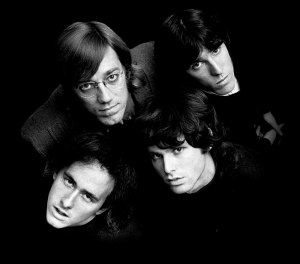
The Doors released their third album on this day in 1968. Given the success of their first two releases, The Doors and Strange Days (both from ’67), expectations were high among fans and critics. While received fairly well, Waiting for the Sun was still considered a bit of a let down after the band had blasted onto the scene the year before.
Due to the amount of time the Doors were spending on the road and doing TV appearances, they had a relative shortage of material to record. Some songs on the album were the last of the leftovers from Jim Morrison’s compositions which landed on the first two releases, and they intended to compensate for the dearth of new material with a long piece titled The Celebration of the Lizard. That track was a collection of song fragments with Morrison’s lyrics, but the band failed to achieve a satisfactory recording so it was left off the album. Oddly, the solid title track was also left off and later used on the 1970 Morrison Hotel record.
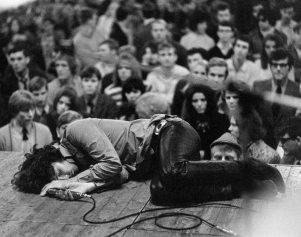
Jim being Jim.
The result was a good but not great album, including the band’s second #1, Hello, I Love You. To me, it’s an enjoyable listen all the way through without any clunkers, although the standouts are obvious. Robby Krieger’s flamenco and electric guitars on Spanish Caravan are among my favorite sounds on the album, and Morrison’s lyrics are worth another reading 50 years on. While songs such as Love Street lighten the vibe, the overall tone is even a little darker than on the first two albums (tracks such as The End from their debut notwithstanding), and Jim’s behavior was becoming more unpredictable on stage and off. The Doors were very active at this point, and we’ll hear from them again in these pages shortly.
Now we’re talkin’! Fifty years ago today, the Band made their debut with Music from Big Pink, an album that continues to influence artists and earn new fans. In the heart of the psychedelic era, these five extremely versatile musicians were the rock antidote to the dayglow paisley scene. Four of the five members were Canadian, but they created a uniquely American sound which is generally referred to today as Americana. Nobody sounded or looked like them.
L-R: Rick Danko, Levon Helm, Richard Manuel, Garth Hudson, Robbie Robertson
The group, originally known as the Hawks, had been hired away from Ronnie Hawkins by Bob Dylan, and they backed him on his combative 1966 UK tour. During Dylan’s subsequent post-tour exile at Woodstock, he summoned the Hawks and put them on retainer to record the songs which finally surfaced as the official release, TheBasement Tapes, in 1975 (the recordings were heavily bootlegged until then). Rick Danko, Richard Manuel, and Garth Hudson moved into a pink house nearby in West Saugerties, with a basement where they and Dylan recorded dozens of somewhat bizarre Dylan originals and cover songs.
When they realized how interesting the material was with or without their boss, they convinced former band mate Levon Helm to leave the oil rigs he was working on and head to the northeast to rejoin them and record their own songs. Helm had left the group early in the ’66 Dylan shows when it became apparent that they would be playing before hostile audiences wherever they went due to Dylan “going electric.” He was replaced for the rest of the tour by Mickey Jones, who passed away this past February at 76.
In the yard at Big Pink, Levon back in the fold.
At the behest of their (and Dylan’s) manager Albert Grossman, the band – at this juncture known as the Crackers – was signed by Capitol Records and they shifted to A&R Studios in New York City where they recorded five songs before moving the project to L.A. where they finished the album. By the time it was released, they had (thankfully) changed their name to simply the Band. Two songs, Tears of Rage and This Wheel’s on Fire, were co-written by Dylan, and Bob was solely credited on the final track, I Shall Be released. He also painted the picture used on the album cover. In his original 1968 Rolling Stone review of the album, Al Kooper referred to the record as a hybrid concoction of “White Soul.” He wrote:
I hear the Beach Boys, the Coasters, Hank Williams, the Association, the Swan Silvertones as well as obviously Dylan and the Beatles. What a varied bunch of influences. I love all the music created by the above people and a montage of these forms (bigpink) boggles the mind…This album was made along the lines of the motto: “Honesty is the best policy.”
Big Pink today, available to rent for overnight stays at $550 per night with two night minimum, basement not included – see link at the bottom of the page for current photos and descriptions.
The Band’s muse (along with Dylan’s at the time) seemingly came seeping through the dirt of the cotton fields of Arkansas, the coal mines of Appalachia, and the basement floor of that pink house from bygone days of the early/mid 20th century, or that “Old, Weird America,” to lift a favorite term of mine coined by author Greil Marcus in describing Dylan’s and the Band’s Basement Tapes recordings as the often otherworldly amalgamation of country, blues, and folk music from that period, much of which is featured in the Anthology of American Folk Music.
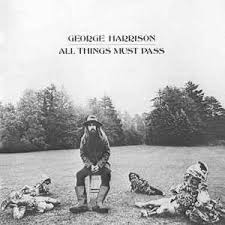
This record and this group inspired Eric Clapton to leave Cream and George Harrison to move toward the songwriting that was later featured on his All Things Must Pass album. Meeting the group also made Harrison long for the camaraderie he saw them enjoying which he no longer felt in the Beatles. “Timeless” is a somewhat overemployed word used to describe various recordings, but that’s what this album (and their follow-up a year later) is. As with many great bands, their energy and creativity was fairly short lived for many of the usual reasons, but what they gave us made a large and lasting impact. And with Music from Big Pink they were just starting to come into their own as recording artists.
The Band in the basement of Big Pink. Elliott Landy photo.
It’s time to put this sluggish month behind me with some final noteworthy June ’68 releases. I hope everyone has had a nice start to the summer. There are some heavy hitters coming in July to heat up the hi-fi.
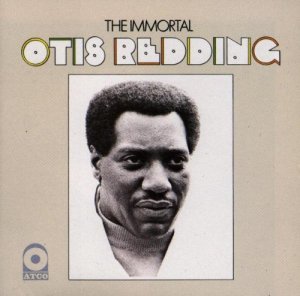
Otis Redding – The Immortal Otis Redding
This posthumous release consists of tracks Redding recorded in the weeks before his death. Only one of the 11 songs had been previously released, and the album was received very well by critics. Redding’s Hard to Handle, famously covered by the Black Crowes, is found here.
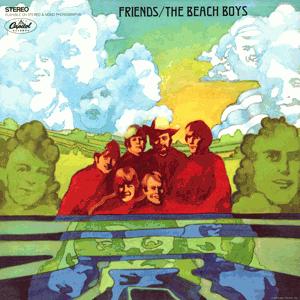
The Beach Boys – Friends
The Beach Boys, along with the Beatles, had jumped on the Maharishi Mahesh Yogi’s Transcendental Meditation train in the summer of ’67, and Mike Love was among the guru’s students in Rishikesh with the Beatles in February and March of 1968. This collection of brief, mellow songs became known as their TM Album, influenced by their time with the Maharishi. Fans were still waiting for a return to the glory of Pet Sounds, and while this wasn’t it, retrospective critiques have been kind.
The 5th Dimension – Single: Stoned Soul Picnic
This great tune, written and recorded earlier in 1968 by Laura Nyro, was soon covered by the 5th Dimension on their album of the same name as the track. They made it their song, as it reached #3 on the US Pop chart and #2 on the Billboard R&B chart. There’s always a place for a well crafted pop tune in my collection, even if I don’t know what the hell it means to “surry.”
Often when describing an album (or book, painting, etc.) as representative of a transitional stage for the artist, it’s a polite way of excusing the work for being a perhaps less-than-stellar offering with glimpses of good things to come. Then there are transition albums like Pink Floyd’s A Saucerful of Secrets, released this day in 1968. While the band was certainly moving toward bigger and better things both artistically and commercially in the years beyond 1968, this album is another example of how something very good and interesting can emerge during times of uncertainty. The question mark I’m referring to? The ushering out of band co-founder, chief songwriter and friend, Syd Barrett, and the shifting of artistic direction with the emergence of Roger Waters as a primary writer along with the addition of David Gilmour to the band – all during the recording of this album.
That oh-so-brief moment in time when the Pink Floyd lineup included both Syd Barrett and David Gilmour.
I used to overlook this release as simply part of an overall spacey and experimental but kind of boring run of post-Piper at the Gates of Dawn/pre-Dark Side of the Moon albums. Finally and thankfully I woke up to Meddle, Obscured by Clouds, and More. (You can throw in the first three songs on side two of Atom Heart Mother as well.) Fantastic albums all. But what about Saucerful?
Recording began at EMI Studios in August of the previous year, and due to Syd’s erratic behavior and general unreliability on stage and off, his friend David Gilmour was brought into the fold in December ’67 as a safety net guitarist for the times Syd would just wander aimlessly around the stage with a blank stare on his face. The group performed as a quintet for a couple of weeks during January of 1968 before they decided to simply not pick up Syd on the way to a gig one day, and that was that. They wrapped up recording in early May as a quartet with an altered lineup and vision.
And then there were four, again.
Ironically, even though Syd only plays on three songs on the record and only sings on the one he wrote, the haunting Jugband Blues, it took gaining an appreciation for Barrett’s two post Floyd solo albums, The Madcap Laughs and Barrett, for me to revisit Saucerful. Well, that and hearing Nick Mason say during a radio interview that this is his favorite Floyd album. And I’m glad I was able to reconsider it with fresh ears, because it’s good. I’ll just have to plead ignorance up to the point of my awakening. It’s still spacey, but hey, so am I from time to time. To time. Now, I’ve got a gold star sticker and a candy bar for the person who can convince me that I shouldn’t dismiss Ummagumma…
Tracklist:
Side One:
Let There Be More Light
Remember a Day
Set the Controls for the Heart of the Sun
Corporal Clegg
Side Two:
A Saucerful of Secrets
See-Saw
Jugband Blues
It’s awfully considerate of you to think of me here
And I’m most obliged to you for making it clear
That I’m not here
And I never knew the moon could be so big
And I never knew the moon could be so blue
And I’m grateful that you threw away my old shoes
And brought me here instead dressed in red
And I’m wondering who could be writing this song
I don’t care if the sun don’t shine And I don’t care if nothing is mine And I don’t care if I’m nervous with you I’ll do my loving in the winter
And the sea isn’t green And I love the queen And what exactly is a dream? And what exactly is a joke?
Iron Butterfly’s second and most well-known album was released June 14, 1968. The title track, released as a single the same day, holds an odd place in rock history in my mind. It’s almost become a punchline due to the garbled title and the fact that it takes up the entire second side of the album. But the album stands on its own as the highest selling release of 1969. It was also the biggest seller for Atlantic Records until Led Zeppelin IV.
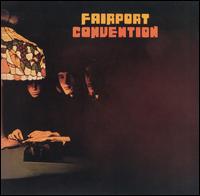
Fairport Convention – Fairport Convention
This was the English folk-rock band’s debut album, and I can’t write intelligently about it because I haven’t listened to it. As with many other groups I’ve wanted to get to know, I familiarized myself with Fairport Convention by purchasing a hits collection before branching out, but the compilation didn’t include any songs from this self-titled debut. Judy Dyble was the lead singer on this record, but she would be replaced by the siren Sandy Denny for the next few releases, and they are among my favorite albums from the era. I’ll have more from Fairport Convention next January when I have a clue what I’m talking about.
The Crazy World of Arthur Brown – Single: Fire
This single from the band’s debut album reached #1 in the UK and #2 in the US Billboard charts.
Confession: Sometimes I’m lazy. Really…freaking…lazy. Lasting momentum eludes me, and this month has encapsulated that struggle. The alloted two weeks of spring here in north Texas have given way to the annual blast furnace which extends into October. I started out fairly active for what is a rather quiet month on the 50th album anniversary front, but today is the first time in a couple of weeks I’ve signed in to the blogosphere. Time to accept what is with the weather and get back to writing, as I’m now feeling spurred on by some random kind words of encouragement from someone I don’t know, but whose work I admire.
Despite my recent inactivity, I did read a couple of books over the past few weeks that I recommend:
JFK and the Unspeakable: Why He Died and Why it Matters, by James Douglass (2008)
The Longest Cocktail Party: An Insider’s Diary of the Beatles, Their Million-dollar Apple Empire and Its Wild Rise and Fall, by Richard DiLello(1972)
The latter is a fun and quick read. While the Beatles loom throughout, the book is really about the people who worked in and visited (crashed, more like) the madhouse that was Apple Corps. It’s more than a minor miracle that the Apple experiment lasted three years. This is not your typical Beatles bio. As for the former, while I’m not a “conspiracy enthusiast,” to anyone left still inclined to believe Oswald was the lone gunman I recommend checking this out from your local library.
Now on to some June 1968 releases. On one hand, it kind of feels like I’m mailing it in with another month-end roundup of leftovers, but as I mentioned earlier this isn’t a big month for 50th anniversaries. Watch the following be among somebody’s all-time favorites…
Steve Miller Band – Children of the Future
This was the debut album of the Steve Miller Band, produced by Glyn Johns. About half the songs on it were written by Miller, the others by the likes of Big Bill Broonzy and then-bandmate Boz Scaggs. An album later and we’re into those early Miller tunes I really dig.
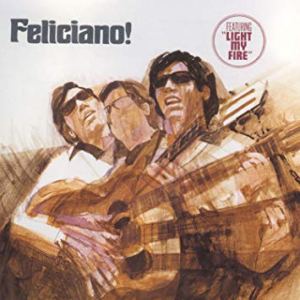
Jose Feliciano – Feliciano!
Admit it, you like this album. Honestly, it had slipped from my memory. I don’t own it, nor do I hear his version of Light My Fire anymore on any radio station I listen to. But I like it. This all acoustic, all covers album is Feliciano’s most successful release, reaching #2 on Billboard’s Top LP Chart, #3 on the R&B charts, and #3 on the Jazz charts. Besides the Doors, he covers the Mamas and the Papas, Gerry and the Pacemakers, the Beatles, and others.
I’ll have more tomorrow. Cheers for now, and thanks for reading!
I’ll wrap up my solo Beatles album rankings by putting it together in a tidy and very scientific Top 25 list. My thoughts on each album can be found in my individual posts for George,Paul,John, and Ringo. Other than my choice for #1, this is a rather absurd exercise to undertake, but what the hey. It’s got me thinking of some mighty good albums I haven’t listened to in a while. Just a reminder: the only reason choices such as #’s 25 and 22 aren’t rated higher is because John and George, respectively, are featured on only half the album or less.
Criteria for this list and all my rankings going forward include but are not limited to:
May include “Best Of” compilations
May include albums produced by the artist, even if their playing or singing on the album is minimal
May include live albums
May include box sets
Number of albums listed may vary depending on catalog
I reserve the right to change my mind about the order down the line
In short, my silly subjective rankings, my silly subjective rules
Today I present my favorite John Lennon albums. For the obvious reason, this list won’t be as long as my rankings of George Harrison or Paul McCartney albums, but a few of Lennon’s solo albums have been very important to me as a music fan. As I write this, with a tinge of guilt I’m whittling my list down even further to maintain the spirit of my rankings, i.e., I’m listing albums I actually like, not just releases by important artists whom I like, no matter what. With that in mind:
7. Rock ‘n’ Roll (1975)
I wasn’t familiar with this album until my teenage years. I’d heard a couple of songs and liked them, but it took me a few years to realize why: John sounds like he’s having fun. A buddy in high school gave me the album on cassette as a gift, and I have it still. Most of the tunes are covered in his box set, which is where I hear them most often.
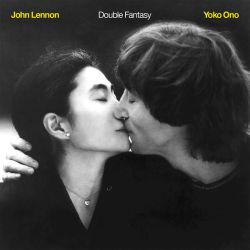
6. Double Fantasy (1980)
Ugh, so much wistfulness attached to this one. I received the LP for my birthday a few months after his death and played it repeatedly. Since it was vinyl, it meant I listened to Yoko’s songs as well, and to be honest I was able to listen to them without banging my nine-year-old skull into my bedroom wall each time. I chuckle when I think about Yoko’s screaming orgasm at the end of Kiss Kiss Kiss blaring down the hallway into the kitchen after school where my mom could be found preparing dinner. I had no clue – all of Yoko’s screaming sounded the same to my innocent ears – and luckily Mom was pretty good at tuning out noise when she wanted to.
After the advent of CD’s, I began programming her songs out of it whenever I wanted to listen to John’s. But a couple of months ago I played the whole thing for my wife so she could hear for herself what I’d been trying to describe. A funny thing happened when I did: the new wave influence on Yoko’s songs – mainly the oft-mentioned B-52’s – jumped out of the speakers at us. Her tunes on this record are not something I would choose to listen to very often, but they aren’t, um, that bad(?) John sounds refreshed and all his songs are very good, and if they had been combined with his songs which appeared on the posthumous Milk and Honey (’84) as a stand alone record without the missus it would’ve vied for #1 in this ranking order.
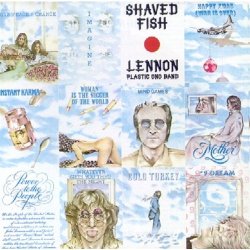
5. Shaved Fish (1975)
Shaved Fish rates this highly despite being a compilation due to the fact that almost half of it consists of tracks that were previously only released as singles, including Cold Turkey, Instant Karma!, and Power to the People. It was also the mournful soundtrack to Christmas break a few weeks after John’s murder when my brother was home from college and played it a handful of times.
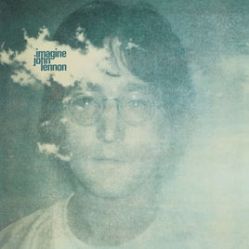
4. Imagine (1971)
Imagine is another good album of John’s in the early aftermath of the Beatles. Though I’ve known the song Imagine my whole life, I got into the entire LP in high school in the late 80’s, and it’s held up for me quite well. He mixes songs of love for Yoko with songs of anger for pretty much everything else, including Nixon, Vietnam, and of course Paul. Favorites of mine include Crippled Inside, Jealous Guy (re-worked from the White Album-era Child of Nature), I Don’t Want to Be a Soldier, Give Me Some Truth, and the title track. I don’t say this as a sycophantic defense of Paul, but I do feel John embarrassed himself with the ultra-petty How Do You Sleep?
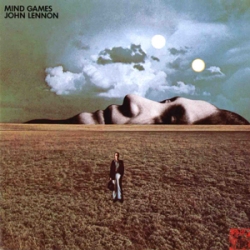
3. Mind Games (1973)
Any of my final three Lennon albums could be #1, and Mind Games is another example of critics being just as full of themselves as the artists they lambast. Jon Landau in Rolling Stone called it Lennon’s “worst writing yet,” and that Lennon was “helplessly trying to impose his own gargantuan ego upon an audience … [that] is waiting hopefully for him to chart a new course.” I have to remind myself that much of the harsh criticism for the Beatles as solo artists was due to the then relatively recent demise of the group, and people expected each of them to be as individually good as the sum of their parts, which was never going to happen. But there’s not a song on this album that I don’t like.
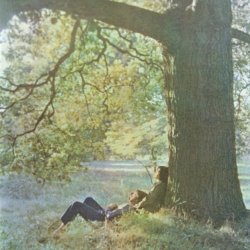
2. Plastic Ono Band (1970)
Perfectly underproduced, stark, raw, scab-peeling, and primal (as in primal scream) – that’s how I think of Lennon’s first post-Beatles album. As a result of the primal scream therapy he was undergoing, John unleashed 30 years of verbal payback to society in general and lament for personal losses. It’s not an easy listen, but man is it good. Even critics agree.
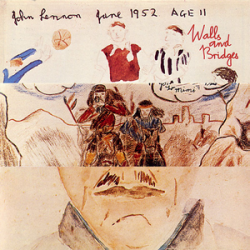
1. Walls and Bridges (1974)
Walls and Bridges was recorded at the tail end of Lennon’s “Lost Weekend” of debauchery in L.A., exiled there by Yoko and accompanied by their assistant (and for 18 months John’s keeper and concubine) May Pang. He recorded this album when they returned to New York, but before he moved back home with Yoko.
It’s sort of odd to celebrate somebody around the anniversary of their death, but that’s how it’s worked out for me with John, as opposed to George whose birthday I think of more. I usually listen to John’s music – especially my top three – in December and January, Walls and Bridges possibly more than the rest. Whatever Gets You Through the Night – his duet with Elton – is a great track, Steel and Glass a shot at Allen Klein (a few years too late?), and #9 Dream is one of my all-time favorite Lennon songs.
I feel obligated to explain the omissions from my Lennon rankings. I find Live Peace in Toronto 1969 and Live in New York City to be dreadful. On the Toronto album, Lennon sounds every bit as wasted and unrehearsed as he actually was, and Yoko is unlistenable. It’s a shame, because he had a good band with Eric Clapton, Klaus Voorman, and Alan White, but they rehearsed only twice: once on the plane from London to Toronto and once right before the show. Clapton didn’t even know about the show until the day before – from across the ocean and while he was in his own haze at the time. A few day’s worth of practice would’ve done wonders.
On NYC, John is visibly nervous on the video, chomping on gum the whole time, and he forgot some lyrics. Furthermore, Jim Keltner is the only other established musician on stage with John. The others are Yoko and a street band called Elephant’s Memory. And those stupid hard hats! As for 1972’s Some Time in New York City, I’ve honestly never listened to it and I have little interest. A few of John’s decent songs from the set are on his box set which I own, and that’s enough for me. And with Milk and Honey, his tracks are also on the box set in different versions, which are all very good, but I don’t think I’ve ever actually listened to that album.
BONUS LIST!
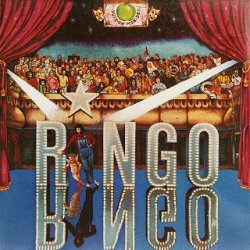
1. Ringo Starr – Ringo (1973)
I promise I’m not just throwing Ringo a bone here. I really like this album, especially with the inclusion of It Don’t Come Easy, Early 1970, and Down and Out as bonus tracks on the 1991 reissue. Its quality is due to the participation of his three former band mates throughout, though not on the same songs. In fact, it’s a great roster of musicians on the record that also includes Marc Bolan, Robbie Robertson, Steve Cropper, Billy Preston, Nicky Hopkins, Garth Hudson, Klaus Voormann, Tom Scott, Bobby Keys, Levon Helm, Rick Danko, David Bromberg, Harry Nilsson, Martha Reeves, Merry Clayton, and oh look, there’s Jim Keltner again!
Folks, if you’re down, talk to someone. If you don’t think you have someone to talk to, put away your pride and call a therapist. If your pain is acute and you don’t know how to find professional help, call the National Suicide Prevention Hotline: 1-800-273-8255 (U.S.). The International Association for Suicide Prevention is available worldwide.
Criteria for this list and all my rankings going forward include but are not limited to:
May include “Best Of” compilations
May include albums produced by the artist, even if their playing or singing on the album is minimal
May include live albums
May include box sets
Number of albums listed may vary depending on catalog
I reserve the right to change my mind about the order down the line
In short, my silly subjective rankings, my silly subjective rules, so let’s get to it…
As with ranking George Harrison’s albums, assigning numerical values to Paul’s catalog is going to take a minute simply due to the volume of his work, and I’ll be leaving much of it out (cough-mid-1980’s-cough). Here’s how my favorite Macca albums stack up:
15. Wings Greatest (1978)
This is a purely sentimental choice. But as a child, I wore. this. thing. out. on my cruddy record player that sounded maybe slightly better than AM radio. This, Wings Over America, and Back to the Egg were the McCartney albums I had in my juvenile collection, while my brothers had the rest of his catalog in their collection in the basement. I used to “crank” Junior’s Farm and Live and Let Die, and I’ve always had a soft spot for Another Day and Mull of Kintyre. I haven’t owned a copy of it in years, but to illustrate what a dork I am, I’ll admit that not long ago I culled the songs that appear on Wings Greatest from the double disc Wingspan and put them in a playlist by themselves, in proper order. You know, to listen to while playing with my little plastic army men or coloring with my crayons.
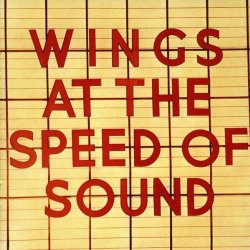
14. Wings at the Speed of Sound (1976)
To his credit as well as his detriment, Paul went to great lengths to present Wings as a band that he was a member of, as opposed to his backing band. A couple of my favorite songs on this album are sung by Denny Laine (The Note You Never Wrote and Time to Hide), but a song that almost seems was included as a gag was Linda’s Cook of the House (may she be resting in peace). Beware My Love and Let ‘Em In are solid, and I’ll go ahead and admit that, for what it is, Silly Love Songs stands up just fine all these years later. I might’ve had this album rated higher if much of it wasn’t covered on the subsequent live album which I do have rated better.
13. London Town (1978)
This album continues to slowly grow on me 40 years on. Recording began in 1977, and it was a bit of a mellow come down after the craziness of the Wings Over the World tour the previous year. This one received a fair amount of spins in my basement growing up, with Cafe on the Left Bank,Deliver Your Children (sung by Denny), I’m Carrying, With a Little Luck, and the title track as my favorites. I could see this album jumping up a few spots in a year or two.
12. Electric Arguments (2008)
Electric Arguments has an un-McCartney-like spontaneity that’s refreshing to hear. The entire album was recorded in 13 days – spread out over a year. (I guess Paul even plans out when he’s going to be spontaneous.) It’s all over the place as heard in the opening three songs: Nothing Too Much Just Out of Sight (a non-love song to his ex-2nd wife, whatever her name was), Two Magpies, and Sing the Changes.
11. Wild Life (1971)
This is Paul’s third post-Beatles album, and is a step back from the one which preceded it. But it has aged better than expected, perhaps because of its simplicity. Dear Friend, another message to John but with a conciliatory tone, is an overlooked gem.
10. Venus and Mars (1975)
Wings were nearing their mid-1970’s zenith with this record. I still enjoy it, but as with Wings at the Speed of Sound, it is heavily featured on Wings Over America, which I prefer. Love in Song is my favorite tune not performed on the live album.
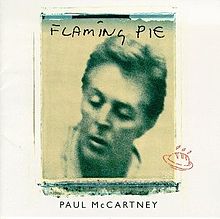
9. Flaming Pie (1997)
When McCartney released this one, it had been (in my opinion) 15 years since he’d recorded a really good album. In the interim there was 1988’s Russia Album of covers which showed he still had his chops, and 1989’s Flowers in the Dirt which got me excited at the time but sounds a little slick for me at this point. Finally, in 1997, he “got back” so to speak.
I remember driving along a country road the first time I heard The World Tonight and how giddy it made me feel. That guitar riff and its tone sounded like something right off Band on the Run, and I was very pleasantly surprised to hear him belt out the vocals as if to shout “I’m back!” The album is maybe a couple of songs too long (Used to be Bad and Really Love You), but that’s a minor criticism. If You Wanna, Somedays, Calico Skies, Great Day – I’d put these among his best solo tracks. I think I know what I’m going to listen to later tonight…
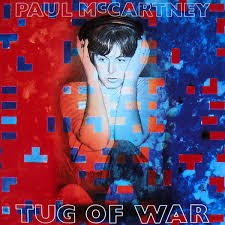
8. Tug of War (1982)
As I go through this list, I’m reminded of just how much style variation there is on Paul’s releases not just from album to album, but song to song. Nowhere is this on display more than on Tug of War, produced by George Martin and with its recording cast that ranged from Carl Perkins to Stevie Wonder. It was a huge success all over the world, with Take it Away and Ebony and Ivory being the smash singles.
This is another sentimental album of McCartney’s for me. It was released in April of ’82, and was on the radio a lot during a very fun summer spent at the city swimming pool and playing whiffle ball in the back yard. The Cardinals won their first World Series title in my lifetime that fall. It was a very good year. Then one of my older brothers returned from a year studying overseas, got the album, and I spent the following summer becoming well-versed in the entire record while hanging out with him in his makeshift dark room in our basement while he developed his film. This is the stuff “serious” music critics don’t consider. Every song is a keeper in my book, even the excessive Ebony and Ivory. My favorites include Take It Away, Here Today (his tribute to John), The Pound is Sinking, Wanderlust, Ballroom Dancing, and the title track.
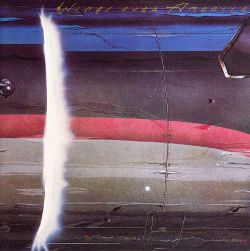
7. Wings Over America (1976)
There was something very magical about live albums in the 1970’s, and for me Wings Over America (and Frampton Comes Alive) was as grand as it could get, especially when listening to it while hanging out with my big brothers. Oh man, those gatefold covers, the photos, the POSTERS! This Wings triple live album extravaganza, out just in time for the American Bicentennial Christmas, was an instant favorite in our house. Looking at it now, it seems more like a live greatest hits compilation. But back then, a couple of Macca’s albums heavily represented on Wings Over America were still new.
I saw Denny Laine live recently, and he told the story of how Paul asked him before the tour if he had anything he could play during the acoustic set (other than Picasso’s LastWords [Drink to Me]), and he didn’t, so he chose a Simon & Garfunkel tune he always liked, which was Richard Cory. Laine made it his song in my mind on this record (although the original is still great), but when he performed it recently the audience still expected him to exclaim that he wishes that he could be…John Denver. Alas, the reference just doesn’t hold up anymore, and Denny doesn’t use it.
6. Chaos and Creation in the Backyard (2005)
It’s hard to believe this one is 13 years old. Paul reached out for a change in production for Chaos, and I’ll just lazily quote wiki to explain why this was such a good decision:
“Paul McCartney hired (Nigel) Godrich to produce his album Chaos and Creation in the Backyard (2005) after being recommended by Beatles producer George Martin. Godrich fired McCartney’s touring band, and demanded that McCartney abandon songs Godrich found clichéd, over-sentimental, or sub par. The album was nominated for several Grammys, including Album of the Year, and Godrich was nominated for Producer of the Year.”
Godrich had previously worked wonders for Radiohead and Beck, with the latter’s Godrich-produced Sea Change being one of my favorite albums of the 2000’s. There’s something to be said for very established acts getting out of their comfort zones with new producers who have fresh ideas. Off the top of my head, this worked extremely well for Dylan when he hired Daniel Lanois, and for Johnny Cash with Rick Rubin. I still consider Chaos to be a recent album in the McCartney canon, and deem it his best album of the last 20 years.
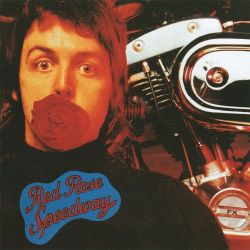
5. Red Rose Speedway (1973)
Red Rose Speedway just seems like one of those albums that has always been around in my world. It was neither dynamic nor boring. I’ve always liked the tunes, and the late Henry McCullough’s guitar solo in My Love is the best rock ballad guitar solo I’ve heard. And it only happened because McCullough stood up to McCartney when his boss inevitably tried to tell him how to play it. It had a booklet stapled into the gatefold with an odd assortment of photos (including neked ladies!) that kept me curious if not entertained as a wee lad.
The record was trashed by critics upon its release; it came on the heels of Wild Life, and the reevaluation of McCartney and Ram were years away, so this was seen as another batch of lazy, middle of the road tunes by a songwriter now on cruise control, resting on his Beatles laurels. Only when people began to accept that they were who they were as solo artists – in Paul’s case someone who often thrived on light weight rock songs and love ballads – was his post-Beatles work taken more seriously or at least viewed more fairly by critics. Fortunately for Paul, there have always been plenty of fans out there like me who enjoy the occasional silly love song, critics be damned. Big Barn Red, My Love, Get on the Right Thing, and Little Lamb Dragonfly keep me coming back to this one.
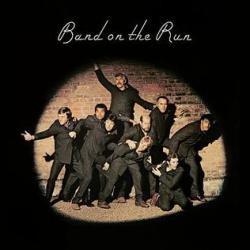
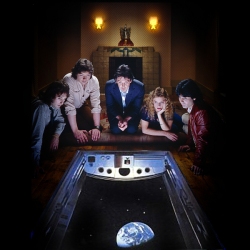
4. Band on the Run (1973)
An obvious classic in the Paul McCartney catalog, I don’t have much to say about it other than to this day I wonder why he thought it would be a good idea to travel to Lagos, Nigeria to record it. Things turned out rather badly for him while there, and he was fortunate to make it back to Jolly Old England to finish it. It’s a great record with many personal fond memories attached to it. However, these days I do tend to begin listening with track #3 (Bluebird) as Band on the Run and Jet have been played to death on the radio.
3. Back to the Egg (1979)
This is no typo, no misplacement in the ranking order. This is one of my favorite McCartney albums, period. The rockers on it are crunchier than any of his solo work prior to it, the pop as good as anything on the radio in 1979 (listen to Arrow Through Me and tell me Michael Jackson couldn’t have recorded it for his Off the Wall album that same year), the ballads and medleys as “Paul” as anything he’d done in years. And the Rockestra/So Glad toSee You Here recordings? I don’t know of too many supposed light weights who can recruit David Gilmour, Hank Marvin, Kenney Jones, John Bonham, Pete Townshend, John Paul Jones, Ronnie Lane, Gary Brooker and others to play all together on the same songs. I simply don’t understand why Paul has dismissed this album. Maybe it has to do with memories of his Japan bust and the end of Wings a year later. I was eight years old when Back to the Egg was released in 1979, and I’ve owned a copy ever since. A very unique, very cool album.
As mentioned above, I saw Denny Laine in a small venue recently. His drummer these days is his old buddy he recruited into the final Wings lineup, Steve Holley. I had an opportunity to chat with both of them, and when I shared my personal Back to the Egg testament with Holley, his response was, “Yeah, it’s got a few good bits on it.” I couldn’t tell if he was being humble or if he doesn’t like it, like his old boss.
I’m the guy getting his copy of Back to the Egg signed, not the Rock and Roll Hall of Famer next to him waving at the camera after graciously signing.
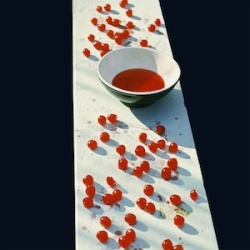
2. McCartney (1970)
Another childhood/basement album for me that I later copied onto cassette from my uncle’s LP (he of the Cheerios as representative of the 4000 holes in Blackburn/Lancashire) before finally purchasing my own proper copy so that McCartney could eke out a living. There are days when I want to hear something a little more interesting or complex, such as a King Crimson album, but if I haven’t yet tired of simple music like that on McCartney I doubt I ever will.
This is such docile music, so it’s hard to imagine any controversy surrounding it based solely upon listening to it in 2018. However, it definitely caused a stir when it was released in April of 1970 a few weeks ahead of Let it Be, much to the chagrin of the other three Beatles. Publicly, it was seen as Paul breaking up the Beatles. This of course was rubbish, since John had already announced to the group the previous September that he was leaving but withheld announcing it publicly for business reasons. But Paul’s inclusion of his self-interview in early pressings of his album was the first fully public shot across the bow in a feud which sadly would consume much of their lives in the ensuing years. And, as with his other early albums, music critics hated it and seemingly hated Paul too. Have a look at some of the reviews mentioned in the wiki article linked at the bottom for example.
The album sounds to me like Paul achieved what he wanted to artistically: a very stripped down recording while playing all the instruments himself. He wrote much of it at his farm in Scotland while in depressed exile after John announced to the group he was leaving. He then recorded it mostly at his home in London on what was by then rudimentary equipment for a major act. While the Wings Over America version of Maybe I’m Amazed became the hit, the home studio version here is just as good in its own way. There aren’t really any standouts among the rest of the tunes; it’s just fun to listen and sing along to (hence Sing Along Junk?).
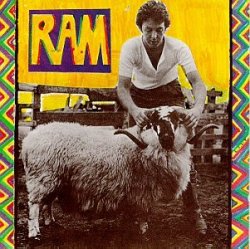
1. Ram (1971)
Ram and McCartney are 1-A and 1-B as far as I’m concerned. Ram, his second album, is another one with a domestic feel to it, though not as crudely recorded so his solo debut. I think of it as a happy record, loose with some good rockers. Upbeat as most of it might be, the back and forth pettiness between Paul and John was now in full view for fans on their albums, with audio and visual references on Ram that provoked John into writing How Do You Sleep for his Imagine album. The critics? Same story as his other work, but at least they’re finally catching up with their positive reassessment.
This concludes my long-winded McCartney list. I welcome any attempts to bring me around to albums of Paul’s I’ve dismissed from my top 15. Best bets are McCartney II, Pipes of Peace, Flowers in the Dirt, The Russia Album, Unplugged, Driving Rain, and New.










![IMG_0703[1010].jpg](https://introgroove.com/wp-content/uploads/2018/06/img_07031010.jpg?w=400&h=300)
 50th Music Anniversaries and Other Musings