December Odds ‘n Year Ends, Pt. 1

We’ve reached the end of the year.  Two years, actually, as pertains to this blog. December was a slower month for 50th album anniversaries, but I’ve also been sidetracked with an unrelated project, hence a few of these “leftovers” from the month really deserved their own dedicated posts which I was unable to make time for. 1969 will not wait – time does this for no one, as somebody once told us in a song – so let’s get to it.

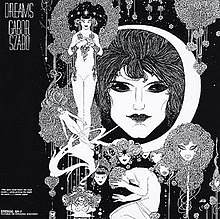
1968:  Gábor Szabó – Dreams

This might be my most random inclusion thus far, and I learned about it in a random manner: the YouTube sidebar of suggested albums. I had one album by the Hungarian guitarist but didn’t know much about him when I came across Dreams on YouTube a couple of years back, and it became an instant go-to album to listen to online at work. It’s a recording of instrumental originals and covers made in August of ’68 and released sometime after, and it includes my favorite session drummer, Jim Keltner. This record brings visions of a Motorola console stereo, paneled walls, shag carpet, highballs, and ashtrays on three-foot stands.
220px-Dreams_(Gábor_Szabó_album).jpg

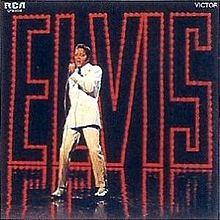
December:  Elvis – Elvis (The Comeback Special)

Yeah, I blew it with this one. It deserves a lot more attention than this paragraph will give it. It was recorded from Elvis’s TV special taped at NBC’s Burbank Studios in June of ’68. The musical format presented Presley in three different settings: production numbers featuring medleys of his material; an informal small band featuring full songs in front of a live audience; and the two original numbers with Presley backed by an orchestra in front of a live audience. The album subsequently peaked at #8 on the Billboard 200. It was certified Gold in July of ’69 and Platinum thirty years later.  I see and hear Elvis on this great recording, and I can’t help but wonder what could’ve been. (Hey Kim, tell me what could’ve been with Elvis post-1968! :))
220px-NBC-TV_Special.jpg

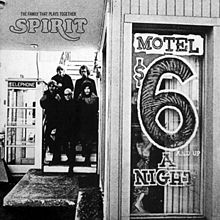
December:  Spirit – The Family That Plays Together

Spirit’s second album of 1968 (and second overall) saw the band reaching a little further into the prog world. The album spawned the single I Got a Line on You, another great track which has been elbowed from homogenized classic rock radio playlists in favor of more plays of Pour Some Sugar on Me. You SUCK, classic rock radio. You suck BAD!
220px-The_Family_That_Plays_Together_(Spirit_album_-_cover_art).jpg

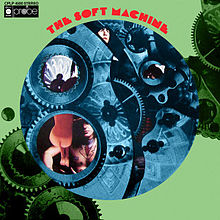
December:  Soft Machine – The Soft Machine

The debut album by Soft Machine was released this month in ’68. The Canterbury bands have been a slowly acquired taste for me, but it is happening. By their third album (aptly titled Third), it starts getting more accessible to me.
220px-The_Soft_Machine-album.jpg

12/1/68  The Monkees – Head (soundtrack)

I have this soundtrack and movie in a mental file labeled Revisit to Learn What the Hell THAT Was All About. The movie itself was released in November of ’68, and was co-written and produced by Jack Nicholson. It did a whopping $16,111 at the box office. This soundtrack was the Monkees’ sixth album, and the final one with Peter Tork until 1987. It features six proper songs mixed with film dialogue and incidental music. I have a vague memory of seeing at least part of this film around the age of fourteen in the mid-1980’s when the Monkees had become somewhat of a thing again thanks to syndicated reruns. It made no sense to me then, but glancing at the cast, there must be some value in it. A good period piece, at least? Please share any thoughts you may have about this. I need to understand.

Monkees-Head.jpg

12/10/68  Thomas Merton died

Merton was a famed American Trappist monk, writer, theologian, mystic, poet, social activist, and scholar who was a proponent of interfaith understanding.  He maintained a dialogue with such spiritual leaders as the Dali Lama and Tich Nhat Hanh, and wrote over 70 books, perhaps the most famous being The Seven Storey Mountain (1948). He passed at the age of 53 while attending a conference near Bangkok. He was found dead in his room, possibly the result of a heart issue, possibly from electric shock. There was no autopsy, and some have speculated he was assassinated by the CIA. The more I learn about this man, the more I wish we had voices like his in the West today.

merton-photo.jpg

-Stephen

https://en.wikipedia.org/wiki/Dreams_(G%C3%A1bor_Szab%C3%B3_album)

https://en.wikipedia.org/wiki/Elvis_(1968_album)

https://en.wikipedia.org/wiki/The_Family_That_Plays_Together

https://en.wikipedia.org/wiki/Head_(film)

https://en.wikipedia.org/wiki/Head_(The_Monkees_album)

https://en.wikipedia.org/wiki/Thomas_Merton
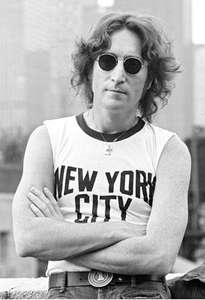


Memories of December 8, 1980


136501-004-345396A4.jpg

We’ve arrived once again at that sad anniversary for much of an entire generation, as well as for many music fans regardless of their age. This is not a date I have to look up or be reminded of. As far as sudden losses of individual well-known people go, this is the one of my life to this day, 38 years on. I was nine years old and in the fourth grade when John Lennon was murdered, and every year since then I experience a period of reflection about John and what his and the Beatles’ music means to me. It’s sad and celebratory at the same time. The odd thing about it to me is that the day of John’s death is on my mind more than his birthday, whereas with George Harrison I’m much more aware of his birthday. My only explanation is that it’s due to the shocking nature of John’s passing, which happened when I was at such a young age, yet a huge fan and highly impressionable already.

IMG_0853[1136].jpg

That fateful Monday evening, I watched the New England Patriots vs. the Miami Dolphins on Monday Night Football. My bed time on Mondays in the fall was extended to halftime of the games, in this case still not late enough for me to hear the announcement made by Howard Cosell. That’s probably a good thing.

The next morning I shuffled into the kitchen for a bowl of cereal before walking a block to school. Still waking up, I heard a reference to Lennon or the Beatles coming from the 12 inch black and white TV on our kitchen counter. I looked over to see footage of the Beatles stepping off a plane in Tokyo in 1966 wearing kimonos.  It took a minute for what was being reported to sink in. Stunned, I walked to school. It’s so vivid in my mind. I recall a couple of other kids who had heard. I wondered what the teachers thought.  I remember feeling very alone all day at school.

IMG_0855[1140].jpg

Two of my biggest music influences growing up, my oft-mentioned older brothers, were away at college, which was an adjustment for me. Fortunately, Christmas break was upon us and they returned for a few weeks shortly after the murder so I had them around to process things. I understand if all this sounds strange for a little guy like I was at the time, but this is how it happened for me. I remember Paul and me walking to downtown Fulton over Christmas break. I begged him to buy me one of the many magazines with John on the cover from a drugstore. He did so, but on the walk back home he explained to me how many of these magazines were just making money off of John’s death – probably my first real-life lesson about the sometimes dark side of capitalism. I remember him playing the Shaved Fish compilation LP over and over those few weeks down in the basement.

IMG_0856[1144].jpg

It’s so surreal to think about to this day: John had just released his fantastic comeback album, Double Fantasy (yes, despite having to hear Yoko’s tracks, it’s still a great album – and I don’t even mind Yoko’s songs on it anymore). As I learned years later, serious plans for a concert tour had been made. It was going to happen, and who knows how things would’ve gone down the road with a rejuvenated Lennon. An actual Beatles reunion, perhaps? We’ll never know. One thing is certain: Every year since then, I’ve felt a wistfulness during the month of December, but there is a sweetness to it. It’s a month I really dive back into John’s solo work, as I’m doing today. Some years are a little heavier than others, but not a year goes by without it to some extent.

2ea790fc6f6fe077f6f43a63f6c3718b

About fifteen years ago, Paul shared a real surprise with me. In December of 1980, he was a freshman in college in southwest Missouri. When he heard what had happened, he had the presence of mind in his dorm room to flip his stereo receiver to AM. On winter evenings in the Midwest, one can pick up radio stations from Chicago to Dallas, from Denver to New York City. He popped a blank cassette into his player, hit record, and started scrolling up and down the dial, where he found WABC in NYC coming in quite clearly at times, then fading out. They had a reporter on the scene at the Dakota and were playing Beatles music. He found other stations back east doing the same thing, all creepily fading in and out with their tributes. Down the line, he had converted that cassette to CD, and he gave me a copy which I usually end this date with.

In two years, John will have been gone as long as he was with us. If I’m still blogging then, I’ll probably have more to say.

-Stephen


December 6 – A Feast for Stones Fans

The Rolling Stones – Beggars Banquet

The Rolling Stones, rock ‘n’ roll’s original bad boys, did not – as it always seemed to me through more youthful eyes looking back at music history – suddenly come by their late-60’s/early-70’s reputation.  It was there from the start. I know, I know, there’s the axiom that from the day the Beatles donned those collarless suits that the Stones were the Dark Side to the Fabs’ loveable mop top Bright Side.

larger
David Bailey photo.

I always thought the clothing was really the only difference in terms of their attitudes until 1968. I was unaware until my late teens that they really did possess more of an edge, even if their music didn’t seem dark to me, at least no more so than the American blues songs which they revered actually were as opposed to the Chuck Berry and Carl Perkins influence on the Beatles. But a few earlier tracks notwithstanding, Beggars Banquet – released this day fifty years ago – is really when it started happening for the Rolling Stones to my ears and eyes.

BeggarsBanquetLP.jpg   Beggar_Banquet

My perception of the Stones in ’68 is that they couldn’t shed the paisley, dayglow ick of the previous year quickly enough. And it’s no coincidence that they made a no holds barred return to their blues roots to express it. They’d had a scary legal moment with Keith and Mick’s Redlands bust in ’67, and psychedelia never really fit their image (though I do like much of Their Satanic Majesties Request). In a way, with Beggars Banquet they had their own “get back” album before that other group, and it actually instigated a new Golden Age for the group instead of its demise.

RollingStones1.jpg

Other than the early tracks found on Hot Rocks plus a small handful of others, I’ve mostly been a fan of Stones music from 1966-onward. Beggars Banquet was the first of a string of Rolling Stones albums which is unparalleled in rock music history in my mind. Generally speaking, this new phase would be known as the “Mick Taylor years,” which lasted until his departure in ’74. But Taylor didn’t appear until the following release, while this one is the last hurrah for Brian Jones. Brian disintegrated right before the band’s and their fans’ eyes, and his lonely sounding slide guitar on No Expectations is a fitting musical representation of his personal slide.

hqdefault

I, and I think many other fans of the Stones, probably take for granted Brian Jones’s influence on this band. A great reminder of his contributions, as well as more thoughts on Beggars Banquet, can be found on fellow blogger hanspostcard’s ongoing series currently focused on the Stones’ earlier tracks.

Tracklist:

Side One:

  1. Sympathy for the Devil
  2. No Expectations
  3. Dear Doctor
  4. Parachute Woman
  5. Jigsaw Puzzle

Side Two:

  1. Street Fighting Man
  2. Prodigal Son
  3. Stray Cat Blues
  4. Factory Girl
  5. Salt of the Earth

-Stephen

https://en.wikipedia.org/wiki/Beggars_Banquet

December 6 – James Taylor’s Debut

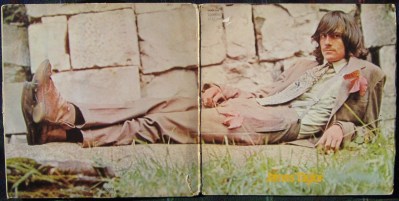
James Taylor – James Taylor

Debut albums by artists who go on to great acclaim are sometimes left left in the realm of the obscure, sometimes fairly, sometimes not.  Often they are clearly works of their era, with production that screams the year of its release. Elton John’s 1969 debut is one such album.  Another album featuring a late-60’s Baroque pop sound is James Taylor’s eponymous debut, released in the UK on this day fifty years ago (February 1969 in the US).  Taylor was twenty years old at the time.

1_c3rpDc56WpZg0tZUS_280w.gif

Taylor was championed by Peter Asher, who secured an audition for him with Paul McCartney – whose girlfriend at the time was Asher’s sister Jane – as the Beatles looked for serious contenders to sign to their fledgling Apple label. James Taylor would be the first release by a non-British musician on that label. It was recorded at London’s Trident Studios from July to August and produced by Asher, at the time Apple’s A&R man.

The two most well-known songs from the release are, of course, Carolina In My Mind and Something In the Way She Moves. The former was written about his homesickness for his North Carolina home, despite the “holy host of others,” i.e., the Beatles, standin’ around him. It was a difficult period for Taylor, who struggled with depression and addiction. A major door had opened for him, but he wasn’t able to take full advantage of it at the time.

James and Kate Taylor of Chapel Hill October 1968 Medium Web view.jpg

The album was received well by critics, but Apple didn’t promote it well. And due to his hospitalization to treat his addiction, live performances weren’t in the cards. He would continue to suffer setbacks, with a motorcycle accident the following year which broke both of his hands and feet. That recuperation time allowed him to write songs which appeared on his standout next album, Sweet Baby James. Due to licensing issues with Apple, Taylor had to re-record Something in the Way She Moves and Carolina In My Mind for his 1976 Greatest Hits album. While I like the originals a lot, the re-done versions serve his 70’s canon well.  They’re what I grew up with until discovering his studio releases down the line.

download.jpg

As for Something In the Way She Moves, which includes McCartney on bass and an uncredited George Harrison on backing vocals, it is the well-known seed of Harrison’s Something. Ironically, Taylor wanted to title the song I Feel Fine after the dominant chorus line, but it had already been used by the Fabs. Of Harrison’s nicking Taylor’s song for what would become one of the most famous and covered songs in pop history, Taylor said:

All music is borrowed from other music, so I completely let it pass. I raised an eyebrow here and there, but when people would make the presumption that I had stolen my song from his, I can’t sit still for that.

It turns out they shared more than that song in common, though this time I’m not referring to Pattie Boyd. Long, dark hair, acoustic guitars, and…BIG SWEATERS!

taylor-james-lead-505.jpg    download.jpg

Obvious standouts to me are the original versions of Carolina In My Mind and Something In the Way She Moves, but there’s plenty more here making it a good listen.  Something’s Wrong sounds like Taylor at his early-mid 1970’s best, but with a bit more strings.  Knocking ‘Round the Zoo is a great, upbeat and ironic track about his stay in a Massachusetts psychiatric hospital. It was originally recorded with his band the Flying Machine.

It’s easy to lump artists into loose categories, but think about the music scene when this record came out.  This album was different.  It portended the new singer/songwriter movement just around the corner. Jon Landau wrote in Rolling Stone at the time, “This album is the coolest breath of fresh air I’ve inhaled in a good long while. It knocks me out.” Discovering and revisiting it for myself many years later, I’d have to concur.

Tracklist:

Side One:

  1. Don’t Talk Now
  2. Something’s Wrong
  3. Knocking ‘Round the Zoo
  4. Sunshine Sunshine
  5. Taking It In
  6. Something in the Way She Moves

Side Two

  1. Carolina in My Mind
  2. Brighten Your Night With My Day
  3. Night Owl
  4. Rainy Day Man
  5. Circle Round the Sun
  6. Blues Is Just a Bad Dream

-Stephen

https://en.wikipedia.org/wiki/James_Taylor_(album)

https://www.udiscovermusic.com/stories/james-taylor-debut-album/

https://www.allmusic.com/album/james-taylor-mw0000264104


November 1968 – A Sneaky Classic by the Pretty Things

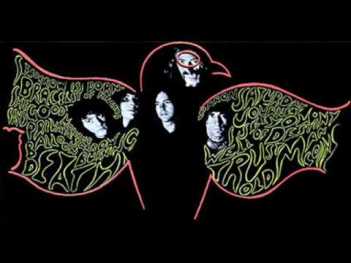
The Pretty Things – S.F. Sorrow

S.F. Sorrow is the fourth album by English group the Pretty Things, formed in 1963 and still going today. It is a concept album based on the life of main character Sebastian F. Sorrow, from birth to relationships, to war and the disillusionment of old age.  As I’ve learned, there’s also a debate as to whether or not it’s the first rock opera, which would’ve precluded the Who’s Tommy.  One major difference between this album and Tommy and Pink Floyd’s The Wall is that the main narrative is shared through small paragraphs printed between the song lyrics in the liner notes, as opposed to within the songs themselves.

prettythings.jpg

“Sneaky,” of course, is relative to one’s own journey as a music fan. For me, S.F. Sorrow is perhaps the best example so far this year of the joy of discovering music I was previously unfamiliar with as a result of this blog.  I knew the song Baron Saturday, and had read maybe a blurb or three about this album, released in November 1968 (the same week, actually, as The White Album and The Kinks Are the Village Green Preservation Society, but my head would’ve exploded had I tried to write about all three that week), but didn’t pick up a copy and dive in until earlier this year. I’m glad I did, and if you aren’t familiar with it and like the musical vibe of 1968, I recommend giving it a spin (or click, as it were).  It is, as Alexis Petridis wrote in the Guardian, “one of the few consistently brilliant British psych albums…”

hqdefault.jpg

Tracklist:

Side One:

  1. S.F. Sorrow is Born
  2. Bracelets of Fingers
  3. She Says Good Morning
  4. Private Sorrow
  5. Balloon Burning
  6. Death

Side Two:

  1. Baron Saturday
  2. The Journey
  3. I See You
  4. Well of Destiny
  5. Trust
  6. Old Man Going
  7. Loneliest Person

-Stephen

https://en.wikipedia.org/wiki/S.F._Sorrow

https://en.wikipedia.org/wiki/Pretty_Things

https://www.theguardian.com/music/2010/may/06/pretty-things-sf-sorrow-cd-review

https://www.allmusic.com/album/sf-sorrow-mw0000308955

November ’68 Odds ‘n Ends

We’ve come to the end of November, which means that shameless (desperate?) retailers in the US have been shoving Christmas down our throats for the past five weeks.  It’s been a good month, though.  Fall is my favorite season, and this month we had a few big 50th album anniversaries as well as some major reissues.  Let’s tidy up those loose ends from November 1968 before stores begin stocking those heart-shaped boxes of chocolate for February.

November:  Tommy Roe – Single:  Dizzy

This chunk of bubblegum was released in the US in November, but not until January ’69 in Australia and March ’69 in the UK.  With instrumental backing by the Wrecking Crew, it was a major hit on both sides of the Atlantic.  It reached #1 on the US Billboard Hot 100 for four weeks in March of ’69, #1 in Canada in March of ’69, and #1 in the UK in June of ’69.

November:  Tommy James and the Shondells – Single:  Crimson and Clover

Crimson and Clover spent sixteen weeks on the US charts where it reached #1 in February ’69.  It was the group’s most successful single, and it’s a classic track I’ve yet to tire of.

November:  Sly and the Family Stone – Single:  Everyday People

Everyday People was the band’s first single to reach #1 on both the Soul chart and the US Billboard Hot 100.  It maintained the top spot on the Hot 100 for four weeks from February to March of 1969.  Here’s a cool live clip of them performing the song.  Where have you gone, Sly?

November:  Nico – The Marble Index

The Marble Index was German artist Nico’s second solo album, and it was produced by John Cale.  Though mostly ignored upon its release, it became a highly influential avant-garde album.  I started to write a proper stand-alone post on it, but I just haven’t absorbed it enough.  I own and like her previous record, Chelsea Girl, but this one is a bit stark for me despite the amount of depressing music in my collection.  It is a very interesting listen, however, and I’ll probably come back to it down the road.

The_Marble_Index_by_Nico.png

11/1/68:  The Turtles – The Turtles Present the Battle of the Bands

The Turtles’ fourth release was a concept album with the band pretending to be a different group on each track, and apparently imitating the worst groomsmen photo ever on the cover.  It peaked at #128 on the Billboard Pop Albums chart, but singles Elenore and You Showed Me both reached #6 on the singles chart.

download.jpg

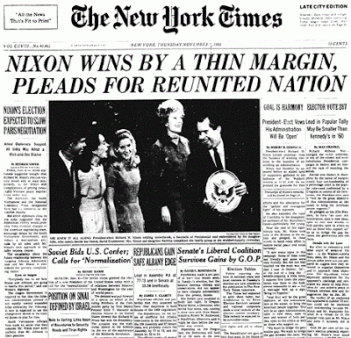
11/5/68:  Nixon wins

I wonder if someday things will improve to the point where they’re only that bad again.

1ffa2433b072d1b5025e17e3c768d02a.gif

11/11/68:  John & Yoko – Unfinished Music No. 1:  Two Virgins 

The title of this album is the answer to the question, “What to you get when an insanely talented and arrogant songwriter/musician gets turned on to an avant-garde artist and heroin at the same time?”  I’m not gonna lie, though – as a child, I had the corner of the page of my brother’s copy of Nicholas Schaffner’s The Beatles Forever with this photo on it bent for quick access to the nekid lady.  Pasty junkies.  Boy howdy.

images.jpg

11/14/68:  National Turn In Your Draft Card Day

07vietnamWeb-1507322848509-master768.jpg

11/22/68:  Fleetwood Mack – Single:  Albatross

Inspired by Santo and Johnny’s Sleep Walk (1959), this Peter Green-penned instrumental was Fleetwood Mac’s only #1 single in the UK.  They apparently really dug it in the Netherlands, where it also reached the top spot.  It climbed to #4 in the US.

11/22/68:  Canned Heat – Single:  Going Up the Country

The second of Alan Wilson’s big hits for the band, Going Up the Country remains a Counterculture anthem.  Lately, we’ve been repeatedly entertained by a clip of it in a car commercial.  I think that’s what it’s selling, anyway.  I make my wife laugh when I try to sing it.  I sound like I’m imitating Kermit the Frog as a member of Canned Heat.  Or something like that.

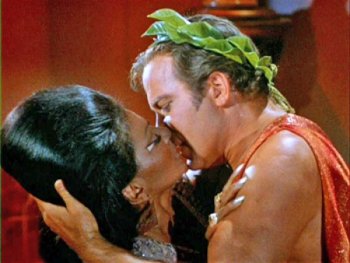
11/22/68:  Star Trek – the first interracial kiss on television

Awe yyyyeah…

startrek-interracial-kiss.jpg

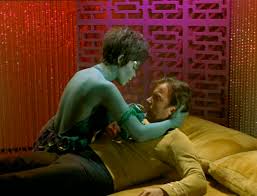
Have you ever heard someone defend their degree of open-mindedness by saying something along the lines of “I don’t care what the color of someone’s skin is – black, brown, green, whatever…”?  For Captain Kirk, this was the literal truth.

download.jpg

Even an Indigenous Spacewoman! (O.k., a white woman wearing dark makeup, pretending to be an Indigenous Spacewoman.)

mihramanee-thumb-400x287.jpg

11/26/68:  Cream bids farewell at the Royal Albert Hall

Cream-Farewell-Concert-02-16x9-1.jpg

-Stephen

https://en.wikipedia.org/wiki/Dizzy_(Tommy_Roe_song)

https://en.wikipedia.org/wiki/Crimson_and_Clover

https://en.wikipedia.org/wiki/Everyday_People

https://en.wikipedia.org/wiki/The_Marble_Index

https://en.wikipedia.org/wiki/The_Turtles_Present_the_Battle_of_the_Bands

https://en.wikipedia.org/wiki/Unfinished_Music_No._1:_Two_Virgins

https://en.wikipedia.org/wiki/Albatross_(instrumental)

https://en.wikipedia.org/wiki/Going_Up_the_Country


November 29 – A Masterpiece by Van the Man

Astral Weeks,” the record that taught me to trust beauty and to believe in the divine, courtesy of my local FM station. – Bruce Springsteen, from his autobiography, Born to Run (p.196).

Van Morrison – Astral Weeks

Today we give a nod, or perhaps a kowtow, to an album many consider to be not only Van Morrison’s best, but one of the best of all time by anyone. Van the Man’s second solo album, Astral Weeks, was recorded during September and October of ’68, and released 50 years ago today. It’s another example of how recording stream of consciousness songs relatively quickly and getting it out there to the public can sometimes achieve the best lasting results over the long haul, even without the boost of a hit single.

van-morrison-astral-weeks_back_

Astral Weeks came about during a period of uncertainty for him, as he was in the throes of legal wrangling with his previous label which had prevented him from recording and even performing live for a period of time. Eventually, in early ’68, Van began playing acoustic duo sets in Cambridge, MA with an upright bassist, then as a trio with jazz flautist John Payne, who would end up playing on the album. During this time, Morrison discovered he enjoyed the greater vocal freedom of the acoustic music. Warner Bros. signed him under the assumption he’d continue playing the rock and R&B music he was known for (i.e., Brown Eyed Girl), but when executives heard the new material – longer-form compositions laced with folk, jazz, blues, and classical –  there was no stopping his new direction.

The live studio tracks were recorded with Morrison on acoustic guitar in a separate booth, with upright bass, lead acoustic guitar, vibes, flute, and drums played together. The group consisted of true jazz cats, despite the fact that Morrison didn’t have much of a jazz background. Bassist Richard Davis had played with Eric Dolphy, guitarist Jay Berliner with Charles Mingus, percussionist Warren Smith, Jr. had worked with Max Roach, and the legendary drummer Connie Kay was a contemporary member of the Modern Jazz Quartet.

17-e1520281017843-1000x754.jpg

Warner Bros. didn’t bother promoting the album, and it didn’t garner much attention upon its release. Contemporary reviews were hit and miss: In NME, Nick Logan regarded it as a pale imitation of the guitarist José Feliciano’s Feliciano! album from the same year, while Greil Marcus reviewed the album positively in Rolling Stone, saying that Morrison’s lyrics were thoughtful and deeply intellectual, while calling Astral Weeks a “unique and timeless” record. Rolling Stone later named it the album of the year. 

As with the contemporary release by the Kinks, Astral Weeks is another classic album I was not exposed to at an early age, though I’ve owned and loved it for about twenty years longer than The Kinks Are the Village Green Preservation Society. Nope, the honor for introducing me to this masterpiece goes to my first wife in 1993.  Two amazing sons and this record – thank you very much! Maybe it’s lazy of me to say I love every song on the album, but it’s true. It is a stream of consciousness work, so in a way it is one long song. Detractors use that against it, of course, but positive critics and fans like me hear the beauty of each song.

merlin_136125162_6b77cf1f-4b4e-4424-b955-87ceeaccfee3-articleLarge.jpg

The bass lines, acoustic guitar, flute, vibes and strings on the title track set the tone for the atmosphere of the entire album. I was shocked to hear his Sweet Thing for the first time and discover it wasn’t a Waterboys original (just keepin’ it real here, folks). There’s a lot of pop music from the late 60’s with a big brass sound that I find a bit cheesy, but when it’s done by the likes of Van Morrison on The Way Young Lovers Do (or the Doors on Touch Me), it just works. And Larry Fallon’s harpsichord and string arrangements on Cyprus Avenue are sublime. Above all else, it’s the lyrics and the mood in which Van Morrison delivers them that makes Astral Weeks the classic that it is.

Tracklist:

Side One:

  1. Astral Weeks
  2. Beside You
  3. Sweet Thing
  4. Cyprus Avenue

Side Two:

  1. The Way Young Lovers Do
  2. Madame George
  3. Ballerina
  4. Slim Slow Slider

-Stephen

https://en.wikipedia.org/wiki/Astral_Weeks

https://www.rollingstone.com/music/music-features/van-morrison-astral-weeks-warren-smith-interview-760209/

https://www.theatlantic.com/entertainment/archive/2018/04/behind-the-masterpiece-van-morrisons-astral-weeks-at-50/556472/

https://en.wikipedia.org/wiki/Born_to_Run_(autobiography)


November 22 – Thoughts on the White Album

The Beatles – The Beatles (The White Album)

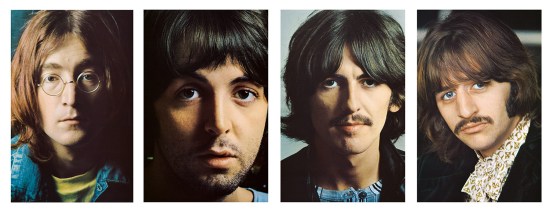
We’ve finally arrived at the Big Anniversary of the Beatles’ sprawling, self-titled 1968 double album.  It’s the first Beatles album to be covered in this unabashed fanboy’s blog which I started at the beginning of the year.  Many of us have already greedily consumed the 50th anniversary release of the album, complete with the Esher Demos, session goodies, the famous individual portraits and lyrics poster, and a hardcover book.  Some have already published nice reviews in the blogosphere and elsewhere.  Somehow today feels a bit anticlimactic, though I’ll probably give it a spin before stuffing my face with turkey later in the day.

4Images_Colour.jpg

It’s not that the anniversary hasn’t re-sparked my enthusiasm for the White Album, released this day in 1968.  It has.  It isn’t that I’m not thrilled with everything to do with the deluxe edition which I’ve been poring over these past couple of weeks.  I am.  But if you’ll excuse a bit of hyperbole, when I think about it, this entire year has been about the White Album as pertains to my perception of the Beatles, the music scene in general, and to some extent the year 1968 itself.

6467e546ed700bef2cece9f59c077905.jpg
The Mad Day Out.  (Stephen Goldblatt photo)

Looking back over the first eleven months of my blog, this record looms throughout.  The seed is probably found as far back as August of 1967 with the death of Brian Epstein.  The Magical Mystery Tour project in the immediate aftermath of his passing may have been their first attempt to carry on managing themselves, but with the White Album we see the fissures within the group and their individual future directions in full light.  Many of these songs were written in February during the Rishikesh retreat, and most of the band’s activities the rest of the year from that trip-onward led to this album or were an offshoot of it.

316GrhxGleL._SY355_.jpg

We had the single, Lady Madonna/The Inner Light, released in March.  In May, the establishment of Apple Corps, Ltd. was announced.  This was to be the band’s business and musical apparatus, as well as a vehicle for them as individual artists – and isn’t that really what the White Album is, some group work but a lot of individual effort?  May was also the month sessions for the album began in earnest.  With the release of the stunning Hey Jude/Revolution single in August, they showed the world that the Beatles were still the Beatles despite the turmoil they always seemed to find themselves in.  Although those tracks were not included on the album, they are White Album session tracks.

beatles-thames-i-medium.jpeg
The Mad Day Out.  (Don McCullin photo)

Group and individual burnout is evident on this album.  Even Ringo walked out during his well-documented “I thought it was YOU three?” moment.  John’s behavior became predictably unpredictable, and the sad state of affairs (no pun intended, but yeah) surrounding his marriage to Cynthia finally came to an end as he officially transitioned to Yoko.  They immediately created their first vinyl baby, Unfinished Music No. 1:  Two Virgins, under the Apple umbrella, and she would be a permanent fixture within the group dynamic from that point on.

images.jpg
Ringo’s personal copy of the White Album, edition numero uno, sold at auction in 2015 for $790,000.

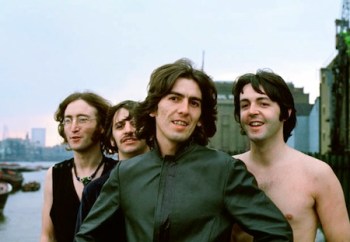
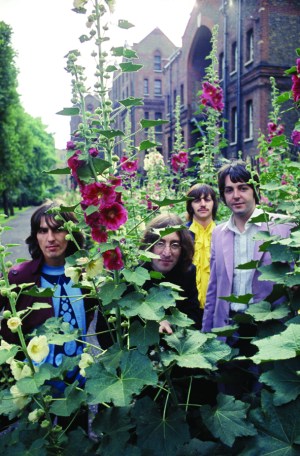
George finally found his own creative outlet with Wonderwall Music (the inaugural release on the Apple label), the score to the Wonderwall movie which included Indian musicians who also performed on the Inner Light, as well as his buddy Eric Clapton, who participated on both the movie score and the White Album.  All of these factors – from India to Apple, from recording the demos at George’s house in Esher to the singles releases, from the “Mad Day Out” photo session in July to the individual side projects and contentious group studio sessions – all of them are woven into the double album we’re celebrating today, and all were played out over the course of the year leading up to its release.

A-225-07compressed.jpg

Some random personal thoughts about the record:

  • In 2018, if there’s any one member of the band I associate with the album more than the others, it’s George.  I freely admit this is due in large part to Hari gradually becoming my “favorite” Beatle over the years.  The White Album was perhaps his final chance to exert serious influence on the direction the Beatles would take, both musically and spiritually.  His creative input could no longer be ignored by John and Paul if he was going to remain in the group long-term.  It may not have gone as he had hoped, but his spirit is everywhere in these songs, including the ones which didn’t make the final cut.  As he mentioned in interviews, he tried to enter the studio the following January for the Get Back sessions with a positive mindset, but it was too late.  The Beatles were, for all intents and purposes, done, despite there being two albums yet to record.  Amazingly to me, George was only 25 when the White Album was released.

tumblr_og6gv2ArQL1sk9evxo1_500.png

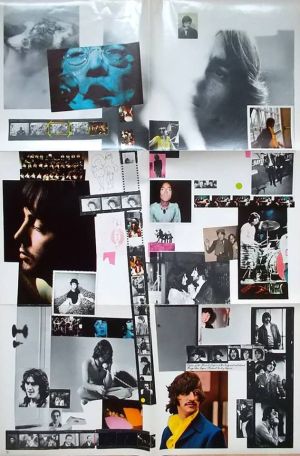
  • As a child, even though I always loved most of its tracks, the White Album kind of creeped me out.  First, the “Paul is dead ‘clues'” in the grooves and album artwork were both fascinating and, to 9 or 10-year-old me, frightening.  My brother Paul would spin the vinyl backwards for me to hear voices supposedly saying “Paul is a dead man.  Miss him, miss him,” and “Turn me on, dead man.”  In that dimly lit basement I was glad not to be alone when listening.  To this day, Revolution 9 still gives me the heebie jeebies, and Good Night which follows sounds more funereal than lullaby because of it. Then there was the unfortunate, unintended  connection to the Manson murders. Even that shoddy collage of photos which makes up the poster insert was at best confusing to me.  But it’s So White Album, no?

c182ef7cfe8aec7b6e9e4e75c214fe71.jpg

  • Their individual appearances fascinated me, as they did many others.  Overnight they transformed from the psychedelic, flower power Sgt. Pepper look to their disheveled appearances of ’68.  John looked tired and bitter, and it wasn’t until my teen years that I understood why that was.

s-l300.jpg

  • Yoko.  Yoko, Yoko, Yoko.  Yoko Ono…                                                                            Because I was born the year after the Beatles broke up, as a younger person I always accepted everything I saw, heard, and read as just part of the narrative of the group.  But wow, what an unforeseen shock her emergence in all their lives must have been!  Whether he’s simply taking the high road or being sincere, Paul made peace with Yoko in recent years as well as declared his perhaps overdue respect for John for making his stand with her.  I believe Paul is sincere.  It’s past time to remove those “I still blame Yoko” bumper stickers, folks.  There were plenty of other factors contributing to the split.

57ac82db1700002d00d1e20d.jpeg

  • And lastly, as for the great debate about whether or not it should’ve been condensed down to a single LP, my answer is a resounding HELL NO!  It’s great just the way it is, but if anything could’ve improved it, it wouldn’t have been making it a single album or two separate releases (the White and Whiter Album as Ringo quipped in the Anthology).  In my mind, this could easily have been a triple album.  I think it’s a crime that George’s Sour Milk Sea wasn’t properly recorded and included (nothing against Jackie Lomax’s version).  The same goes for Not Guilty.  Sprinkle those tracks, plus Hey JudeRevolution, and Circles throughout Sides 1-5, and make Side 6 all about John and Yoko’s madness with What’s the New Mary Jane and Revolution 9, and presto!, The Grand and Mega-Blindingly White Album!  It was all free-form craziness anyway, and we’d be celebrating it the same as we are today.  That still would’ve left Lady Madonna/The Inner Light as the non-album single between Magical Mystery Tour and the White Album.

But I’ll defer to Sir Paul for the final word on the matter:

Tracklist:

Side One:

  1. Back in the U.S.S.R.
  2. Dear Prudence
  3. Glass Onion
  4. Ob-La-Di, Ob-La-Da
  5. Wild Honey Pie
  6. The Continuing Story of Bungalow Bill
  7. While My Guitar Gently Weeps
  8. Happiness is a Warm Gun

Side Two:

  1. Martha My Dear
  2. I’m So Tired
  3. Blackbird
  4. Piggies
  5. Rocky Raccoon
  6. Don’t Pass Me By
  7. Why Don’t We Do It in the Road?
  8. I Will
  9. Julia

Side Three:

  1. Birthday
  2. Yer Blues
  3. Mother Nature’s Son
  4. Everybody’s Got Something to Hide (Except Me and My Monkey)
  5. Sexie Sadie
  6. Helter Skelter
  7. Long, Long, Long

Side Four:

  1. Revolution 1
  2. Honey Pie
  3. Savoy Truffle
  4. Cry Baby Cry
  5. Revolution 9
  6. Good Night

-Stephen

https://www.rollingstone.com/music/music-news/ringo-starrs-personal-white-album-sells-for-world-record-790000-62410/


November 22 – Hey! the Kinks Released an Album on 11/22/68, Too!

The Kinks – The Kinks Are the Village Green Preservation Society

In an alternate universe, this would be my highly anticipated album anniversary for the month, and one of the most important of the year. But it’s not even the biggest anniversary today! That’s not intended as an insult to the Kinks or to The Kinks Are the Village Green Preservation Society, released 50 years ago today (Jan. ’69 in the US). It’s a fantastic record, but it’s also fitting in an unfair kind of way that it was released the same day as the Beatles’ White Album in terms of the Kinks’ station on the British Invasion ladder, and that of the 1960’s rock scene in general.

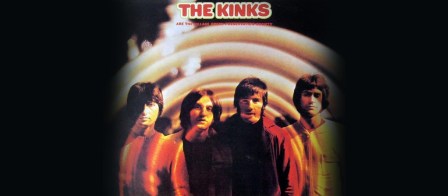
the-kings-1140x500.jpg

Sure, there are fans who can honestly say they’ve loved this album since its release and have owned it on vinyl, eight track, cassette, CD, and now on vinyl once again, and that the releases by the Beatles and the Stones don’t hold a candle to it. But in terms of sheer renown, this album is not on par with the White Album or Beggars Banquet, and that’s a shame. The Kinks Are the Village Green Preservation Society is really, really good. I wasn’t exposed to this album until five or six years ago after reading about it on my favorite music forum, and all I can do is plead ignorance for not having learned, loved, and lived it all along. In the small, flyover burg where I grew up, the only Kinks albums people owned or liked were the hits, and songs from Village Green most certainly weren’t heard on the radio.

the-kinks-press-photo.jpg
L-R: Pete Quaife, Ray Davies, Dave Davies, and Mick Avory

Village Green was the band’s 6th studio album, and the last to feature the original quartet of lead vocalist and multi-instrumentalist Ray Davies, lead guitarist Dave Davies, bassist Pete Quaife, and drummer Mick Avory. Nicky Hopkins contributed work on keyboards and Mellotron (he claimed to have played 70% of the keyboards, but that Davies took most of the credit). The album was produced by Ray Davies. Recorded over a period of two years, it’s a very English rock album featuring themes of childhood nostalgia and character sketches of old friends, a hoodlum, a prostitute, and steam locomotives of British Railways. It is, as AllMusic’s Stephen Thomas Erlewine writes, a lament “on the passing of old-fashioned English traditions.”

51+Sh6LFuZL.jpg

The album is considered one of the best and most influential of the Kinks’ albums, yet it was a failure upon release and didn’t chart. But by 2003, Rolling Stone named it 255 on its top 500 albums of all time, and as of this month it was finally certified gold in the UK. Village Green is their best-selling album. Critics have loved it all along.

Relative to how fast rock music was evolving by ’68, this album seemed out-of-place from the day of its release. Perhaps that’s part of the reason it wasn’t embraced from the beginning. It’s a distinctly Kinks and English album, and one that doesn’t really fit into a loose 1968 musical aesthetic. That it is timeless would be another way of saying it. Mick Avory’s snare pops and the guitars have heavy moments like mid-60’s Kinks, but with an overall slightly updated and even gentle sound.

I like every song on this album, but some of my favorites are rockers Do You Remember Walter?, Picture Book, Big Sky, the whimsical and kind of trippy Sitting by the Riverside, the cool rhythm track of Animal Farm, and the driving tempo of the acoustic-heavy People Take Pictures of Each Other. A five-disc 50th anniversary edition was released this past month, and I’ve texted Santa that I want it.

Tracklist:

Side One:

  1. The Village Green Preservation Society
  2. Do You Remember Walter?
  3. Picture Book
  4. Johnny Thunder
  5. Last of the Steam-Powered Trains
  6. Big Sky
  7. Sitting by the Riverside

Side Two:

  1. Animal Farm
  2. Village Green
  3. Starstruck
  4. Phenomenal Cat
  5. All of My Friends Were There
  6. Wicked Annabella
  7. Monica
  8. People Take Pictures of Each Other

-Stephen

https://en.wikipedia.org/wiki/The_Kinks_Are_the_Village_Green_Preservation_Society

https://www.allmusic.com/album/the-village-green-preservation-society-mw0000068713

https://www.spin.com/2018/11/the-kinks-village-green-preservation-society-gold-record/

http://ultimateclassicrock.com/kinks-village-green-50th-album-review/

November ’68 – The Nice and the Shape of Prog to Come

The Nice – Ars Longa Vita Brevis       

Progressive rock, or prog – how to discuss it?  It’s a sub-genre most folks seem to have their minds made up about one way or the other.  Preconceived notions such as “It’s music only musicians like,” or “It’s music only dudes like,” are common.  There’s probably a lot of truth in that, but why?  Women enjoy rock, jazz, and classical, so why not prog?  Granted, as one who was not introduced to this music at an early age, I’ve had to dive in head-first with a few albums on which I had no idea what I was listening to.  But it’s paying off.  I’ve even reached a point where I’m exploring more current prog (i.e., from the last 20 years), some of which, as I’ve discovered, my wife has owned and liked all along.  Funny how that works.  Back to the topic at hand…

Fear_of_a_blank_planet.jpg    Scenes_From_a_Memory.jpg

The Nice formed in the UK in 1967 and soon released their first LP, The Thoughts of Emerlist Davjack.  Their style, as was that of prog in general, was an outgrowth of the psychedelic genre with more classical and jazz elements.  On the heels of a couple of followup singles, including their controversial take on Leonard Bernstein’s America which Emerson described as an “instrumental protest song,” they released their second album, Ars Longa Vita Brevis, 50 years ago this month.  The title is an aphorism of Hippocrates’ which translates as “Art is long, life is short.”

The band entered into these sessions as a quartet consisting keyboard madman Keith Emerson, bassist Lee Jackson (who also handled most of the vocals), Brian Davison on drums, and guitarist David O’List.  Tension between O’List and the rest of the band led to his dismissal or to his quitting during the sessions, depending upon who is asked.  O’List would go on to join the first incarnation of Roxy Music.  Steve Howe was auditioned to replace him, but when he declined their offer to join, they decided to move forward as a trio.

hqdefault
Clockwise from left:  Keith Emerson, David O’List, Lee Jackson, and Brian Davison.  O’List departed the group during recording.

On this album, which AllMusic’s Bruce Eder considers groundbreaking, we hear and glimpse what Keith Emerson would become famous for:  his flair for the dramatic.  The music itself was dramatic, as was the way Emerson would sometimes violently play his Hammond organ.  On this disc, there’s a little something for every prog fan, with classically themed shorter songs on the first side, and the Ars Longa Vita Brevis suite on the flip side.

The record has an exuberant beginning on Daddy Where Did I Come From?, which is dominated by Keith’s keyboards and a Davison’s drums.  It’s heavy psych-rock that rolls into the jazzy second song, Little Arabella, which is almost on the cheesy side but which works in the context of the album.  The band lets loose on the next track, Happy Freuds.  As Dave Swanson notes on ultimateclassicrock.com, Syd Barrett’s influence is quite evident here, and that the following song, the band’s take on Sibelius’ Karelia Suite (1893), was the seed of what would ultimately be Emerson, Lake & Palmer’s calling card.

gettyimages-84901613-612x612.jpg
And then there were three.  (Photo by Jan Persson/Redferns)

Side two is, to me, an over the top affair consisting of the nearly 20 minute Ars Longa Vita Brevis, complete with a prelude, four movements, and coda.  Perhaps it’s simply the drum solo which squelches my interest.  I do find the “3rd Movement,” Acceptance (Brandenburger), and “4th Movement,” Denial, to be rather enjoyable.

Knh8MVDGAi4sjjAh7tkJth-320-80.jpg

Ars Longa Vita Brevis, and prog in general, is not everyone’s cup of tea.  The core of what is liked and disliked about the genre can be found on this album:  It’s teeming with Emerson’s virtuosity and creativity on keyboards in a manner not heard before.  It can also be heard as bloated and pretentious, which, to me, isn’t always a bad thing.  With this album, and later with ELP, I find the shorter songs to be more interesting as they were able to pack a lot into four minutes.  It’s not that I don’t like any longer works, but they tend to be the ones by King Crimson and Yes.  Either way, along with early Pink Floyd, this is what I imagine underground London sounded like.  If you aren’t familiar with it, give it a listen and let me know what you think.

Tracklist:

Side One:

  1. Daddy, Where Did I Come From?
  2. Little Arabella
  3. Happy Freuds
  4. Intermezzo from the Karelia Suite
  5. Don Edito el Gruva

Side Two:

  1. Ars Longa Vita Brevis
  • Prelude
  • 1st Movement:  Awakening
  • 2nd Movement:  Realisation
  • 3rd Movement:  Acceptance “Brandenburger”
  • 4th Movement:  Denial
  • Coda:  Extension to the Big Note

Here is the aforementioned second single for the Nice, America.  When they played it at the Royal Albert Hall, Emerson set an American flag on fire, earning the band a permanent ban from the venue.

-Stephen

https://en.wikipedia.org/wiki/Ars_Longa_Vita_Brevis_(album)

https://en.wikipedia.org/wiki/The_Nice

http://ultimateclassicrock.com/the-nice-ars-longa-vita-brevis/

https://www.allmusic.com/album/ars-longa-vita-brevis-mw0000198046