July 17 – Deep Purple Debuts with a Shot of Vitamin C3

Deep Purple – Shades of Deep Purple

Deep Purple’s debut 50 years ago today was part of a significant shift in rock music toward sub-genres including hard rock, metal, and prog.  Shades of Deep Purple is all of that, and since we’re still in the middle of 1968, it has a psychedelic feel as well.  And, it’s drenched in Jon Lord’s trademark Hammond C3 organ with that beautiful distorted sound.

dp684.jpg
L-R: Rod Evans, Jon Lord, Ritchie Blackmore, Nick Simper, Ian Paice

The album was released on the Tetragrammaton label in the US, and on Parlophone in the UK in September.  The debut was not received well in the UK.  With the likes of Led Zeppelin and Black Sabbath yet to appear, Deep Purple were considered rather out-of-place in the UK music scene.  They were, as one British review claimed, the “poor man’s Vanilla Fudge,” i.e., too American sounding.  Deep Purple were indeed unabashed Vanilla Fudge fans.

However, as these things often go, it came down in large part to promotion.  And in the US (where they were referred to as “the English Vanilla Fudge,” and it was a compliment), the decision to release Hush as a single instead of their slowed-down, sloggy version of the Beatles’ Help, turned out to be a stroke of genius (or luck).  The song peaked at #4 on the Billboard Hot 100 and was a solid catalyst for the album, which reached #24 on the album chart.
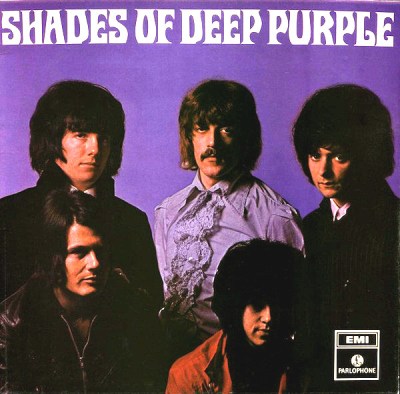
R-3609992-1513988824-7604.jpeg.jpg
UK album cover

Four of the eight songs are originals, plus the aforementioned Help, Joe South’s Hush, Skip James’s I’m So Glad (which was recorded by Cream the year before), and the oft-covered Hey Joe by Billy Roberts.

Modern critiques have been mostly positive on both sides of the Atlantic.  Bruce Eder writes in AllMusic:

Ritchie Blackmore never sounded less at ease as a guitarist than he does on this album, and the sound mix doesn’t exactly favor the heavier side of his playing, but the rhythm section of Nick Simper and Ian Paice rumble forward, and Jon Lord’s organ flourishes, weaving classical riffs, and unexpected arabesques into “I’m So Glad,” which sounds rather majestic here…

Also, none other than Rick Wakeman said that Shades of Deep Purple is his favorite British album of all time.  And that’s good enough for me.

Tracklist:

Side One:

  1. And the Address
  2. Hush
  3. One More Rainy Day
  4. Prelude: Happiness/I’m So Glad

Side Two:

  1. Mandrake Root
  2. Help!
  3. Love Help Me
  4. Hey Joe

https://en.wikipedia.org/wiki/Shades_of_Deep_Purple

https://www.allmusic.com/album/shades-of-deep-purple-mw0000651951

https://en.wikipedia.org/wiki/Jon_Lord

-Stephen
July 3 – The Doors Roll On

The Doors – Waiting for the Sun

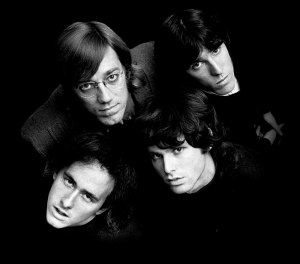
The Doors released their third album on this day in 1968.  Given the success of their first two releases, The Doors and Strange Days (both from ’67), expectations were high among fans and critics.  While received fairly well, Waiting for the Sun was still considered a bit of a let down after the band had blasted onto the scene the year before.

The-Doors-resize-1.jpg

Due to the amount of time the Doors were spending on the road and doing TV appearances, they had a relative shortage of material to record.  Some songs on the album were the last of the leftovers from Jim Morrison’s compositions which landed on the first two releases, and they intended to compensate for the dearth of new material with a long piece titled The Celebration of the Lizard.  That track was a collection of song fragments with Morrison’s lyrics, but the band failed to achieve a satisfactory recording so it was left off the album.  Oddly, the solid title track was also left off and later used on the 1970 Morrison Hotel record.

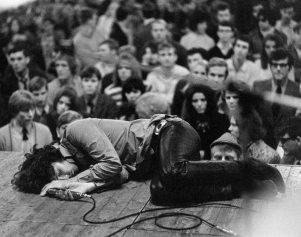
Jim-Morrison-laying-on-the-stage-during-a-1968-concert-for-The-Doors..jpg
Jim being Jim.

The result was a good but not great album, including the band’s second #1, Hello, I Love You.  To me, it’s an enjoyable listen all the way through without any clunkers, although the standouts are obvious.  Robby Krieger’s flamenco and electric guitars on Spanish Caravan are among my favorite sounds on the album, and Morrison’s lyrics are worth another reading 50 years on.  While songs such as Love Street lighten the vibe, the overall tone is even a little darker than on the first two albums (tracks such as The End from their debut notwithstanding), and Jim’s behavior was becoming more unpredictable on stage and off.  The Doors were very active at this point, and we’ll hear from them again in these pages shortly.

Tracklist:

Side One:

  1. Hello, I Love You
  2. Love Street
  3. Not to Touch the Earth
  4. Summer’s Almost Gone
  5. Wintertime Love
  6. The Unknown Soldier

Side Two:

  1. Spanish Caravan
  2. My Wild Love
  3. We Could Be So Good Together
  4. Yes, the River Knows
  5. Five to One

https://en.wikipedia.org/wiki/Waiting_for_the_Sun

-Stephen

July 1 – The Band Step Out

The Band – Music from Big Pink

Now we’re talkin’!  Fifty years ago today, the Band made their debut with Music from Big Pink, an album that continues to influence artists and earn new fans.  In the heart of the psychedelic era, these five extremely versatile musicians were the rock antidote to the dayglow paisley scene.  Four of the five members were Canadian, but they created a uniquely American sound which is generally referred to today as Americana.  Nobody sounded or looked like them.

ZZZ037996-FP
L-R: Rick Danko, Levon Helm, Richard Manuel, Garth Hudson, Robbie Robertson

The group, originally known as the Hawks, had been hired away from Ronnie Hawkins by Bob Dylan, and they backed him on his combative 1966 UK tour.  During Dylan’s subsequent post-tour exile at Woodstock, he summoned the Hawks and put them on retainer to record the songs which finally surfaced as the official release, The Basement Tapes, in 1975 (the recordings were heavily bootlegged until then).  Rick Danko, Richard Manuel, and Garth Hudson moved into a pink house nearby in West Saugerties, with a basement where they and Dylan recorded dozens of somewhat bizarre Dylan originals and cover songs.

When they realized how interesting the material was with or without their boss, they convinced former band mate Levon Helm to leave the oil rigs he was working on and head to the northeast to rejoin them and record their own songs.  Helm had left the group early in the ’66 Dylan shows when it became apparent that they would be playing before hostile audiences wherever they went due to Dylan “going electric.”  He was replaced for the rest of the tour by Mickey Jones, who passed away this past February at 76.

theband2BIGPINK
In the yard at Big Pink, Levon back in the fold.

At the behest of their (and Dylan’s) manager Albert Grossman, the band – at this juncture known as the Crackers – was signed by Capitol Records and they shifted to A&R Studios in New York City where they recorded five songs before moving the project to L.A. where they finished the album.  By the time it was released, they had (thankfully) changed their name to simply the Band.  Two songs, Tears of Rage and This Wheel’s on Fire, were co-written by Dylan, and Bob was solely credited on the final track, I Shall Be released.  He also painted the picture used on the album cover.  In his original 1968 Rolling Stone review of the album, Al Kooper referred to the record as a hybrid concoction of “White Soul.”  He wrote:

I hear the Beach Boys, the Coasters, Hank Williams, the Association, the Swan Silvertones as well as obviously Dylan and the Beatles. What a varied bunch of influences. I love all the music created by the above people and a montage of these forms (bigpink) boggles the mind…This album was made along the lines of the motto: “Honesty is the best policy.” 

81a0835f-640x628.jpg
Big Pink today, available to rent for overnight stays at $550 per night with two night minimum, basement not included – see link at the bottom of the page for current photos and descriptions.

The Band’s muse (along with Dylan’s at the time) seemingly came seeping through the dirt of the cotton fields of Arkansas, the coal mines of Appalachia, and the basement floor of that pink house from bygone days of the early/mid 20th century, or that “Old, Weird America,” to lift a favorite term of mine coined by author Greil Marcus in describing Dylan’s and the Band’s Basement Tapes recordings as the often otherworldly amalgamation of country, blues, and folk music from that period, much of which is featured in the Anthology of American Folk Music.

This record and this group inspired Eric Clapton to leave Cream and George Harrison to move toward the songwriting that was later featured on his All Things Must Pass album.  Meeting the group also made Harrison long for the camaraderie he saw them enjoying which he no longer felt in the Beatles.  “Timeless” is a somewhat overemployed word used to describe various recordings, but that’s what this album (and their follow-up a year later) is.  As with many great bands, their energy and creativity was fairly short lived for many of the usual reasons, but what they gave us made a large and lasting impact.  And with Music from Big Pink they were just starting to come into their own as recording artists.

42-18979729.jpg
The Band in the basement of Big Pink.  Elliott Landy photo.


Tracklist:

Side One:

  1. Tears of Rage
  2. To Kingdom Come
  3. In a Station
  4. Caledonia Mission
  5. The Weight

Side Two:

  1. We Can Talk
  2. Long Black Veil
  3. Chest Fever
  4. Lonesome Suzie
  5. This Wheel’s on Fire
  6. I Shall Be Released

https://en.wikipedia.org/wiki/Music_from_Big_Pink

https://www.rollingstone.com/music/albumreviews/music-from-big-pink-19680810

https://en.wikipedia.org/wiki/Invisible_Republic

https://www.vrbo.com/3970069ha

-Stephen

June Tunes, Pt. 3

It’s time to put this sluggish month behind me with some final noteworthy June ’68 releases.  I hope everyone has had a nice start to the summer.  There are some heavy hitters coming in July to heat up the hi-fi.

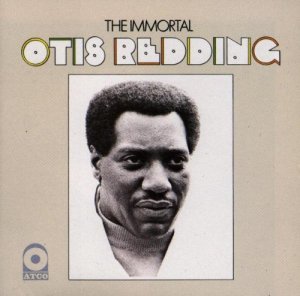
Otis Redding – The Immortal Otis Redding

This posthumous release consists of tracks Redding recorded in the weeks before his death.  Only one of the 11 songs had been previously released, and the album was received very well by critics.  Redding’s Hard to Handle, famously covered by the Black Crowes, is found here.

51GmSJ75n5L.jpg

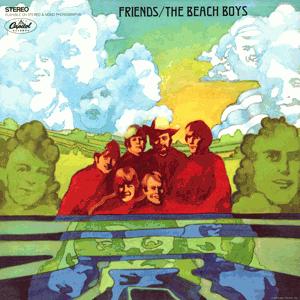
The Beach Boys – Friends

The Beach Boys, along with the Beatles, had jumped on the Maharishi Mahesh Yogi’s Transcendental Meditation train in the summer of ’67, and Mike Love was among the guru’s students in Rishikesh with the Beatles in February and March of 1968.  This collection of brief, mellow songs became known as their TM Album, influenced by their time with the Maharishi.  Fans were still waiting for a return to the glory of Pet Sounds, and while this wasn’t it, retrospective critiques have been kind.

17819.jpg

The 5th Dimension – Single:  Stoned Soul Picnic

This great tune, written and recorded earlier in 1968 by Laura Nyro, was soon covered by the 5th Dimension on their album of the same name as the track.  They made it their song, as it reached #3 on the US Pop chart and #2 on the Billboard R&B chart.  There’s always a place for a well crafted pop tune in my collection, even if I don’t know what the hell it means to “surry.”

https://www.youtube.com/watch?v=hgPGDRc7_kM

https://en.wikipedia.org/wiki/The_Immortal_Otis_Redding

https://en.wikipedia.org/wiki/Friends_(The_Beach_Boys_album)

https://en.wikipedia.org/wiki/Stoned_Soul_Picnic_(song)

-Stephen

June 29 – Pink Floyd in Transition

Pink Floyd – A Saucerful of Secrets

Often when describing an album (or book, painting, etc.) as representative of a transitional stage for the artist, it’s a polite way of excusing the work for being a perhaps less-than-stellar offering with glimpses of good things to come.  Then there are transition albums like Pink Floyd’s A Saucerful of Secrets, released this day in 1968.  While the band was certainly moving toward bigger and better things both artistically and commercially in the years beyond 1968, this album is another example of how something very good and interesting can emerge during times of uncertainty.  The question mark I’m referring to?  The ushering out of band co-founder, chief songwriter and friend, Syd Barrett, and the shifting of artistic direction with the emergence of Roger Waters as a primary writer along with the addition of David Gilmour to the band – all during the recording of this album.

Pink-Floyd-1968-resize.jpg
That oh-so-brief moment in time when the Pink Floyd lineup included both Syd Barrett and David Gilmour.

I used to overlook this release as simply part of an overall spacey and experimental but kind of boring run of post-Piper at the Gates of Dawn/pre-Dark Side of the Moon albums.  Finally and thankfully I woke up to Meddle, Obscured by Clouds, and More.  (You can throw in the first three songs on side two of Atom Heart Mother as well.)  Fantastic albums all.  But what about Saucerful?

Recording began at EMI Studios in August of the previous year, and due to Syd’s erratic behavior and general unreliability on stage and off, his friend David Gilmour was brought into the fold in December ’67 as a safety net guitarist for the times Syd would just wander aimlessly around the stage with a blank stare on his face.  The group performed as a quintet for a couple of weeks during January of 1968 before they decided to simply not pick up Syd on the way to a gig one day, and that was that.  They wrapped up recording in early May as a quartet with an altered lineup and vision.

Pink-Floyd-1968-resized
And then there were four, again.

Ironically, even though Syd only plays on three songs on the record and only sings on the one he wrote, the haunting Jugband Blues, it took gaining an appreciation for Barrett’s two post Floyd solo albums, The Madcap Laughs and Barrett, for me to revisit Saucerful.  Well, that and hearing Nick Mason say during a radio interview that this is his favorite Floyd album.  And I’m glad I was able to reconsider it with fresh ears, because it’s good.  I’ll just have to plead ignorance up to the point of my awakening.  It’s still spacey, but hey, so am I from time to time.  To time.  Now, I’ve got a gold star sticker and a candy bar for the person who can convince me that I shouldn’t dismiss Ummagumma

https://www.youtube.com/playlist?list=PL3PhWT10BW3Vcxa7faKH0l0EehjnDjsGA

Tracklist:

Side One:

  1. Let There Be More Light
  2. Remember a Day
  3. Set the Controls for the Heart of the Sun
  4. Corporal Clegg

Side Two:

  1. A Saucerful of Secrets
  2. See-Saw
  3. Jugband Blues
It’s awfully considerate of you to think of me here
And I’m most obliged to you for making it clear
That I’m not here
And I never knew the moon could be so big
And I never knew the moon could be so blue
And I’m grateful that you threw away my old shoes
And brought me here instead dressed in red
And I’m wondering who could be writing this song
I don’t care if the sun don’t shine
And I don’t care if nothing is mine
And I don’t care if I’m nervous with you
I’ll do my loving in the winter
And the sea isn’t green
And I love the queen
And what exactly is a dream?
And what exactly is a joke?
-Syd Barrett, Jugband Blues
-Stephen

June Tunes, Pt. 2

Let’s continue our June 1968 wrap up:

Iron Butterfly – In-A-Gadda-Da-Vida

Iron Butterfly’s second and most well-known album was released June 14, 1968.  The title track, released as a single the same day, holds an odd place in rock history in my mind.  It’s almost become a punchline due to the garbled title and the fact that it takes up the entire second side of the album.  But the album stands on its own as the highest selling release of 1969.  It was also the biggest seller for Atlantic Records until Led Zeppelin IV.

2012090714-44-14-1000x1000.jpg

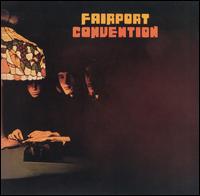
Fairport Convention – Fairport Convention

This was the English folk-rock band’s debut album, and I can’t write intelligently about it because I haven’t listened to it.  As with many other groups I’ve wanted to get to know, I familiarized myself with Fairport Convention by purchasing a hits collection before branching out, but the compilation didn’t include any songs from this self-titled debut.  Judy Dyble was the lead singer on this record, but she would be replaced by the siren Sandy Denny for the next few releases, and they are among my favorite albums from the era.  I’ll have more from Fairport Convention next January when I have a clue what I’m talking about.

FCFCcover.jpg

The Crazy World of Arthur Brown – Single:  Fire

This single from the band’s debut album reached #1 in the UK and #2 in the US Billboard charts.

220px-ArthurBrownFire.jpg

I’ll just leave this dose of insanity here…

https://www.youtube.com/watch?v=FaHEusBG20c

https://en.wikipedia.org/wiki/In-A-Gadda-Da-Vida_(album)

https://en.wikipedia.org/wiki/Fairport_Convention_(album)

https://en.wikipedia.org/wiki/Fire_(Arthur_Brown_song)

-Stephen

May, Fading, Pt. 2

5/17/68:  The Pentangle 

May brought the outstanding self-titled debut release of the influential British folk-jazz group, The Pentangle, consisting of vocalist Jacqui McShee, guitarist/vocalist John Renbourn, guitarist/vocalist Bert Jansch, bassist Danny Thompson, and drummer Terry Cox – all of whom were accomplished musicians prior to the formation of this unit.

2603427.jpg

I find The Pentangle and British folk music in general from the mid-late 60’s, including  Fairport Convention, Nick Drake, and Davey Graham, to be the perfect tonic when I want that 60’s vibe but from a different angle than the electric scene we know so well.  This is a timeless musical stew of folk, jazz, blues and rock.

Tracklist:

Side One:

  1. Let No Man Steal Your Thyme
  2. Bells
  3. Hear My Call
  4. Pentangling

Side Two:

  1. Mirage
  2. Way Behind the Sun
  3. Bruton Town
  4. Waltz


5/30:  The Beatles White Album sessions commence

It’s hard to say any one year in the Beatles’ existence was more of a whirlwind than the others, but 1968 was packed with activity and notable moments in the band’s lore.  The four spent varying lengths of time in India in February, where in addition to taking the Maharishi’s meditation course John and Paul wrote most of the songs that would wind up on the group’s eponymous release later in the year.  The film Wonderwall, with its Harrison-produced soundtrack, premiered at Cannes on May 17, and in the midst of all the recording activity during the year, the Fabs would appear in psychedelic cartoon form in Yellow Submarine, though their actual contribution (other than the music) was limited to a cameo at the end of the film.

images.jpg

John and Paul returned from their US publicity tour for the introduction of the group’s new company, Apple Corps, Ltd., in mid-May, and on an unspecified date later in the month, the Beatles assembled at George’s house in Esher to record demos of the songs they’d written in India.  Finally, on this date 50 years ago, recording sessions began in earnest at Abbey Road Studios and would continue until October 14.  Some sessions would take place at Trident Studios.

maxresdefault.jpg

While traces of the Beatles’ demise can be seen as far back as the final concert tour in ’66 (and even earlier when taking into account some of George’s comments), the sessions for this double album marked the beginning of a definite acceleration of their split two years later.  Engineer Geoff Emerick quit, and producer George Martin took a hiatus during recording, as did Ringo in a story recounted in the Anthology documentary and George Harrison:  Living in the Material World.  

bd0cf8ce0c00d981ebf5f7256cfa8ca0.jpg

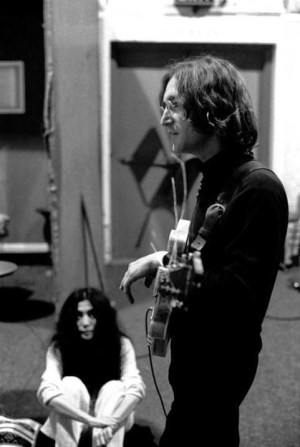
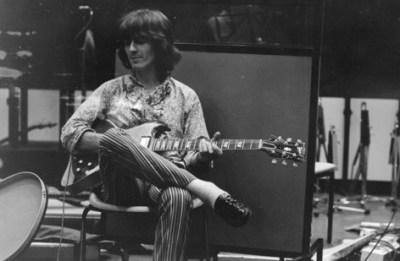
Personal issues and resentments began to foment, as Yoko became a permanent presence in the studio.  For that matter, Pattie, Maureen, and Paul’s girlfriend Francie were also present at times, breaking the group’s rule up until then of not allowing wives and girlfriends in the studio.  George was growing rapidly as a songwriter, yet was still alloted minimal room for his songs on the album (a couple of his tunes, Not Guilty and Sour Milk Sea, would’ve been among my favorites had they been included on the album).

tumblr_ohd1pr2ZSr1rg1rnvo1_500.jpg

As we’ll see in August, the sessions would also yield another monumental non-album, double A-sided single with accompanying promotional films.  When all was said and done, a glorious mish-mash of songs and sound experiments – “very varied” as Paul refers to it in the Anthology – would be released as a self-titled double album in November.  A common argument among fans is whether the album is too long, too short, or just right.  Perhaps we’ll discuss this debate further down the line on the release anniversary date, but for now I’ll just mention that hopefully those of us in the “More please!” crowd will be satiated with the anticipated 50th anniversary White Album reissue later this year.

download

Among the recordings many of us would like to see cleaned up for a deluxe anniversary White Album reissue are the above-mentioned Esher Demos linked below:

https://www.youtube.com/watch?v=2Y1DrUoTuAQ

https://en.wikipedia.org/wiki/The_Pentangle_(album)

https://en.wikipedia.org/wiki/The_Beatles_(album)

https://www.beatlesbible.com/1968/05/24/demo-recordings-for-the-white-album/

https://en.wikipedia.org/wiki/Wonderwall_(film)

-Stephen

May 24 – Small Faces Get Heavy Before Checking Out

Small Faces – Ogden’s Nut Gone Flake

Today marks the 5-0 anniversary of the Small Faces album Ogden’s Nut Gone Flake.  It is the fourth and also the final album released with the original group intact.  Their next release came posthumously as its members were splintering into the groups Humble Pie and Faces.  The album peaked at #1 on the UK Album Charts.

Small-Faces-resize-1-1280x620.jpg
Ian McLagan, Ronnie Lane, Kenney Jones, and Steve Marriott (L-R)

The album’s recording took approximately five months, with the majority of the work completed during the spring of 1968.  Side one of the album contains a collection of heavy rock songs which sound very 1968, i.e., still psychedelic but moving away from the dayglow flower power pop rock of the prior year – a common theme which runs throughout rock releases from ’68.  Side two is a concept recording based on a fairy tale with narration provided by South African comedian, actor and writer “Professor” Stanley Unwin.

hqdefault-528120253-1510074588441.jpg
The Small Faces performing in 1968.

The LP, with its replica of an old-time tobacco tin for a cover, was received very well from the time of its release, and is widely considered to be the band’s peak.  Unfortunately, the recording also precipitated the band’s demise.  As with other albums from the era, enhanced studio techniques and experiments rendered it difficult if not impossible to replicate Ogden’s on stage at the time.  The album never was performed live, and a frustrated Steve Marriott quit the band during a New Year’s Eve gig at the end of the year.  Drummer Kenney Jones said of the breakup in 2001:

I wish we had been a little bit more grown up at the time, if we had played Ogdens’ live it would have boosted our confidence so much, we were labelled as a pop band, which definitely got up Steve’s nose more than we realised. I wish we had been more like The Who in the fact that when they have problems they stick together until they’ve overcome them, Steve just thought well how do we top Ogdens’ and he was off. Ogdens’ was a masterpiece if we had played it live we would have gone on to even greater things, I reckon we were on the verge of crossing the great divide and becoming a heavier band.

Heavier – as in Humble Pie and Faces.

https://www.youtube.com/watch?v=qBOFm96rTsg

Tracklist:

Side One:

  1. Ogden’s Nut Gone Flake
  2. Afterglow of Your Love
  3. Long Agos and Worlds Apart
  4. Rene
  5. Song of a Baker
  6. Lazy Sunday

Side Two:

  1. Happiness Stan
  2. Rollin’ Over
  3. The Hungry Intruder
  4. The Journey
  5. Mad John
  6. Happy Days Toy Town

https://en.wikipedia.org/wiki/Ogdens%27_Nut_Gone_Flake

https://en.wikipedia.org/wiki/Small_Faces

-Stephen

May 1968 – Johnny Cash Goes to Prison

Johnny Cash – At Folsom Prison

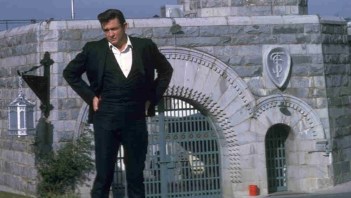
The Man in Black’s landmark live album, recorded January 13, 1968, was released 50 years ago this month.  At Folsom Prison signified a number of things for Cash, including the realization of his desire to perform for a Folsom Prison audience, which he first thought of 13 years prior with his recording of Folsom Prison Blues.  Additionally, it was the beginning of a series of prison performances, as well as a return to commercial success after years of battling substance abuse.

biggest-seller-iconic-photo-john-in-front-of-towerxx-1515801715.jpg

Johnny and soon-to-be wife June Carter arrived in Sacramento on January 10, followed by Carl Perkins, the Statler Bros., and the Tennessee Three.  One of main reasons for the early arrival was so that the group could learn a new song, Greystone Chapel, written by inmate Glen Sherley.  The troupe performed two shows on the 13th, one at 9:40 a.m. and the other at 12:40 p.m., with Cash ending both shows with Sherley’s song.

2041.jpg
Cash, shaking the hand of inmate and songwriter Glen Sherley.

Perkins opened each show with Blue Suede Shoes before the Statlers performed two songs, then Cash took the stage as the inmates – instructed to do so by the MC – withheld their applause until they heard “Hello, I’m Johnny Cash…”  June joined him for a couple of duets, as well as the recitation of a poem while Johnny took a breather.  On the original release, all songs except Give My Love to Rose and I Got Stripes are from the first performance that morning.

d93fdf5345e50c01b330b1823d2c1be351634_large.jpg

The album performed well in the charts despite relatively little investment by Columbia Records, who was more focused on rock and pop recordings at the time.  The album and its single, Folsom Prison Blues, were climbing the charts when, on June 5, Robert Kennedy was assassinated in Los Angeles.  Radio stations immediately ceased playing the single due to the line about shooting a man in Reno “just to watch him die” after RFK’s murder, but the song was edited with the line removed – against Johnny’s wishes – and re-released.  Subsequently it became a #1 hit on the country charts, as well as placing in the top 40 in the national charts.  The album itself also reached #1 in the country charts, and #13 on the pop charts.

hqdefault

To me, At Folsom Prison (as with most of Cash’s recordings) transcends genre.  If I’m in a country music mood, it’s a no-brainer.  But if I’m in rock or folk mode, this record fits right into a playlist along with Neil Young, Dylan, Springsteen, etc., just as Bob Marley’s Catch a Fire does as a non-rock album when put next to them.  It’s gritty, populist, and loud as you want it to be.

Tracklist:

Side One:

  1. Folsom Prison Blues
  2. Dark as the Dungeon
  3. I Still Miss Someone
  4. Cocaine Blues
  5. 25 Minutes to Go
  6. Orange Blossom Special
  7. The Long Black Veil

Side Two:

  1. Send a Picture of Mother
  2. The Wall
  3. Dirty Old Egg-Suckin’ Dog
  4. Flushed From the Bathroom of Your Heart
  5. Jackson (with June Carter)
  6. Give My Love to Rose (with June Carter)
  7. I Got Stripes
  8. Green, Green Grass of Home
  9. Greystone Chapel

https://en.wikipedia.org/wiki/At_Folsom_Prison

https://www.npr.org/2018/01/12/576763031/johnny-cash-at-folsom-prison-50-years-later

-Stephen

April 1968 – Spring Cleaning

Some final musical notes on April 1968 releases:

Ravi Shankar – The Sounds of India

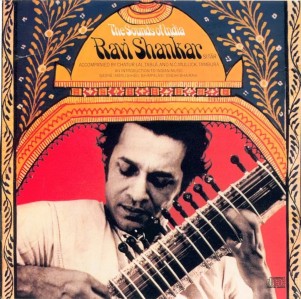
This studio album was the second Ravi Shankar title I owned.  Actually, I burned it from a friend’s cd onto cassette almost 30 years ago, and it’s still out in the garage somewhere as we’re currently a cd-only household (I really need to get my turntable out of mothballs).  It was a bit strange to me at first, not because of the Hindustani classical music I was becoming more interested in, but because of the album’s production:  Shankar gives brief lessons between pieces on the significance of each performance (e.g., a morning raga vs. an evening raga).  He also did this frequently in concerts outside his native India.  I still laugh whenever I hear him address the largely clueless Madison Square Garden audience during the Concert for Bangladesh after their initial polite applause:  “Thank you.  If you appreciate the tuning so much, I hope you will enjoy the playing more.”  Ravi was a true cultural ambassador.

maxresdefault.jpg

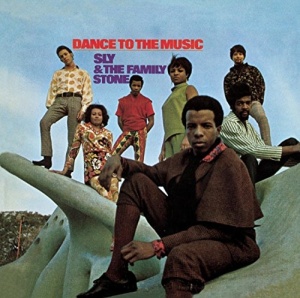
Sly and the Family Stone – Dance to the Music

This second album by the group gave us the hit title track and was influential with acts such as the Temptations and the Jackson 5.  Sly and the Family Stone were rising fast.

0001260569.jpg

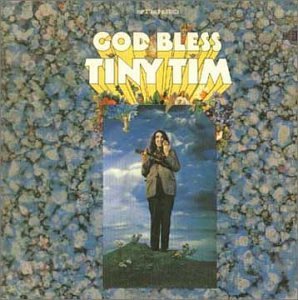
Tiny TimGod Bless Tiny Tim 

I…I, um, don’t really know what to say about this one.  In my mind, Tiny Tim was in a class of celebrities that included people like Phyllis Diller and Charo (aka María del Rosario Mercedes Pilar Martínez Molina Baeza).  You know, the kind of entertainers who popped up occasionally anywhere from The Tonight Show with Johnny Carson to Sesame Street, from Scooby Doo to Match Game, and from Laugh In to The Love Boat.  Then you find out later in life that, unlike today’s celebs who are “famous for being famous,” they were actually very talented people.

41Z1Z8GF6BL.jpg

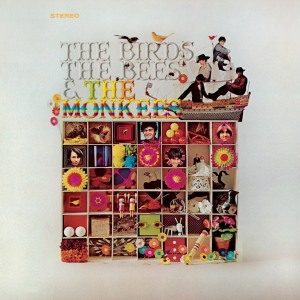
The Monkees – The Birds, The Bees, and the Monkees

This is the fifth studio album by the Monkees, released the month after their final TV episode aired.  It was the first to not reach number one on the Billboard charts (!).  The album yielded two hits:  Valleri and chart-topper Daydream Believer.

maxresdefault.jpg

Archie Bell and the Drells – Single:  Tighten Up

The first I recall hearing this song was not on an oldies radio station, but on VH1’s My Generation hosted by Peter Noone in the late 1980’s.  The song was a hit in Bell’s native Houston before Atlantic Records picked it up for distribution in April 1968, where it subsequently reached number one on Billboard’s R&B and pop charts – while Bell was doing time in Vietnam.  Years later I was lucky enough to hear Tighten Up almost hourly at a retail job, where the song was included on one of those corporate-distributed mixed cd’s played in-store, seemingly on a loop.

https://www.youtube.com/watch?v=uN7vm-k-AaA

On to May…


https://en.wikipedia.org/wiki/The_Sounds_of_India

https://en.wikipedia.org/wiki/Dance_to_the_Music_(Sly_and_the_Family_Stone_album)

https://en.wikipedia.org/wiki/God_Bless_Tiny_Tim

https://en.wikipedia.org/wiki/The_Birds,_The_Bees_%26_The_Monkees

https://en.wikipedia.org/wiki/Tighten_Up_(Archie_Bell_%26_the_Drells_song)

-Stephen