August 20-21: Some Musical Notes From a Whirlwind Trip to the Big Apple, Including My Review of Jeff Lynne’s ELO at MSG

Today I thought I’d share a travelogue of sorts.  My wife and I just returned from a brief trip to the East Coast, where we visited family in Virginia for a couple of days before boarding an Amtrak with my brother and sister-in-law for New York City.  I’ve been to NYC five or six times in my life, spread out over the last 30 years or so.  I don’t know if I could handle living there, but I absolutely love visiting.

The main event of our trip was Jeff Lynne’s ELO at Madison Square Garden on Tuesday night, the first of his two shows at the Garden.  But as anyone who has visited the Big Apple can tell you, you don’t have to venture too far before seeing something of historical significance.  Here are some mostly musically themed photos from our trip which took us through Richmond, Washington, D.C., Baltimore, and Philadelphia before reaching NYC:

IMG_0823[1104].jpg
View from our train of the former Washington Coliseum.  This is the site of the Beatles’ first US concert after their debut on the Ed Sullivan Show.  Footage of that show can be found in the Anthology series, as well as the Ron Howard film.  Today it houses part of REI’s business operations.
After dropping off our bags at the Roosevelt Hotel in Midtown, we took the subway to Greenwich Village for dinner at an old school Italian restaurant called Monte’s downstairs on MacDougal St.  Just around the corner on Bleeker St. is the Bitter End.  Originally known as the Cock and Bull, the coffee-house hosted folk hootenannies in the early 1960s.  The list of musicians and comedians to grace its stage is too long to type (see link at bottom of page).

IMG_0833[1108].jpg
My brother outside the Bitter End.
At the corner of MacDougal and Minetta Ln. is the Cafe Wha?.  We were only 56 years late to catch then-unknown Dylan among many others playing for pennies.

IMG_4696[1075].jpg
My wife and me outside the Cafe Wha?
Still walking off our dinner, we made our way through Broadway and Times Square.  As much as I’d love to catch Bruce’s Broadway show, I’ll have to settle for the eventual DVD.

IMG_4701[1073].jpg
Yours truly outside the Walter Kerr Theatre.
img_08381120.jpg

At Broadway and 49th I just happened to look up as we passed beneath some scaffolding.  I was standing in front of the Brill Building, home of some of the most famous American songs ever composed.  Burt Bacharach, Neil Diamond, Bobby Darin, Gerry Goffin, Carole King, Leiber and Stoller, Laura Nyro, and Neil Sedaka are just some of the famous composers who worked here.

IMG_0839[1118].jpg

IMG_0846[1122].jpg
Having a peek through the front door of the Ed Sullivan Theater.  Knock-knock-knock…”Dave ain’t here, man.”
Tuesday morning we started our day with breakfast at Barney Greengrass, a.k.a. “The Sturgeon King.”  This historic deli opened in 1908, and was the favorite NYC breakfast haunt of Anthony Bourdain.  I had a corned beef and swiss omelette, and it was the real deal.

IMG_0852[1130].jpg

img_08501176.jpg
“Tony ain’t here, man.” 😦

After breakfast we made our way down to Central Park West.  It was a beautiful day with temps in the high 70’s, so we didn’t feel the need to quickly check out points of interest and then scurry back into the AC.

I’d traveled past 1 West 72nd St., a.k.a. the Dakota, a few times before, but never on foot.  Some of this apartment building’s famous residents have included Lauren Bacall, Leonard Bernstein, Roberta Flack, Judy Garland, Joe Namath, and John and Yoko, to name a few.  Unfortunately, this location is also the site of one of the music world’s worst-ever tragedies.

IMG_4717[1094].jpg
The Dakota, as seen from across the street in Central Park.  Paul Harrison photo.
IMG_0856[1144].jpg
If only there had been a couple of guards like the ones to my right in that spot the night of December 8, 1980.  Maybe it wouldn’t have made any difference.  We’ll never know.
IMG_0855[1140].jpg
My wife Janis at the Strawberry Fields memorial in Central Park, across the street from the Dakota.  A nice spot despite the talent-less buskers who harass those they hope to receive money from.
LADIES…AND…GENTLEMEN, THE MAIN EVENT!

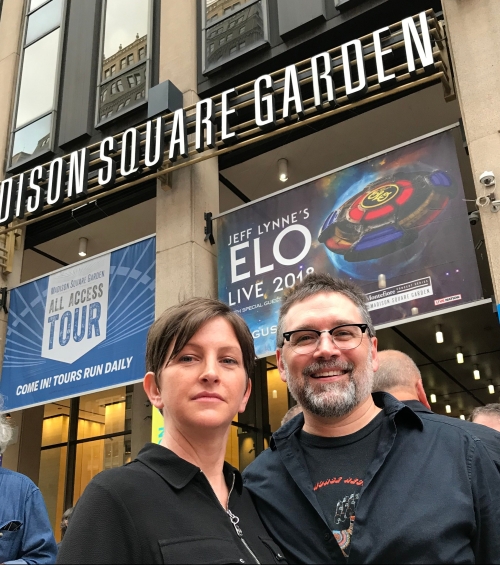
After a very nice early dinner at Executive Chef Alex Guarnaschelli’s Butter Midtown, it was off to Madison Square Garden for Jeff Lynne’s ELO.  Last November I was one click away from purchasing tickets to the show in Dallas, but at the last second I called my brother Paul to see if he’d like to fly out and join us.  He had a business engagement in the books for that night, so he asked if we’d be interested in looking for another show and making a vacation out of it.  Nine months later, here we were.

IMG_0865[1148].JPG
My big brother Paul and me outside MSG.
img_08641156-e1535067031777.jpg
With my better half, heading inside.

In my excitement over seeing Jeff Lynne and visiting MSG for the first time, I’d completely forgotten that Dawes was opening the show.  I’m only familiar with their tunes I’ve heard on the radio, but I like them and I keep telling myself I need to pick up some of their albums.  The house was mostly full and very responsive for their set, and it showed in their performance.  They were full of energy and very aware of who their audience was.  They closed out their set with All Your Favorite Bands, the perfect touch considering who was about to appear on that stage.

hqdefault (1)
Taylor Goldsmith of Dawes warming up the MSG crowd, Tuesday, August 21.  From YouTube.

Jeff Lynne’s ELO:  What can I say?  One might go to a concert featuring any number of artists from the classic rock era, enjoy the show, sing along, and maybe freak out a little at how old the audience has gotten, then go home and forget about it a day or two later.  But for my family and me, as well as approximately 20k others in the sold out Garden, this was different.  Why so?  For a few reasons.

The first and most obvious explanation is that even though Jeff Lynne has been very active and visible over the past 30+ years as a producer for the likes of Roy Orbison, Tom Petty, George Harrison, and the Threetles, and as a member of the Traveling Wilburys, he hadn’t toured in years.  As he noted to the crowd, he hadn’t performed at MSG in 40 years!  It was great just seeing him standing on that stage after all this time, and I didn’t think I’d ever have this opportunity.

Another factor was that Lynne was in great voice.  There were no cringe-worthy moments at all.  He’s never been much of a front man, but that’s not what’s expected of him.  He composed all this great music, and he delivered it almost completely without flaw (he got one line out-of-order, but I don’t even recall during which song).  Lastly, his group of musicians and vocalists was spot on.  Generally speaking, I’m somewhat of a purist who prefers bands to stay in tact with as many original members as possible.  However, while it would’ve been neat to have seen Roy Wood, Bev Bevan, Richard Tandy (Tandy is still officially a part of the group but not currently touring), and the rest of the classic lineup, in all honesty I doubt they would sound better than this group who clearly had a blast on stage playing those classic songs.  And the audience clearly had a blast listening to them.  That place was electric.

This was, of course, a mostly greatest hits show (see axs.com link below for another review with complete set list).  10538 Overture from ELO’s eponymous debut was a nice surprise to me, as was Wild West Hero from Out of the BlueWhen I Was a Boy from his most recent album (2015) was very worthy of inclusion in the set.  He also did the Wilburys’ Handle with Care, which was the second rendition by a member of that supergroup I’ve heard live – Petty’s being the first a few years back.

The rest of the show consisted of one fantastically performed ELO hit after another.  Sweet spots for me included Rockaria! (Melanie Lewis-McDonald more than rose to the occasion on this one), Telephone Line, and Turn to Stone.  At roughly an hour and a half the show could’ve perhaps been two or three songs longer, but I feel kind of silly even suggesting it.  We were thoroughly entertained, and I’ll never forget it.

IMG_0867[1154].JPG
Jeff Lynne’s ELO in selfie mode at the conclusion of their performance at Madison Square Garden, Tuesday, August 21.
Noses were bleeding high up where we sat at the Garden, but it didn’t matter.  The acoustics were very good for an arena show and there were plenty of big screens.

IMG_0871[1162]

https://www.axs.com/review-jeff-lynne-s-elo-makes-magical-return-to-madison-square-garden–132786

Cheers, and thanks for reading!

-Stephen

https://en.wikipedia.org/wiki/The_Bitter_End

https://en.wikipedia.org/wiki/Cafe_Wha%3F

https://en.wikipedia.org/wiki/Brill_Building

https://en.wikipedia.org/wiki/Barney_Greengrass

https://en.wikipedia.org/wiki/The_Dakota


August 17 – My Top 15 Elton John Albums: The Top 5

55-38085-elton-john-1975-1478022642.jpg

Recapping 6-15:  15. Live in Australia 14. Friends (soundtrack) 13. Here and There 12. Caribou 11. Honky Château 10. 11/17/70 9. Empty Sky 8. Blue Moves 7. Rock of the Westies 6. Elton John

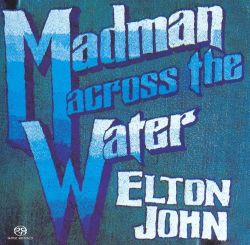
5. Madman Across the Water (1971)

Reading the liner notes to this album has reminded me there wasn’t a clear delineation in personnel among Elton’s early albums.  This one features a crossover of many of the musicians who played on his previous recordings into what became his most well-known Elton John Band:  Davey Johnston on guitar, Dee Murray on bass, Nigel Olsson on drums, and Ray Cooper on percussion.  Johnston, who is Elton’s lead guitarist to this day, and Cooper, the percussion maniac, make their debuts with Elton here (if you’re not familiar with Ray Cooper, look him up on YouTube sometime where he’s playing with Elton or Clapton – he’s a true original).

Two of Elton and Bernie’s most famous songs lead off:  Tiny Dancer and Levon, both featuring the oft-mentioned Paul Buckmaster strings.  Razor Face, Madman Across the Water, Holiday Inn (how has that one never been used in a commercial?), Indian Sunset…all quintessential E.J.

MI0002207495.jpg

4. Don’t Shoot Me I’m Only the Piano Player (1973)

Released in January of 1973, Don’t Shoot Me… was Elton’s second consecutive #1 album.  There were two hit singles in the US:  Crocodile Rock (#1) and Daniel (#2).  But in my mind this album – the top four albums, actually – contains zero filler.  By 1973, Elton had created self-inflicted distractions when it came to his music with all the stage costumes and antics.  No doubt that trademark of his attracted plenty of new fans at the time, but the reality is for fans of the music these are fantastic albums.  Though he’s still about the bling onstage, the days of Donald Duck suits and platform heels are long gone and the substance, as is usually the case, has outlasted the style.

A few of the standout tracks for me on this album include Blues for Baby and Me, the rocker Midnight Creeper, and the cinematic Have Mercy on the Criminal.  I always thought Texan Love Song was a hoot, and since I’ve resided in the Lone Star State for 15 years now it’s even funnier.  Critic Robert Christgau gave this album a C+, therefore I give it an A.

81WalVvSXzL._SX355_.jpg

3. Tumbleweed Connection (1970)

Tumbleweed illustrates, possibly better than any other of E.J.’s albums, just how tuned in he and lyricist Bernie Taupin were with what we now refer to as “Americana.”  It’s a concept album based on themes of the mythical American south and west, and Bernie’s lyrics nailed it.  What’s even more fascinating to me is that it was recorded in March of 1970, five months before they would even set foot in the US for the first time.  Besides their God-given songwriting talents (and old black and white movies on the telee), what else fed their interest in American themes?  As it turns out, George Harrison and Eric Clapton were not the only English musicians to be heavily influenced by the Band’s first two albums.  With Bernie Taupin you can stir a little CCR into the mix as well.

Most of my top 15 Elton John albums, especially these final three or four, could change places depending on my mood.  Probably the only reason Tumbleweed Connection didn’t vie for one of the top two spots is because I’ve “only” been listening to it for the past 30 or so years as opposed to from the moment I emerged from the womb.  There were no singles from this album, and time has proven that none were needed.  I love every one of these songs, so I’m not going to mention just a few.  They even got the cover right despite the fact that the photo was taken at a railway station in England instead of a country store in Alabama or Nevada.

71BalaeIjEL._SY355_.jpg

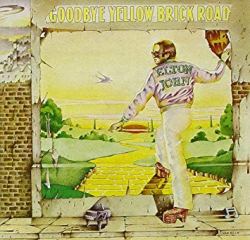
2. Goodbye Yellowbrick Road (1973)

Goodbye Yellowbrick Road is Elton John’s highest selling and most iconic album.  As of 2014 it was certified 8x platinum.  Bernie wrote the lyrics for all the songs on this sprawling double album in two and a half weeks, and Elton composed the music in three days while the band was stationed in Kingston, Jamaica, where the Rolling Stones had just recorded.  However, the equipment was not up to standard and the sociopolitical environment not exactly safe in Jamaica at the time, so they split before recording commenced and set up shop at the Château d’Hérouville, Hérouville, France.

GBYBR is not a concept album, but as with #’s 3 and 1 on my list, its themes revolve around nostalgia.  Bernie’s lyrics cover a wide range of topics within that theme plus society’s underbelly, including the death of a friend, a mythical glam band, Hollywood, sailors and prostitutes, gangsters, the murder of an underage girl of the female persuasion, boozin’ it up on a Saturday night, and once again, the Old West.  The only weak links for me aren’t really weak links, they’ve simply been played to death on the radio.  Every one of these tunes stokes my imagination, every time.

81Ls3DlV5YL._SX355_.jpg

1. Captain Fantastic and the Brown Dirt Cowboy (1975)

And finally, #1.  Captain Fantastic and the Brown Dirt Cowboy is an autobiographical album based on the lives and songwriting partnership of Elton and Bernie, the “city mouse and country mouse” as they’ve described themselves.  For years before I owned a CD player, my copy of this album was a cassette recording of my brothers’ LP, which of course maintained the skips and all.  It took me a few digital listens to get used to a couple of songs where the needle no longer jumped.  The CD remaster issued a few years back includes a second disc which contains a live concert Elton did at Wembley Stadium where he introduced this then-new album to the audience by playing the entire thing from start to finish.  That took nerve, and thankfully he had it in him.

The themes include the development of their songwriting craft (the title track and Writing), the perils of the entertainment industry, including unscrupulous record company executives – a topic commonly covered by a number of artists in the 70’s such as Pink Floyd, George Harrison, and Lynyrd Skynyrd (Tower of Babel and Bitter Fingers), and E.J.’s failed attempt at suicide (Someone Saved My Life Tonight).  Two of his most emotional songs finish off the album, We All Fall in Love Sometimes and Curtains, and they still get to me all these years on.  As does the memory of the father of the family I grew up next door to who, as far back as I can remember, teasingly referred to me as “Captain Fantastic.”

220px-Elton_John_-_Captain_Fantastic_and_the_Brown_Dirt_Cowboy.jpg

Cheers, and as always, thanks for reading!

https://en.wikipedia.org/wiki/Madman_Across_the_Water

https://en.wikipedia.org/wiki/Don%27t_Shoot_Me_I%27m_Only_the_Piano_Player

https://en.wikipedia.org/wiki/Tumbleweed_Connection

https://www.rollingstone.com/music/music-album-reviews/tumbleweed-connection-203947/

https://en.wikipedia.org/wiki/Goodbye_Yellow_Brick_Road

https://en.wikipedia.org/wiki/Captain_Fantastic_and_the_Brown_Dirt_Cowboy

-Stephen

August 16 – My Top 15 Elton John Albums (6-10)

maxresdefault.jpg

Picking up where we left off yesterday before I change the order again, first with a quick recap:  15. Live in Australia 14. Friends (soundtrack) 13. Here and There 12. Caribou 11. Honky Château

10.  11/17/70 (1971)

This was EJ’s first live album.  It was taken from a live radio broadcast and was only officially released due to the flood of bootlegs which followed.  It captures Elton on his first, highly acclaimed US visit.  His performance at L.A.’s Troubadour on that tour is legendary.  At the time, the band was a no-frills trio consisting only of Elton, Dee Murray on bass, and Nigel Olsson on drums (guitarist Davey Johnston wouldn’t join the group for two more years).  They were hungry and played great.  They flat-out rocked the small studio audience with tunes such as Take Me to the Pilot, Honky Tonk Women, and Bad Side of the Moon.  My favorites on the original release are Sixty Years On and the medley:  Burn Down the Mission/My Baby Left Me/Get Back.  Dee and Nigel’s contributions not just as the rhythm section but also as backing vocalists cannot be understated.

Elton’s 1970 debut US tour visited an odd mish-mash of small to medium-sized venues including the Troubadour in L.A., the Fillmore West and East, the Santa Monica Civic Auditorium, and the Boston Tea Party, but they were all in major cities, except for one:  Champ Auditorium at Westminster College in Fulton, MO.  Why do I mention this fact?  Because it’s about three blocks from where I grew up (population approx. 10,000).  The show was on 12/1/70, and I was born just under three months later.  My future high school cross country coach was in attendance, and I walked across the same stage to receive my high school diploma.  Here’s a photo of the performance taken from the balcony:
elton-john-and-band-at-westminster.png
Elton, Nigel, and Dee at Champ Auditorium in my hometown of Fulton, MO.

Unfortunately, only six of the thirteen songs from the performance at A&R Studios in New York were included on the original album.  It was re-released with all the songs included in conjunction with Record Store Day in 2017, but only on vinyl (Grrr!).

171170UK.jpg

9.  Empty Sky (1969/UK, 1975/US)

Elton’s first album was not released in the US until 1975 at the peak of his 1970’s fame, and it’s really nothing like the other classics.  Caleb Quaye and Roger Pope are on guitar and drums, respectively, and they would subsequently re-join Elton in 1975.  Tony Murray of the Troggs played bass on the record.  When asked about the album’s style, Elton has compared it to Leonard Cohen’s work, albeit a little more amateurish.

While it’s not folk music per se, the somewhat esoteric themes are reminiscent to me of those heard on late 60s/early 70s English folk rock albums by the likes of Fairport Convention, whom I like quite a bit.  This was the first Elton album in my fledgling collection, and I think I must’ve absconded with it from my brothers’ collection.  I’m not quite certain how I ended up with it, but I’ve liked it a lot since I was a child.  The original Skyline Pigeon, with Elton on harpsichord, is heard here.  Western Ford Gateway, Sails, Gulliver, and the title track are my favorites.

81YINzPzASL._SL1400_.jpg
Original 1969 UK cover
download.jpg
1975 US cover

8.  Blue Moves (1976)

Astoundingly, this was E.J.’s 11th official album release in seven years.  It was also his second double album.  Not surprisingly, Elton was in meltdown mode by this point from the pressures of recording, touring, and all the trappings of stardom, and in my opinion it is his last really good album.  To borrow from McCartney’s description of the White Album, Blue Moves is “very varied.”

It’s a blend of rockers (Shoulder Holster, One Horse Town), blue-eyed soul (Chameleon, Boogie Pilgrim, If There’s a God in Heaven [What’s He Waiting For?], Where’s the Shoorah?), instrumentals (Your Starter For, Out of the Blue, Theme from a Non-Existent TV Series), and sad songs (the hits Tonight and Sorry Seems to Be the Hardest Word, as well as Cage the Songbird).  But perhaps my favorite song of the bunch is his late-to-the-party stab at raga-rock, The Wide-Eyed and Laughing.

A few of the interesting guest appearances on the album include Michael and Randy Brecker on sax and trumpet, David Sanborn on sax, and David Crosby, Graham Nash, Bruce Johnston, and Toni Tennille on backing vocals.

512FS1FXEJL.jpg

7.  Rock of the Westies (1975)

The title of this album is a play on the phrase, “West of the Rockies,” as it was recorded at Caribou Ranch in Colorado (as was his earlier album, Caribou).  The album debuted at #1, his second album in a row to do so and a feat which had never happened before.  Looking to change things up, he fired Nigel and Dee and recorded this album with a host of musicians including Caleb Quaye and Roger Pope from his Empty Sky days.

Island Girl is the hit song here, but I love this record because it’s easily his grittiest, crunchiest batch of tunes overall, and I’m not sure why it isn’t mentioned more among his best albums.  Dan Dare (Pilot of the Future), Grow Some Funk of Your Own, Street Kids, and Billy Bones and the White Bird are cool guitar-oriented songs.  I Feel Like a Bullet (In the Gun of Robert Ford) is one of my favorite Elton sad songs (they do say so much, after all), and Feed Me takes me right back to my childhood home with the lyric, “…’Cause I miss my basement, the sweet smell of new paint, the warmth and the comforts of home…”

Elton_John_-_Rock_of_the_Westies.jpg

6.  Elton John (1970)

This self-titled album is Elton’s second overall and first to be released in America.  It was also his first to be produced by Gus Dudgeon, with whom he would work for the majority of his 1970s heyday.  Elton and Bernie made a rather sizeable leap in their songwriting from Empty Sky to Elton John.  It opens with the immortal Your Song and ends with the epic The King Must Die.  Sandwiched within are classics such as Take Me to the Pilot (a song whose meaning Elton and Bernie hilariously acknowledge they have no idea of, even though they wrote it), Sixty Years On, and Border Song.

Paul Buckmaster’s beautiful string arrangements are heard throughout the album, including on a song which I have a personal affinity for, The Greatest Discovery, with its lyrics about parents introducing their young son to his newborn baby brother.  The first time I heard this after my second son was born in 2000 it choked me up quite a bit.  I was cured of it soon after, however, as they’ve been scrapping for the past 17-plus years.

51hYtzvKTWL

The top five are coming up, and I wonder if I’ll change the order any more than I already have.  I listened to Honky Château last night and reaffirmed its greatness in my mind despite its exclusion from my top ten.

https://en.wikipedia.org/wiki/17-11-70

https://en.wikipedia.org/wiki/Elton_John_1970_World_Tour

http://news.westminster-mo.edu/features-carousel/westeryears-elton-john-at-westminster/

https://en.wikipedia.org/wiki/Empty_Sky

https://en.wikipedia.org/wiki/Blue_Moves

https://en.wikipedia.org/wiki/Rock_of_the_Westies

https://en.wikipedia.org/wiki/Elton_John_(album)

-Stephen

August 15 – Some Thoughts on Elton and My Top 15 E.J. Albums (11-15)

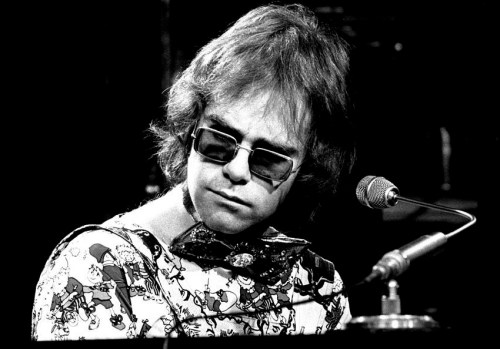
As things will be slowing down a bit for the next couple of months on the 50th anniversary album front, I’ll wander off course now and then into other topics.  Today I think I’ll take a shot at my favorite Elton John albums.  This would probably be a very difficult task for those who are fans of his work from A-Z, but for me it’s a little easier.  With one exception (and it’s really not much of an exception as you’ll see), there’s not one post-1976 album in my ranking.  I don’t think it’s a coincidence that this was when he parted ways with songwriting partner Bernie Taupin, as well as drummer Nigel Olsson and the late bassist Dee Murray for a few years.  But his output in those first 7-8 years is amazing.

elton-john-1971-2-chris-walter

I’m glad for Reg that he’s been able to reinvent himself over the years, and we’re fortunate he’s still with us.  But 1976 is a demarcation for his music in my mind, both in the studio and on stage.  I bought The One upon its release, as it sounded like he was returning to his early-70s sound.  Alas, it came up a bit short.  I’d probably enjoy The Union with Leon Russell, but I have yet to listen to it all the way through.  I’m sure it’ll end up in my collection at some point.

That said, ranking my 15 albums is not easy.  All of these titles are very dear to me; each one of them elicits good memories from my youth, and I still enjoy listening to them.  All of them.  I’ll try not to keep repeating my nostalgia attached to these records, but isn’t that what most of us of a certain age or older experience when listening to our favorite music from “back in the day?”  It’s hard to avoid.

For the sake of keeping it a tidy, 15 album list, my parameters for this ranking include:

  • No greatest hits albums included.  This alone is not easy, as his Greatest Hits and Greatest Hits Vol. II are iconic in my world, the latter containing the non-album tracks Lucy in the Sky with Diamonds and Pinball Wizard, and Vol. III contains the post-1976 hit singles which I like.
  • No box sets or other compilations.  The To Be Continued box and the Rare Masters set are wonderful.  They were my first exposure to those cool esoteric singles from ’68-’69.
  • No bootlegs.  There are some pretty good ones out there on YouTube last I checked, including a full show from the Russia tour he did with Ray Cooper in 1979.  If that were cleaned up and officially released, it would automatically be on my list (time to open the vault, Elton!).

Let’s get to it…

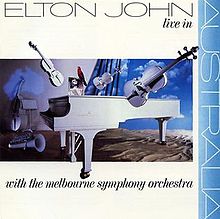
15.  Live in Australia (1987)

Apart from the occasional good single, the 1980’s weren’t kind to Elton.  He was productive, but his mental and physical health were in steady decline.  Then one day this live gem appeared.  It’s a celebration of his and Bernie’s early tunes, complete with the Melbourne Symphony Orchestra, which brought back to life those fantastic Paul Buckmaster arrangements.  The show was recorded in Sydney in December of 1986, shortly before he had throat surgery which permanently dropped his voice from tenor to baritone.  His voice was pretty rough, but it’s a great performance.  I’ve heard Elton describe how that surgery forced him to use his singing voice properly for the first time in his life, but an awful lot of songs never sounded the same again live without his occasional falsetto.

Live_in_australia.JPG

14.  Friends (1971)

This soundtrack to the film of the same title (which I’ve never seen) received a Grammy nomination for best film score in 1972.  It became his third gold record in as many months in 1971.  Elton and Bernie were just about to bust loose in America when this came out.  It’s got that great, mellow, early Elton sound.  The title track and Can I Put You On are highlights.

maxresdefault

13.  Here and There (1976)

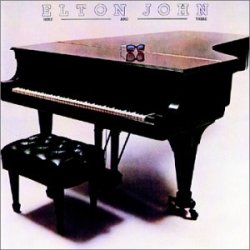
As I’ve mentioned before, live albums in the 1970’s were a different animal.  The excitement level kicked up a notch for me as a kid with live recordings, so much so that it didn’t occur to me that some day I could actually be in a live audience.  This release, recorded at the height of Elton mania in 1974, captures a somewhat buttoned-up Elton performing for the Queen on side one, and buttoned-down Elton at Madison Square Garden on Thanksgiving Day on side two.  Skyline Pigeon is my favorite tune on the original release, and Ray Cooper’s duck call on Honky Cat I found somewhat mesmerizing as a kid.  I was also enthralled by the photo of the band equipment, especially Nigel’s drum kit.  When the album was re-released in the mid-90’s, it stretched to two discs and included John Lennon’s guest appearance during the MSG portion, the final time he would grace a stage.

Elton_John_-_Here_and_There.jpg

12.  Caribou (1974)

Another chart-topper, this album is a good example of how putting together a list such as this can cause me to re-examine my opinions.  I’ve always considered Caribou a so-so album.  It contains the singles The Bitch is Back and Don’t Let the Sun Go Down on Me.  I tired of the former years ago, but looking at the track list the only real stinker here in my mind is, well, Stinker, and even that’s a rocker.  Pinky is a great love song, I just think it would’ve been better with a different (female) name ending in “y.”  It always makes me think of the Fonz’s brief love interest on Happy Days, Pinky Tuscadero.  Grimsby, I’ve Seen the Saucers, and Ticking are other favorites of mine.  By far the worst aspect of this album is the cover.  What was he thinking?

Elton_John_-_Caribou.jpg

11.  Honky Château (1972)

The first of seven consecutive number one albums for Elton, I can’t really justify why I don’t have it ranked better other than to say this is an honest assessment which includes how often I listen to it in relation to his other albums.  Honky Cat, Mellow, Rocket Man, Mona Lisas and Mad HattersSlave, Hercules, etc.  What’s not to like?  This is a great album deserving of more frequent listens in my home.

Elton_John_-_Honky_Château.jpg

6-10 coming up!

https://en.wikipedia.org/wiki/Live_in_Australia_with_the_Melbourne_Symphony_Orchestra

https://en.wikipedia.org/wiki/Friends_(film_soundtrack)

https://en.wikipedia.org/wiki/Here_and_There_(Elton_John_album)

https://en.wikipedia.org/wiki/Caribou_(album)

https://en.wikipedia.org/wiki/Honky_Ch%C3%A2teau

-Stephen

August 12 – “Four gentlemen and one great, great broad…”: Cheap Thrills @ 50

Big Brother and the Holding Company – Cheap Thrills

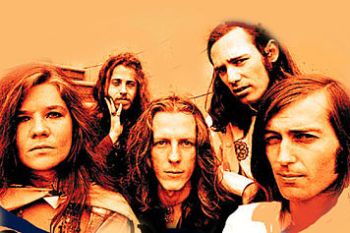
So many of these albums from ’68 seem to have some unique angle on the claim of being among the most important in rock history, and Cheap Thrills by Big Brother and the Holding Company, released this day 50 years ago, is no exception.  It was the band’s second album, and the last one to feature Janis Joplin’s soulful, desperate, wailing blues vocals.

jjbb.jpg

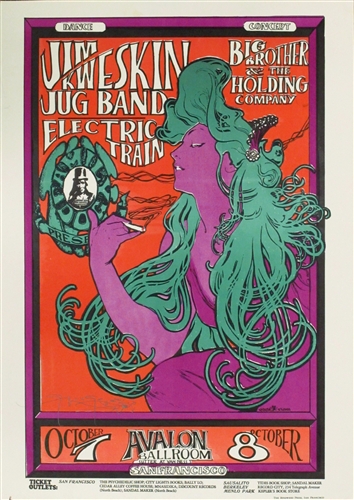
The band had emerged in 1965 in the same San Francisco psychedelic music scene which produced the Grateful Dead, Quicksilver Messenger Service, and the Jefferson Airplane.  They were already established in the Bay Area as a progressive instrumental jam band and house band at the Avalon Ballroom when Joplin, a Texan from Port Arthur, made her way west and auditioned with them.  She made her live debut with the group at the Avalon in June of 1966, and their eponymous debut album was released in August of the following year just after their (her) breakout performance at the Monterey Pop Festival.  It would take months of legal wrangling for the group to extract itself from its contract with Mainstream Records for their move to Columbia, which is why it took another full year for this follow-up release.

cheap-thrills-cover_cropped.jpg

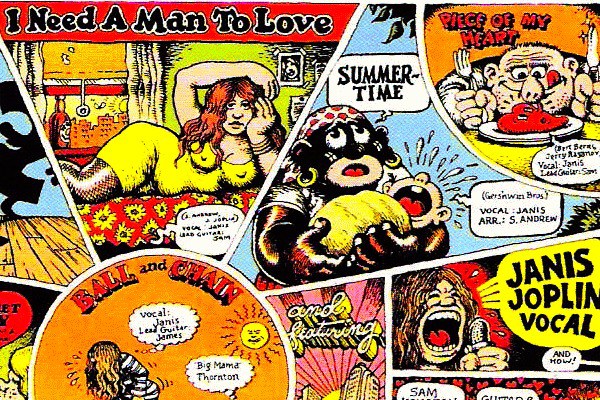
Cheap Thrills was originally intended to be a proper live album to showcase the energetic, raw sound of the band and Joplin’s vocal, but attempts to achieve good recordings on the band’s spring ’68 tour proved fruitless.  They were a little too loud and raw, and audiences outside of California didn’t quite know what to make of them, especially Janis.  So, with producer John Simon, they did the next best thing:  record a “live” album in the studio by adding live audience sound effects.  Their cover of Big Mama Thornton’s Ball and Chain was the only true live recording on the record, taken from the Fillmore West.  But whereas faux, doctored (or “Frankensteined”) recordings cheapened some live recordings in the 70’s (retrospectively speaking), I think it works great in this instance.  And it starts with Bill Graham’s “live” introduction:  “Four gentlemen and one great, great broad:  Big Brother and the Holding Company…”

maxresdefault.jpg

Of the album’s seven tracks, three were covers:  the aforementioned Ball and Chain, Erma Franklin’s Piece of My Heart which ended side one and became the band’s signature song, and Gershwin’s Summertime.  Janis made all of them her songs.  In a 50th anniversary retrospective in Rolling Stone, Jordan Runtagh notes “Joplin’s mournful version of Gershwin’s Summertime seems only to underscore the shift in mood from the Summer of Love to the Summer of Violence that greeted the album. A week after its release, police would beat up demonstrators at Chicago’s Democratic National Convention. A month later, Joplin and Big Brother parted ways for good.”  The album also features the Joplin-penned acoustic blues, Turtle Blues, and Sam Andrew’s cool psychedelic guitar work on Oh, Sweet Mary.

ROCK_1061-2.jpg

The group pushed the envelope with Columbia.  The original title of the album was to be Sex, Dope and Cheap Thrills, and the cover was to feature the group together in bed, naked.  Needless to say, the ideas were vetoed by the suits.  Instead, the cover was drawn by underground cartoonist Robert Crumb.  By the end of the year, Cheap Thrills sold almost a million copies and spent eight weeks at the top of the Billboard charts.  A month later, urged on by her manager Albert Grossman, Janis submitted notice to the band that she was moving on.  Big Brother and the Holding Company had given her a start, but there’s no doubt who the star was, and she needed better musicians to get where she wanted to go.

27559335_1.jpg

As for reviews of the record, it’s kind of the same story that pervades rock music from the era:  Contemporary reviews were all over the place from “not a well-produced, good rock and roll recording” to “it not only gets Janis’s voice down, it also does justice to her always-underrated and ever-improving musicians.”  And retrospectively, it’s considered a masterpiece.  The album’s aspects that were considered negative by some at the time of its release – its messiness and the gravelly onslaught of Joplin’s vocals – are of course now considered crucial elements of its psychedelic glory.

I first heard this album in my mid/late 1980s teens, and it stuck immediately.  I can honestly say my reaction to it was much like what I read contemporary reactions were like:  I’d never heard anything like Janis Joplin.  It wasn’t pretty, and it wasn’t supposed to be.  I discovered Hendrix around the same time, and somehow felt the two of them communicated the blues in such amazing and unique ways that my small Midwest town brain just couldn’t articulate.  They both found mass audiences, but did so without compromising who they were.  Janis Joplin:  a white woman emerging out of nowhere Texas to become not only one of the best female blues singers, but one of the best blues singers ever, period.  Alas, no matter how much we may wonder “What if?,” Janis, along with Jimi, Jim, and others, was a shooting star who was going to burn out.  She recorded two albums as a solo artist (the second a posthumous release) before checking out, but Cheap Thrills is where her star shines the brightest.  The music world could sure use another Janis right about now.

Some interesting factoids about the album can be found here.

https://www.youtube.com/watch?v=wVX9mbCIXVM

Tracklist:

Side One:

  1. Combination of the Two
  2. I Need a Man to Love
  3. Summertime
  4. Piece of My Heart

Side Two:

  1. Turtle Blues
  2. Oh, Sweet Mary
  3. Ball and Chain

https://en.wikipedia.org/wiki/Big_Brother_and_the_Holding_Company#Discography

https://en.wikipedia.org/wiki/Cheap_Thrills_(Big_Brother_and_the_Holding_Company_album)

https://www.allmusic.com/album/cheap-thrills-mw0000194385

https://www.rollingstone.com/music/music-news/janis-joplins-breakthrough-album-10-things-you-didnt-know-about-cheap-thrills-707573/

http://ultimateclassicrock.com/big-brother-holding-company-cheap-thrills/

-Stephen

August 9 – When Cream Rose to the Top

Cream – Wheels of Fire

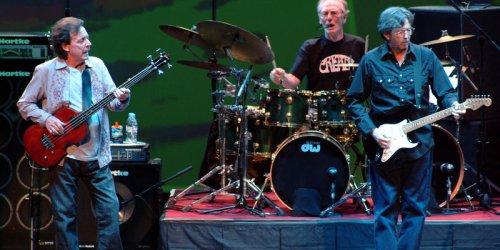
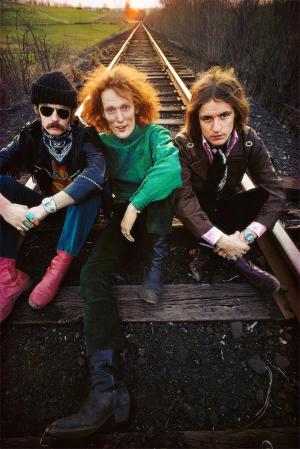
That loud sound you hear is the thunder of White Room, the opening track of Wheels of Fire, that quintessential 1968 double album by power trio Cream, released 50 years ago today.  From here, the record twists and turns in many directions in the studio, from other solid originals penned by bassist Jack Bruce and writing partner Peter Brown such as Politician, As You Said, and Deserted Cities of the Heart, to heavy blues covers of Howlin’ Wolf (Sitting on Top of the World) and Albert King (Born Under a Bad Sign), as well as Ginger Baker’s somewhat bizarre spoken word Press Rat and Warthog.  And that’s only the first record, subtitled In the Studio.

74286795-612x612.jpg
Clapton, Baker, and Bruce

The second album of the set, Live at the Fillmore (named as such despite the fact that three of its four songs were recorded at the Winterland Ballroom), features Cream’s live exploits, showcasing Clapton’s blistering guitar work on the Robert Johnson classic Crossroads and the excessive 16 minute drum solo madness of Ginger Baker on Toad.  Despite the fact that Cream were coming apart at the seams, Wheels of Fire displays the band at their peak, both in the studio and on stage.  It became the first platinum selling double album, and rose to #1 in the US and #3 in the UK with White Room (reaching #6) and Crossroads as singles which continue to endure as radio staples.

2422844_1304_cream_live_1966.jpg

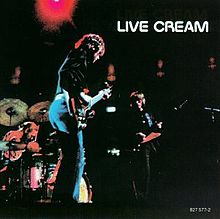
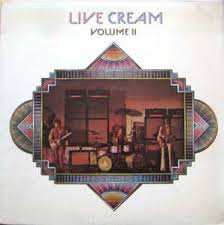
The group, with producer Felix Pappalardi, began work in recording studios in the summer (London) and fall (NYC) of ’67.  However, due to Cream’s relentless touring schedule they had difficulty achieving a solid album, so they returned to the studio in January and February of ’68.  It was then they decided to order a mobile recording studio to be delivered to the Fillmore West and Winterland Ballroom to record six live performances and make it a double album.  The unused material from those shows would comprise the later Live Cream and Live Cream Volume II releases.

220px-Livecream.jpg

download.jpg

For most of the albums I celebrate in these pages, I read through both contemporary and latter day reviews in order to glean some perspective.  But more often than not I come away with an eyebrow raised at what I perceive to be the arrogance of critics who look for any reason to lambast an artist.  Maybe that’s Professional Music Critiquing 101: counterbalance record company hype.  Maybe I’m just ignorant of how this works.  Yet here we are, 50 years on, and if you liked this music 20-50 years ago, chances are you still do.  I certainly do.

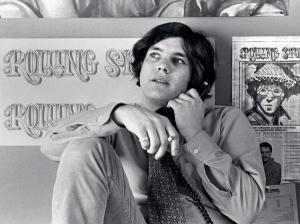
But Jann Wenner in his 1968 critique in Rolling Stone (see link below for the full, embarrassing review) heard White Room as nothing more than a carbon copy of Tales of Brave Ulysses and couldn’t imagine why they chose to repeat it.  I’ll grant that there are similarities, but how was that anything new to rock or blues music?  He also suggested it was “unfortunate” that they recorded the contemporary blues hit, Born Under a Bad Sign because, he wrote, Jack Bruce didn’t have a good voice for blues.  He also wrote that his harmonica playing was “amateurish.”  Wenner did like the live Crossroads, Spoonful, and oddly enough, Toad (a “fine number”), and somehow concluded that the album “will be a monster” despite his misgivings which outweigh his praises.

BN-VO896_JANN1__8H_20171013134146.jpg
Jann Wenner

Stephen Thomas Erlewine in his AllMusic review describes Wheels of Fire as a “dense, unwieldy double album.”  He continues:

…it’s sprawling and scattered, at once awesome in its achievement and maddening in how it falls just short of greatness. It misses its goal not because one LP works and the other doesn’t, but because both the live and studio sets suffer from strikingly similar flaws, deriving from the constant power struggle between the trio.

To me, that power struggle was a major part of what made Cream great, as well as the main reason they unravelled almost as quickly as they began.  And, perhaps that’s the type of information people like Wenner didn’t have in 1968.  They were young, ego-maniacal, substance abusing, brilliant musicians at or near their creative peaks.  They made loud, urgent, volatile, indulgent music, and there was no way they were going to maintain that level of output (the old animosity between Bruce and Baker would even quickly resurface during their brief but highly lucrative 2005 reunion).

rah_29063910307.jpg

They had decided to split during the studio recording sessions that spring and held on for a farewell album and tour the following year.  But Wheels of Fire, along with another “sprawling and scattered” double album by a well-known quartet later that November, captures the essence of 1968 through rock and blues music as well as or better than anyone else – at least to someone like me born after the fact who can only view it through the lens of history.  

©Art Kane_Cream_1_1968.JPG

https://www.youtube.com/watch?v=h66lp3gI7iQ

Tracklist:

Side One (In the Studio):

  1. White Room
  2. Sitting on Top of the World
  3. Passing the Time
  4. As You Said

Side Two:

  1. Pressed Rat and Warthog
  2. Politician
  3. Those Were the Days
  4. Born Under a Bad Sign
  5. Deserted Cities of the Heart

Side Three (Live @ Winterland & the Fillmore West):

  1. Crossroads
  2. Spoonful

Side Four:

  1. Traintime
  2. Toad

https://en.wikipedia.org/wiki/Wheels_of_Fire

https://en.wikipedia.org/wiki/Cream_(band)

http://ultimateclassicrock.com/cream-wheels-of-fire/

https://www.allmusic.com/album/wheels-of-fire-mw0000189640

https://www.rollingstone.com/music/music-album-reviews/wheels-of-fire-95827/

-Stephen

August 1 – The Jeff Beck Group Tells it Like it Is

Jeff Beck Group – Truth

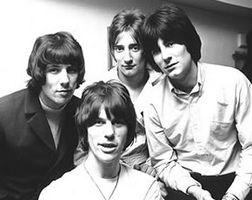
Today we’re celebrating the Golden Anniversary of an early standard-bearer in the hard rock/metal genre.  Truth, the debut for the Jeff Beck Group, is one of those albums you might put on when you arrive home from work on a Friday, crank the volume, and just hope that the neighbors like it, because they’re going to hear it.  Blistering music for a blistering time of year.  The original lineup included Beck on guitars, Ronnie Wood on bass, Micky Waller on drums, and then-consummate front man (where have you gone?) Rod Stewart on vocals.  But they had more than a little help from their friends on this blues based recording.

252px-Jeff_beck_group.jpg
L-R: Waller, Beck, Stewart, Wood

Truth is mostly comprised of covers, beginning with the opening track Shapes of Things, which is a tune from Beck’s previous stop, the Yardbirds.  The album is also a continuation of the love affair English guitarists were having with Chicago blues; even the “originals” (credited to “Jeffrey Rod,” i.e. Beck and Stewart) are reworked Buddy Guy and B.B. King songs.  But the direction in which Beck took them was more aligned with Hendrix and Cream (and the simmering but as-yet-unheard Zeppelin).

My favorite track is the instrumental Beck’s Bolero, which features a very interesting lineup:  Besides Beck on guitar, Nicky Hopkins plays piano, John Paul Jones is on bass, Jimmy Page (uncredited) plays 12-string electric guitar, and Keith Moon (credited as “You Know Who” for contractual reasons) is on the skins.  It was also Page who wrote the song. (Jones, Hopkins, and Moon also play on other tracks.)

o6FVMyYATXmeYYGQmahHxg.jpg

Musician, band leader, engineer, A&R man, and music critic extraordinaire Al Kooper (whose name may end up gracing these pages more than anyone else, at least for 1968) shared his two very different opinions of the band in his September 1968 review in Rolling Stone, after first hearing the Jeff Beck Group live early on prior to listening to the album:

It was an unnerving experience to hear the Beck group. I had to leave after three numbers. The band was blowing changes, the bass player was losing time, Beck was uncomfortably and bitingly over-volumed, the singer was doing deep knee-bends holding the mike stand like a dumbbell (original, but so what.) It didn’t make a hell of a lot of sense to me.

But his evaluation of the record is much more positive:

As a group they swing like mad on this record. It remains to be seen what will happen to them in person. I hope the public is honest enough to make them work out.

Bruce Eder points out in his AllMusic review that Truth was “a triumph — a number 15 album in America, astoundingly good for a band that had been utterly unknown in the U.S. just six months earlier — and a very improbable success.”  

And, given that the group’s follow-up album (Beck-Ola) a year later is a brief 30 minutes long, you could probably go ahead and squeeze it in as well during Friday evening cocktail hour for the full Jeff Beck Group experience before the neighbors call the cops.

https://www.youtube.com/watch?v=9auGQ7OxMtE

Tracklist:

Side One:

  1. Shapes of Things
  2. Let Me Love You
  3. Morning Dew
  4. You Shook Me
  5. Ol’ Man River

Side Two:

  1. Greensleeves
  2. Rock My Plimsoul
  3. Beck’s Bolero
  4. Blues De Luxe
  5. I Ain’t Superstitious

Here’s a Jeff Beck Group show at Louann’s in Dallas, July 19, 1968 (the club is long gone, but was just a couple of blocks from where I’m presently employed):

https://en.wikipedia.org/wiki/Truth_(Jeff_Beck_album)

https://www.rollingstone.com/music/music-album-reviews/truth-2-184508/

https://www.allmusic.com/album/truth-mw0000262744

https://www.dmagazine.com/publications/d-magazine/1977/february/remembering-louanns/

-Stephen

July 31 – Midsummer Odds ‘n Ends

It’s time to wrap up another month.  July was a big month for major releases, but there are plenty more to come in the back half of 1968.  This project has been a lot of fun so far, and I hope I’ve been doing these releases justice.  Here are some other noteworthy July ’68 releases and events before we head into the grind of August:

7/5  Tyrannosaurus Rex – My People Were Fair and Had Sky in Their Hair…But Now They’re Content to Wear Stars on Their Brows

This was the debut of Marc Bolan’s band, yet to be called simply T. Rex.  As often seems to be the case, retrospective reviews of the album are kinder than the originals.

TRex_1st_album_cover.jpg

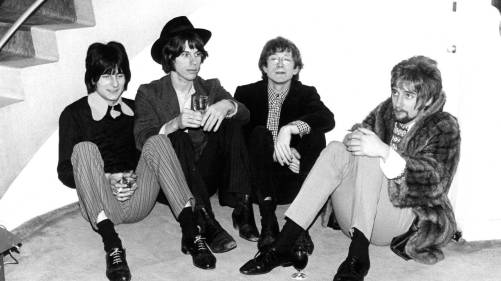
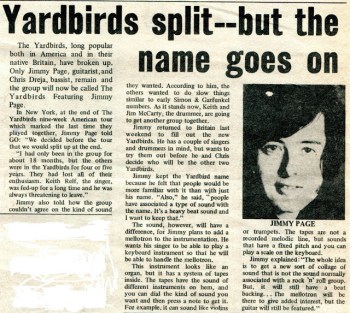
7/7  The Yardbirds final show took place at the College of Technology in Luton, Bedfordshire, supported by the Linton Grae Sound.  Within weeks, Jimmy Page would assemble the New Yardbirds, a.k.a., Led Zeppelin.

img275.jpg

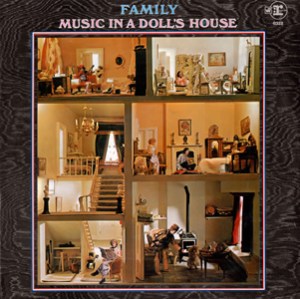
7/19  Family – Music in a Doll’s House

Another debut, this one by the English progressive rock band Family.  Family is one of those bands I feel I should know more about by now, but I really don’t (other than Ric Grech’s involvement).  They’re on my mental list of perhaps unjustly undercelebrated prog bands to check out, which also includes the likes of Gentle Giant and Soft Machine.  For an excellent critique of this album, check out fellow blogger Zumpoem’s write-up.

Musicinadollshouse.jpg

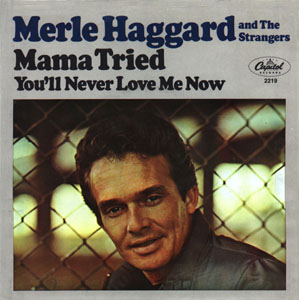
7/22  Merle Haggard – Single:  Mama Tried

The title track and first single from his new album released three months later, Mama Tried became a beloved country song and a cornerstone of Haggard’s career.  Though not purely autobiographical, it is based on his time as an inmate at San Quentin.  It reached #1 on the U.S. Billboard Hot Country Singles Chart as well as #1 in Canada.   It won the Grammy Hall of Fame Award in 1999, and was selected for preservation in the National Recording Registry due to its “cultural, historic, or artistic significance” on March 23, 2016, just 14 days before Haggard’s death.  The track has been covered by other artists many times.  My favorite cover is the Grateful Dead’s.  They performed the song live over 300 times.

Haggard_-_Mama_Tried_cover.jpg

https://en.wikipedia.org/wiki/My_People_Were_Fair_and_Had_Sky_in_Their_Hair…_But_Now_They%27re_Content_to_Wear_Stars_on_Their_Brows

https://en.wikipedia.org/wiki/The_Yardbirds#Final_days:_the_Page_era

https://en.wikipedia.org/wiki/Music_in_a_Doll%27s_House

https://en.wikipedia.org/wiki/Mama_Tried_(song)

-Stephen

July 30 – Buffalo Springfield Bow Out

Buffalo Springfield – Last Time Around

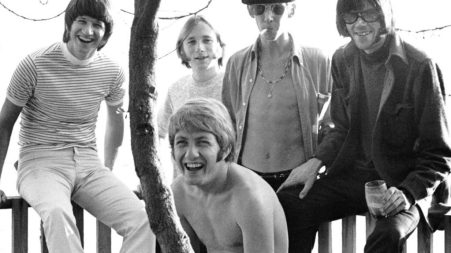
This record seems to have defied the odds with how good it is.  Contract obligation albums have often not been the best representation of rock groups, and in the case of Buffalo Springfield, they had already gone their separate ways by the time this one was released.  The tracks had been recorded months earlier in late ’67-early ’68.  But producer Jim Messina, who also played bass and sang on a couple of songs, pulled a very good swan song album out of the void of participation by the others.

Buffalo Springfield.jpg

The other side of the coin for Last Time Around, released 50 years ago today, is that it is really more of a collection of solo songs.  The opening track, On the Way Home, is the only song with all five original members participating.  The lyrics to one of the tracks, The Hour of Not Quite Rain, were actually written by a fan who won a radio station contest, something that seems more fitting for a Monkees bio.  And even that’s an enjoyable listen to my ears.  The upbeat Latin flavored Uno Mundo, one of five Stills penned songs, features a rather dark lyric for such a happy sounding song:  Uno Mundo/Asia is screaming/Africa seething/America bleating/just the same.  Stills took a bit of a hit with critics, who wrote that his contributions weren’t up to his standard.  I don’t hear it that way; his other songs, Pretty Girl Why, Four Days Gone, Special Care (with Buddy Miles on drums), and Questions (which he later revived for on the CSN&Y song Carry On) are all fantastic tracks.

Buffalo-Springfield-1023x576.jpg

It was the mercurial Neil Young whose participation was next to nil on this project.  Despite this, the two tracks he did write for the album went on to be classics:  I Am a Child and On the Way Home (the latter sung by Richie Furay on the album, though my favorite rendition is with Neil on vocals).  The closing track is Furay’s Kind Woman, a ballad for his wife who he is still married to today.  It’s a nice, peaceful ending to a tumultuous three years for a very heavily ego-driven band.

The album could be looked at as an embarrassment of riches considering how much great music they recorded on the first two albums and knowing where they were headed in the immediate future:  Furay and Messina would form Poco, the very influential early country-rock band, Neil would record his first solo record before rejoining Stills, along with Crosby and Nash, on their second album.  And Stills, before joining CSN and a mere two days before Last Time Around was released, would have his name featured on a highly acclaimed blues rock album with Al Kooper and Mike Bloomfield (which I wrote about here).

Tracklist:

Side One:

  1. On the Way Home
  2. It’s So Hard to Wait
  3. Pretty Girl Why
  4. Four Days Gone
  5. Carefree Country Day
  6. Special Care

Side Two:

  1. The Hour of Not Quite Rain
  2. Questions
  3. I Am a Child
  4. Merry-Go-Round
  5. Uno Mundo
  6. Kind Woman

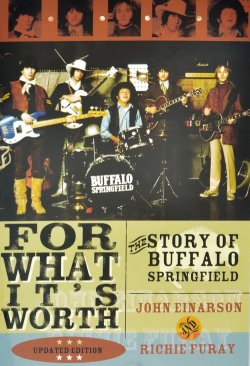
A very solid bio of the band is For What It’s Worth:  The Story of Buffalo Springfield (2004).  It was written by respected music history writer John Einarson with Richie Furay.  It seems like a pretty even-handed account of their story, and is bolstered by Furay, who appears to have been the most level-headed member of the group.

IMG_7637.jpg

https://en.wikipedia.org/wiki/Last_Time_Around

https://www.allmusic.com/album/last-time-around-mw0000310624

https://books.google.com/books/about/For_What_It_s_Worth.html?id=vIdR–aAoAsC

-Stephen