Neil Young’s Ditch Trilogy, Pt. 4

Neil Young – On the Beach

Sooner or later it all gets real – from Neil’s track, Walk On

Today we revisit On the Beach, the final link in Neil Young’s Ditch Trilogy, which put on full display not only Young’s state of mind in the early 1970’s, but also the zeitgeist of America.  As discussed in my previous post, while On the Beach was the last of the three to be recorded, it was actually the second to be released, as well as the long-awaited studio followup to Harvest.  Therefore, even though the songs weren’t quite as caustic as Tonight’s the Night and the production a little cleaner, it was still a shock to fans expecting a radio-friendly offering.

on_the_beach_poster_detail.jpg

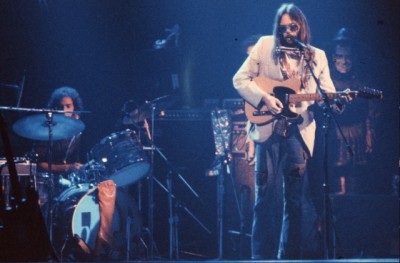
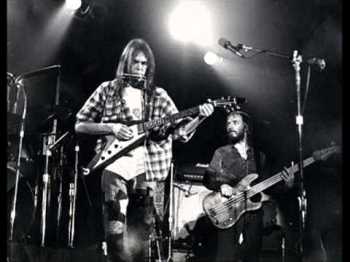
The album was recorded over two months, from February to April 1974.  By the time it was released on July 16, Neil had moved on and was a month away from CSNY’s reunion mega-tour (perhaps worth a write-up itself).  Unlike his previous studio efforts, Neil enlisted the help of numerous musicians instead of a core band, including Rick Danko and Levon Helm of the Band.

If Tonight’s the Night was an emotional purge, On the Beach was part resignation to the bleakness that was his world view at the time, and part leaving it behind.  Hence the opening track, Walk On.  Young also tackles some of the sensational stories of the era in a manner that, as pointed out in the original Rolling Stone review of the album, puts listeners in the shoes of both the predators and the victims.  This is heard in Revolution Blues (Charles Manson, whom Young had known) and Ambulance Blues (Patty Hearst):

I saw today
In the entertainment section
There’s room at the top
For private detection.
To Mom and Dad
This just doesn’t matter,
But it’s either that
Or pay off the kidnapper – from Ambulance Blues

In Vampire Blues, Neil takes aim at the oil industry and perhaps our insatiable thirst for the black gold:

I’m a vampire, babe,
Suckin’ blood
From the earth
I’m a vampire, baby,
Suckin’ blood
From the earth.
Well, I’m a vampire, babe,
Sell you
Twenty barrels worth

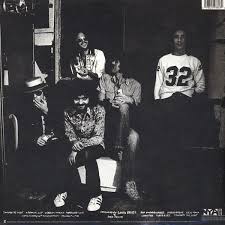
Also of interest to fans and critics is the album jacket with its gaudy 70’s lawn furniture and pale yellow motif – even on the inside – right down to the can of Coors resting on the table and the fin of a Cadillac half buried in the sand like a crashed rocket (from better days?).  Under the table rests a newspaper with the headline:  Senator Buckley Calls for Nixon to Resign.  On the back of the jacket stands a solitary, rather pitiful looking palm tree in a pot.
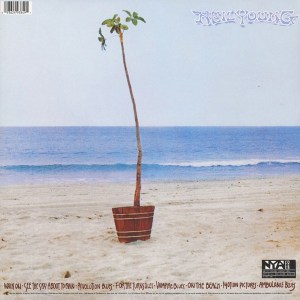
neil-young-on-the-beach-lp-vinyl-bernie-grundman-official-release-series-aaa-pallas-2016-eu.jpg

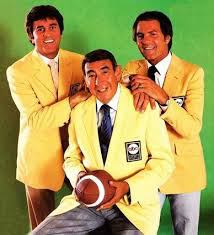
Neil’s blazer makes him look like he just stepped out of the Monday Night Football broadcast booth with Howard Cosell and the gang.  Well, maybe not, but you get the picture.  Neil’s art director was Gary Burden, who passed away less than a month ago at the age of 84.  Burden also worked with Joni Mitchell, the Doors, and My Morning Jacket, and collaborated with famous rock photographer Henry Diltz.

images.jpg

MNF.jpg

I first listened to On the Beach when I managed to find a new-but-cut-out LP in the early 90’s when it was out of print, and it’s been in my regular rotation since.  I went without it for a couple of years when I foolishly lost track of my small LP collection, but replaced it on CD when it was re-released in 2003.

I’d like to wrap up Neil Young’s Ditch Trilogy with a bit of unsolicited social commentary:  While I don’t consider myself to be in a personal rut despite my enthusiasm for these emotionally charged albums, with regard to On the Beach, it feels very apropos of the current atmosphere in the US in my perception.  Coincidentally, a certain president is speaking at the convention of a certain organization of gun enthusiasts in my town on this very day.  I don’t know where we’re headed, and this album captures that mood perfectly for me.

So you be good to me
And I’ll be good to you,
And in this land of conditions
I’m not above suspicion
I won’t attack you,
But I won’t back you – from Revolution Blues

https://www.youtube.com/watch?v=gALPWW9QByQ&list=PL94gOvpr5yt1mZgtJSDkoIni5N8XsEB-7

Tracklist:

Side One:

  1. Walk On
  2. See the Sky About to Rain
  3. Revolution Blues
  4. For the Turnstiles
  5. Vampire Blues

Side Two:

  1. On the Beach
  2. Motion Pictures
  3. Ambulance Blues

In addition to the online citations I’ve included at the bottom of each edition of this series, I’d also recommend Jimmy McDonough’s solid biography of Neil Young, Shakey, which was published in 2002.

I’ll have a postscript to this little series next time ’round.
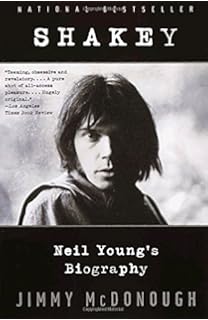
Image result for neil young book

https://en.wikipedia.org/wiki/On_the_Beach_(Neil_Young_album)

http://neilyoungnews.thrasherswheat.org/2013/05/neil-young-bottom-line-club-new-york.html

http://neilyoungnews.thrasherswheat.org/2017/03/neil-youngs-on-beach-images-behind.html

http://thrasherswheat.org/tnfy/on_the_beach_rolling_stone_092674.htm

http://www.lyricsmode.com/lyrics/n/neil_young/revolution_blues.html

-Stephen
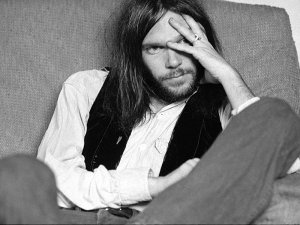


Neil Young’s Ditch Trilogy, Pt. 3

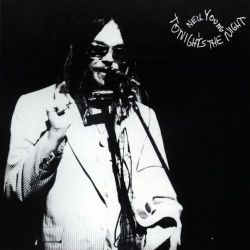
Neil Young – Tonight’s the Night

I’m sorry. You don’t know these people. This means nothing to you. – Neil Young, in the liner notes to Tonight’s the Night.

Harrowing, boozy, bluesy, scary, druggy, world-weary, cracked, confrontational, emotionally apocalyptic, glorious mess, weirdo genius:  This is a sample of some of the words used by music critics over the years to describe the second album recorded in Neil Young’s Ditch Trilogy, though it was the final one to be released.  The reason for this is because Warner Bros. withheld the album for almost two years in hopes that Young would create something more commercially pleasing and less harrowing, boozy, scary…

C1jdl+2TiFS._SL1000_.png

Recorded in August and September of 1973 but not released until June of 1975, Tonight’s the Night was the first studio album Neil recorded after the drug-related deaths of friends Bruce Berry and Danny Whitten the year before, and it’s even more jarringly raw than its live predecessor, Time Fades Away, which wasn’t released until the month after the recording of Tonight’s the Night was wrapped up.  Confused?  Neil’s timeline from these years is almost as sloppy as his music, and that’s just fine with me.  This album is a no holds barred perpetuation of his abrasive, unapologetic catharsis.  He had money and fame; he could’ve slipped away from the public eye for a spell to deal with his grief in private.  Instead, he continued to share the trip into his personal heart of darkness with his fans because that’s what true artists do, take it or leave it.

GettyImages-113247491-1519488039-640x422.jpg

Critics mostly took it from the day of its release, while his fans were a little slower to catch on to the beauty of its many imperfections.  But they did eventually.  Tonight’s the Night was recorded mostly live in the studio, primarily during one session in August, with his professional-yet-ragtag group the Santa Monica Flyers, featuring the Crazy Horse rhythm section of Ralph Molina and Billy Talbot, and a 22-year-old Nils Lofgren on guitar.  Right in the middle of the record is a creepy and haunting reminder of what it’s all about:  a live recording of Neil with Crazy Horse at the Fillmore East in 1970 with the late Whitten on vocals singing Come On Baby Let’s Go Downtown, an upbeat rocker which makes light of the drug scene which ultimately consumed him.

images.jpg
The back of the Tonight’s the Night jacket.

I first delved into Uncle Neil’s catalog at the age of 18 in 1989 upon the release of Freedom.  That album, plus Ragged Glory, Rust Never Sleeps, Live Rust, After the Gold Rush, Harvest, and Everybody Knows This is Nowhere, was in my blood before I took the plunge with Tonight’s the Night.  I had picked it up, studied it, and returned it to its slot at Streetside Records on more than one occasion over a period of two or three years in the early 90’s.  I listened to it for the first time without a good understanding of what went into it and liked it, but only because I’d steeped myself in those albums listed above.  It was still a bit of a shock and an acquired taste for me, but eventually it clicked.  By the time it did, it had long been considered one of the best albums in rock history by various music publications.

https://www.youtube.com/playlist?list=PL94gOvpr5yt3Gz94uu1UztA5cD_iIq_k-

Tracklist:

Side One:

  1. Tonight’s the Night
  2. Speakin’ Out
  3. World on a String
  4. Borrowed Tune
  5. Come on Baby Let’s Go Downtown
  6. Mellow My Mind

Side Two:

  1. Roll Another Number (For the Road)
  2. Albuquerque
  3. New Mama
  4. Lookout Joe
  5. Tired Eyes
  6. Tonight’s the Night (Part II)

http://thrasherswheat.org/tnfy/ttn_album.htm

https://en.wikipedia.org/wiki/Tonight%27s_the_Night_(Neil_Young_album)

https://www.superseventies.com/spyoungneil5.html

-Stephen

Neil Young’s Ditch Trilogy, Pt. 2

Neil Young – Time Fades Away

A long time ago, in a galaxy far, far away, a band would release an album – hopefully a good one – then go on a concert tour heavily promoted by the record company to solidify the record’s place in the music world, and in turn sell more records.  Occasionally a live album from that tour would follow.  Wash, rinse, repeat.  Coming off his 1972 hit album Harvest, fans of Neil Young who bought tickets to see him and the Stray Gators on tour in early ’73 expected a show which featured that album and earlier hits.  But fans weren’t fully aware of the catharsis Young was undergoing at the time.  While the accepted truth that has developed over the years that concert-goers didn’t hear Harvest songs or any of their older favorites on this tour is a misnomer, neither the set lists nor the vibe of the shows were what they expected.

hqdefault.jpg

While rehearsing in late ’72 for the upcoming tour, Young dismissed guitarist and friend Danny Whitten from the group, giving him some cash and a plane ticket back to L.A.  Whitten, in the throes of heroin addiction, was simply unable to play.  Shattered, Whitten died of an overdose of Valium and alcohol the following day, sending an already unstable Neil reeling.

87185585_135310072075.jpg
Danny Whitten

And with that, Neil Young and the Stray Gators set out on a three-month, 62 (!) show, tequila-soaked tour, combative with each other from the start.  Once the tour began, the band began demanding larger salaries, and as the nightly wake for Whitten wore on, Neil’s voice wore out.  Halfway through the tour, drummer Kenny Buttrey left and was replaced by Johnny Barbata.  Also, Young enlisted the help of old band mates David Crosby and Graham Nash to assist with vocals.

https://www.youtube.com/watch?v=GVn8jvddl64

The resulting live album, Time Fades Away, was released on 10/15/73, and was met with positive reviews by critics, though many fans didn’t care for it at the time as it was seen as a complete departure from what he was known for.  Seven of its eight songs were written for that tour, the eighth a leftover from his solo 1971 tour.  It’s ragged and uneven, heavy but not overly loud.  It’s a perfect document of where he was emotionally at the time, but with the stress of the tour ingrained in his memory he considered it his worst album.  Young explained:

Money hassles among everyone concerned ruined this tour and record for me but I released it anyway so you folks could see what could happen if you lose it for a while. I was becoming more interested in an audio vérité approach than satisfying the public demands for a repetition of “Harvest.”

Eventually the album fell out of print and stayed there for years with Neil showing no interest in revisiting the tour.  Meanwhile, fan demand for its re-release grew until it finally reappeared on vinyl a couple of years ago, then on CD as part of the Original Release Series a year later.  As of this writing, it’s still not available on CD as a stand-alone release.  Thank goodness for bootlegs and good ol’ YouTube, since I refuse to re-purchase three albums I already own to get one I don’t.  Standouts on the release for me include Don’t Be Denied, L.A., Yonder Stands the Sinner, and the title track.

Neil has stated that his Archives Vol. 2 will include the title Time Fades Away II, with different material from the ’73 release.  While I like the original as it is, hopefully II would be a fuller example of what a typical show from the tour sounded like.  And again, that’s if and when it ever comes out.  Either way, the ’73 version is available to anyone who wants to hear it.  By the time it originally came out, Young was already further along in the ditch with another new batch of raw, beautifully grating tunes in his exploration of audio vérité.  He would continue to meet life’s demons head on, and for this fan it made for great art.

Tracklist:

Side One:

  1. Time Fades Away
  2. Journey Through the Past
  3. Yonder Stands the Sinner
  4. L.A.
  5. Love in Mind

Side Two:

  1. Don’t Be Denied
  2. Bridge
  3. Last Dance

https://www.setlist.fm/setlists/neil-young-and-the-stray-gators-1bd241a4.html

https://en.wikipedia.org/wiki/Time_Fades_Away

http://thrasherswheat.org/tnfy/timefadesaway_album.htm

-Stephen


When Neil Young Found His Muse in the Ditch, Pt. 1

“Heart of Gold” put me in the middle of the road.  Traveling there soon became a bore so I headed for the ditch.  A rougher ride but I saw more interesting people there. – Neil Young, from the liner notes to his 1977 compilation, Decade.

Loss, lament, despair, societal decay, and a general feeling of gloom:  These are a few of the elements that can comprise great art.  Life isn’t always rosy, and for artists who are able to express these sentiments effectively there will always be an audience.  It’s not everyone’s cup of tea, but for those whom it touches, it can be very moving.  For me, Neil Young’s work hits that nerve.  That’s not to say I need to be in a melancholy frame of mind to listen to him, far from it.  There’s joy to be had when pressing on through sadness or the mundane, and if there’s one phase of Neil Young’s long career which encapsulates this philosophy, it’s the period from roughly 1973-1975 when he released three albums that came to be known as the Ditch Trilogy: Time Fades Away, On the Beach, and Tonight’s the Night.

neil_young_-time_fades_away.jpg

61-nbgwo6l-_sl1000_.jpg

MI0004147283.jpg

While we continue to wait for his Archives, Vol. 2, which will cover this period even more in-depth (if and when it sees the light of day), and with his recent stand-alone archival release from this era, Roxy:  Tonight’s the Night Live, I thought I’d revisit the glorious doom of Neil’s time in the wilderness.  The factors which led Neil in this direction are well-known to his fans:  the dark side of the late 1960’s/early 1970’s, including the loss of his friends Danny Whitten (band member) and Bruce Berry (roadie) to drug overdoses, as well as national stories including the Manson Family, the Patty Hearst saga, the oil embargo, and Nixon.  Generally speaking, it was the overall demise of the hippie dream.

In the midst of all this, Young unexpectedly struck gold with his 4x Platinum Harvest album, released in February of 1972.  But his positive feelings about the accomplishment didn’t last long.  As Neil told Melody Maker in 1985:

I guess at that point I’d attained a lot of fame and everything that you dream about when you’re a teenager.  I was still only 23 or 24, and I realised I had a long way to go and this wasn’t going to be the most satisfying thing, just sittin’ around basking in the glory of having a hit record.  It’s really a very shallow experience, it’s actually a very empty experience…So I think subconsciously I set out to destroy that and rip it down, before it surrounded me.  I could feel a wall building up around me. 

51D2yn9KVZL._SX355_.jpg

https_%2F%2Fimages.genius.com%2F8702261e6c5835c381370064d9592c74.600x600x1.jpg

Later in ’72, after a poorly received soundtrack to a documentary about Young that few people saw at the time, both titled Journey Through the Past, Neil would begin to tear down that wall in startling musical fashion.  As with his friend and musical peer Bob Dylan, he would unapologetically express where he was at that time through his music, fan base expectations be damned.  The feel-good sequel to Harvest wouldn’t arrive for another 20 years.  Neil’s journey through the present at that time was so rough that one of the three albums fell out of print and remained there until somewhat recently, with Young not wanting to revisit much of it.  However, not only have these three albums held up well over time, they actually continue to gain appreciation from critics and fans alike.  But before we look back at Shakey’s dramatic 90-degree turn, here’s a performance of a track from Harvest which hinted at the vibe to come:

http://thrasherswheat.org/tnfy/ditch.htm

http://neilyoungnews.thrasherswheat.org/2018/02/neil-youngs-ditch-trilogy-or-is-it.html

https://en.wikipedia.org/wiki/Harvest_(Neil_Young_album)

-Stephen
April 1968 – Spring Cleaning

Some final musical notes on April 1968 releases:

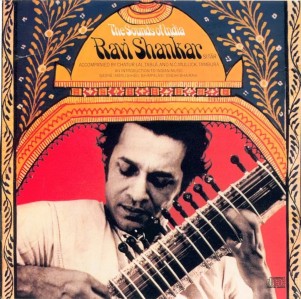
Ravi Shankar – The Sounds of India

This studio album was the second Ravi Shankar title I owned.  Actually, I burned it from a friend’s cd onto cassette almost 30 years ago, and it’s still out in the garage somewhere as we’re currently a cd-only household (I really need to get my turntable out of mothballs).  It was a bit strange to me at first, not because of the Hindustani classical music I was becoming more interested in, but because of the album’s production:  Shankar gives brief lessons between pieces on the significance of each performance (e.g., a morning raga vs. an evening raga).  He also did this frequently in concerts outside his native India.  I still laugh whenever I hear him address the largely clueless Madison Square Garden audience during the Concert for Bangladesh after their initial polite applause:  “Thank you.  If you appreciate the tuning so much, I hope you will enjoy the playing more.”  Ravi was a true cultural ambassador.

maxresdefault.jpg

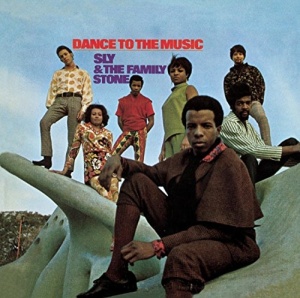
Sly and the Family Stone – Dance to the Music

This second album by the group gave us the hit title track and was influential with acts such as the Temptations and the Jackson 5.  Sly and the Family Stone were rising fast.

0001260569.jpg

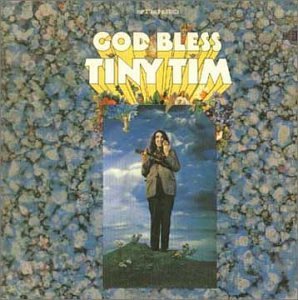
Tiny TimGod Bless Tiny Tim 

I…I, um, don’t really know what to say about this one.  In my mind, Tiny Tim was in a class of celebrities that included people like Phyllis Diller and Charo (aka María del Rosario Mercedes Pilar Martínez Molina Baeza).  You know, the kind of entertainers who popped up occasionally anywhere from The Tonight Show with Johnny Carson to Sesame Street, from Scooby Doo to Match Game, and from Laugh In to The Love Boat.  Then you find out later in life that, unlike today’s celebs who are “famous for being famous,” they were actually very talented people.

41Z1Z8GF6BL.jpg

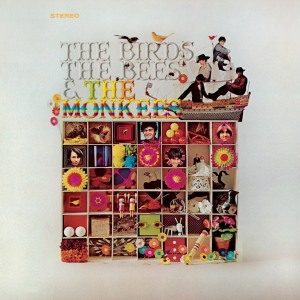
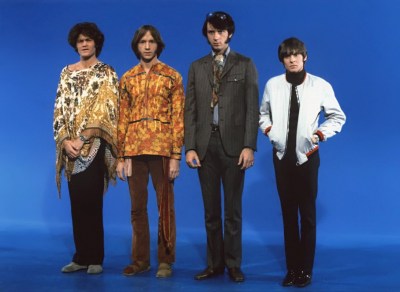
The Monkees – The Birds, The Bees, and the Monkees

This is the fifth studio album by the Monkees, released the month after their final TV episode aired.  It was the first to not reach number one on the Billboard charts (!).  The album yielded two hits:  Valleri and chart-topper Daydream Believer.

maxresdefault.jpg

Archie Bell and the Drells – Single:  Tighten Up

The first I recall hearing this song was not on an oldies radio station, but on VH1’s My Generation hosted by Peter Noone in the late 1980’s.  The song was a hit in Bell’s native Houston before Atlantic Records picked it up for distribution in April 1968, where it subsequently reached number one on Billboard’s R&B and pop charts – while Bell was doing time in Vietnam.  Years later I was lucky enough to hear Tighten Up almost hourly at a retail job, where the song was included on one of those corporate-distributed mixed cd’s played in-store, seemingly on a loop.

https://www.youtube.com/watch?v=uN7vm-k-AaA

On to May…


https://en.wikipedia.org/wiki/The_Sounds_of_India

https://en.wikipedia.org/wiki/Dance_to_the_Music_(Sly_and_the_Family_Stone_album)

https://en.wikipedia.org/wiki/God_Bless_Tiny_Tim

https://en.wikipedia.org/wiki/The_Birds,_The_Bees_%26_The_Monkees

https://en.wikipedia.org/wiki/Tighten_Up_(Archie_Bell_%26_the_Drells_song)

-Stephen

April 29 – Klaus Voormann at 80

The list of the Beatles’ friends and associates who played significant roles in the band’s lore is a mile long.  Some were shady characters who owned (or were bouncers at) the dank clubs the band played in early on.  Others were music executives and promoters who got the better of manager Brian Epstein in business deals.  The women in their lives would fill volumes, as would the group’s general list of reliable friends and associates.  Klaus Voormann is one of the good guys they knew from their early Hamburg days along with his friends Astrid Kirchherr and Jürgen Vollmer, and he has remained a trusted friend, artist, and session musician throughout the years.  Mr. Voormann turns 80 today.  Let that sink in, Beatle fans.  Alles Gute zum Geburtstag, Klaus!

Klaus1.jpg

Voorman’s impressive list of album credits as designer, musician, and producer began in 1966 with his cover design for the Beatles’ Revolver.  Shortly thereafter he became the bassist in Manfred Mann.  He would go on to play on recording sessions for solo Lennon, Harrison, and Starr records, as well as dozens of others including Peter Frampton, Lou Reed, Carly Simon, Howlin’ Wolf, and B.B. King.  Voormann played in Harrison’s Concert for Bangladesh in 1971, as well as the memorial celebration show for his friend, Concert for George, 31 years later.

Revolver_IllustrationChronicles_1482.jpg
Voormann’s best known design
Klaus 4.jpg
Voormann (left) on bass at the Concert for Bangladesh (1971) with George Harrison and Jesse Ed Davis

Klaus 2.jpg

Did you know:

That Voormann produced this infectious ditty by by the German band Trio in 1982?:

https://en.wikipedia.org/wiki/Klaus_Voormann

https://www.beatlesbible.com/people/klaus-voormann/

https://en.wikipedia.org/wiki/Da_Da_Da

-Stephen

April 19 – Like a Zombie: The Album That Wouldn’t Die

The Zombies – Odessey and Oracle

For the Zombies, the road to Odessey was a bit of an odyssey.  The seed was planted in 1958 when schoolboys Rod Argent, Paul Atkinson, and Hugh Grundy began playing music together.  After five years playing small UK gigs as the Mustangs, the group, now including Colin Blunstone and Chris White, changed their name to the Zombies in 1962.  Their only successful singles until 1969 were She’s Not There and Tell Her No, released in 1964 and 1965, respectively.

The-Zombies-2-resize-1280x620.jpg

After the group’s first full album, 1965’s Begin Here, flopped, they signed with CBS Records and recorded Odessey and Oracle, mostly at EMI’s Abbey Road Studios, beginning June 1, 1967 and completing it November 7.  Odessey was accidentally misspelled by the album cover designer, but the band would claim it was intentional (psychedelic, man!).  By the time the album was released in the UK on this date in 1968, the group had already split over internal disagreements and a lack of commercial success.

Rod Argent went on to form the band Argent in 1969 while the others found work ranging from music executives to insurance.  CBS did not intend to release the record in the US until staff producer, musician, and jack of all musical trades Al Kooper heard the album and insisted upon its release in the states.  Lo and behold, Time of the Season became a hit single and the slow re-evaluation of the album began.  Today, Odessey can be found in music publications listed among the all-time best albums

From the vantage point of 50 years on, it’s hard to understand why this album wasn’t more of a hit from the get-go.  Perhaps if albums such as Revolver, Pet Sounds, and Sgt. Pepper hadn’t already existed, Odessey would’ve stood out more.  Maybe the record buying public was experiencing a Summer of Love hangover and had moved on to heavier sounds.

Then again, if those albums hadn’t been recorded, Odessey might not have been either.  In no way do I consider Odessey a ripoff, as the album stands on its own merits.  But to my ears these are pop gems crafted in the spirit of McCartney and Wilson.  While it’s a shame the group wasn’t able to revel in the success of its creation in 1968, there would be subsequent well received reunions down the road with Odessey and Oracle played in full.  One of my live music regrets is not seeing them in 2015 when they played nearby.

Tracklist:

Side One:

  1. Care of Cell 44
  2. A Rose For Emily
  3. Maybe After He’s Gone
  4. Beechwood Park
  5. Brief Candles
  6. Hung Up On a Dream

Side Two:

  1. Changes
  2. I Want Her She Wants Me
  3. This Will Be Our Year
  4. Butcher’s Tale
  5. Friends of Mine
  6. Time of the Season

https://en.wikipedia.org/wiki/Odessey_and_Oracle

https://en.wikipedia.org/wiki/The_Zombies

-Stephen

April 3 – A Simon & Garfunkel Classic

Simon and Garfunkel – Bookends

Today we celebrate the 50th anniversary of the release of one of those generation defining albums, Simon and Garfunkel’s sometimes deceptively whimsical Bookends.  Not including the soundtrack to The Graduate released earlier in the year, this was the first studio album by the duo in a year and a half, an eternity for in-demand acts in those days.  Sporadic work on the album began in 1966.  Hazy Shade of Winter was recorded during sessions for the Parsley, Sage, Rosemary and Thyme album, but was released as a single at the time instead.  The following year the duo helped organize the Monterey Pop Festival, where they also performed, while Fakin’ It was released as a single.  Recording proceeded slowly throughout the fall and into 1968, with finishing touches in early March.

maxresdefault

As part of their recording contract, Columbia Records picked up the tab for their sessions, giving Simon and Garfunkel free rein to take their time and be as meticulous as they wanted to be, which they were, at least on the conceptual first side of the record.  Side two, other than Mrs. Robinson, is comprised of previously unused tracks recorded for possible inclusion in The Graduate soundtrack.  Surprisingly, Simon seems to have had little regard for those tracks at the time.  Not unlike Sgt. Pepper the year before, the concept portion of Bookends ends rather quickly with the rest being a collection of songs.  But also like Pepper, it works.  In all, the whole thing lasts a very concise 29:51.

This is among the albums that fascinated me during childhood.  It didn’t occur to me then that this was from the same period as some of the other late 60’s music I was familiar with from my brothers’ collection or the radio.  The stark, black and white cover, the turtlenecks, and Simon’s short hair all suggested another time and another sound to me, although I wouldn’t have been able to articulate it.  But of course it is a quintessential 1960’s record, as much so as any of its contemporaries.  And, it reached number one in both the US and UK.

61kbXVzBRmL._SL1050_.jpg

The album has always made me imagine bleak 1960’s winters in New York City, of tiny apartments there with clanking radiators blasting out heat, of a bottle of milk and a bruised apple in the fridge and not much else, of hanging on to that one remaining friend in old age, of loneliness.  But in my young person’s mind, that was someone else’s reality, not mine.  When I would hear Voices of Old People as a child, I was always relieved to know that I would never grow old and never be so sad and grumpy.  If there was ever any doubt, it would be erased by the more lively side two which winds up at the zoo, where it was all happening and always would be.

But before visiting the skeptical orangutans, the album’s journey detoured out of the city and into America.  As I’ve grown to middle age, this song remains a bit of a personal lament for that road trip out west I never took as a 20-year-old, with a best buddy along the Pacific coast.   Or wherever.  I guess that’s what Kerouac and Steinbeck are for, to fill in those gaps.  Them, and albums such as this.

Tracklist:

Side One:

  1. Bookends Theme
  2. Save the Life of My Child
  3. America
  4. Overs
  5. Voices of Old People
  6. Old Friends
  7. Bookends Theme

Side Two:

  1. Fakin’ It
  2. Punky’s Dilemma
  3. Mrs. Robinson
  4. A Hazy Shade of Winter
  5. At the Zoo


https://en.wikipedia.org/wiki/Bookends_(album)

-Stephen

March 1968: A Union, A Departure, & Odds ‘n Ends

We close out March of 1968 by tidying up with some notable items which didn’t receive dedicated posts:

3/1/68:  Johnny Cash and June Carter marry

9463d2fe19df9e9ae6d289bde82ddd29.jpg

3/8/68:  The Fillmore East opens

Bill Graham’s 2,654 seat New York sibling to his Fillmore West opened fifty years ago in the Lower East Side and remained open under his ownership until June 27, 1971.  Originally a Yiddish theater when constructed in 1925, The Fillmore East hosted many major names in rock and jazz during its brief existence.  Dozens of live recordings from the Fillmore made their way to vinyl, the Allman Bros. being arguably the most well-known.  Today, what used to be the Fillmore lobby is now a bank, and the auditorium was demolished and replaced with apartments.

P1120155A.jpg

the_who.jpg
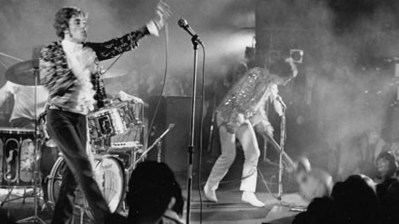
The moment of impact for Pete Townshend’s guitar at the Fillmore East
fillmore.jpg
The queue outside the Fillmore East

3/25/68:  The final episode of The Monkees aires on NBC

4010055_orig.jpg

Other Noteworthy Releases from March 1968:

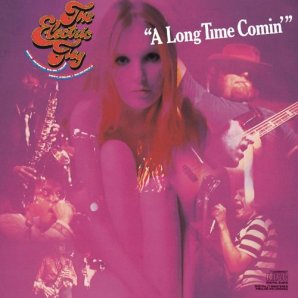
The Electric Flag – A Long Time Comin’

The debut album and probably the peak for the Flag, formed by Mike Bloomfield after his time with the Butterfield Blues Band.  The music is blues, rock, and soul, and has a big sound that features a horn section.

Flag.jpg

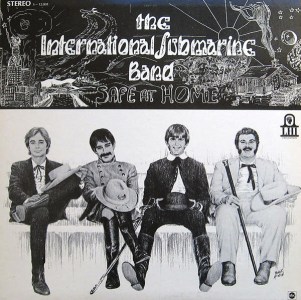
The International Submarine Band – Safe at Home

The sole release by Gram Parsons’ first country rock group.  Parsons had been a folkie while pretending to be a student at Harvard, but switched to a heavy country flavor with the ISB, which he maintained for the rest of his too brief career and life.  By the time this album was released, Parsons had already quit the band to join the Byrds on their Sweetheart of the Rodeo sessions (who he would soon leave to form the Flying Burrito Bros.).

R-2165543-1267548987.jpeg.jpg

Miles Davis – Nefertiti

The album is significant for being Davis’s final acoustic album.

R-219046-1239767174.jpeg.jpg

Joni Mitchell – Song to a Seagull

Joni’s debut, produced by David Crosby.  These were Mitchell’s brief salad days; her fortunes improved greatly one year later.

A12ogM+PqSL._SL1500_.jpg

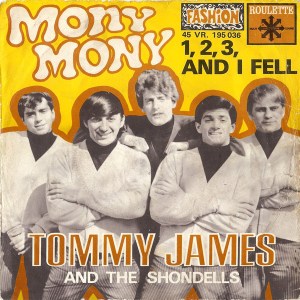
Tommy James and the Shondells – Single:  Mony Mony

A great track still.

R-3445838-1374759807-2744.jpeg.jpg

And while I try to keep the politics to a minimum in these pages, it feels silly to write about this period and avoid the topic, as well as Vietnam.  As such, March was quite a volatile month on the political home front as Eugene McCarthy nearly defeated the sitting president from his own party, Lyndon B. Johnson, in the New Hampshire Primary.  Four days later, Robert Kennedy announced his candidacy.  And on March 31, 1968, fifty years ago today, Johnson went before a national TV audience to announce that he wouldn’t seek re-election, and also to proclaim that steps would be taken to limit the war in Vietnam.  It was a respectable thing to do at a time when there was still a hint of honor in the White House.  As shocking as all of this was, the headlines were about to get crazier.  And more tragic.

https://www.youtube.com/watch?v=sc40A0DzXhc


http://ultimateclassicrock.com/the-monkees-final-episode/

https://en.wikipedia.org/wiki/A_Long_Time_Comin%27

https://en.wikipedia.org/wiki/Safe_at_Home

https://en.wikipedia.org/wiki/Nefertiti_(Miles_Davis_album)

https://en.wikipedia.org/wiki/Song_to_a_Seagull

-Stephen