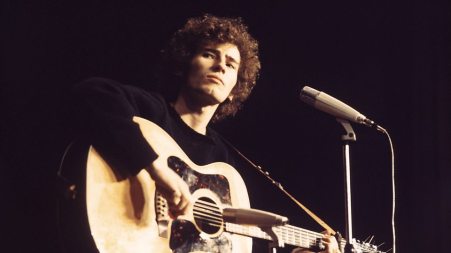
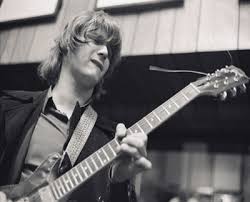
October 25 – This is Jethro Tull’s This Was

Jethro Tull – This Was

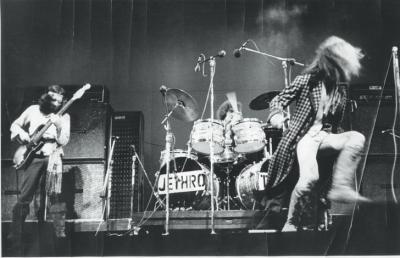
With many bands that go on to achieve a degree of success, their debut efforts are looked back upon as lacking or even amateurish in their songwriting, musicianship, production, or some combination of the three.  But some start strong right out of the gate.  I consider Jethro Tull’s This Was, released 50 years ago this day in the US (Feb. 3, 1969 in the UK), to be one of the better debuts among bands from the era.
field4.jpg
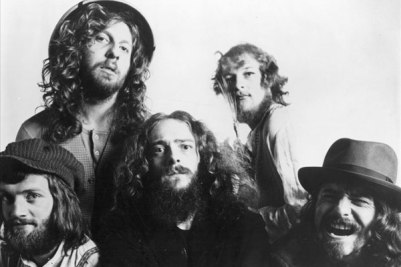
Jethro Tull once competed with The Mothers of Invention for the title of Most Insane Looking Band.

This Was IS different from what came after, and it’s mainly to do with personnel.  Whereas Jethro Tull is known as Ian Anderson’s band, on this first record he collaborated with guitarist Mick Abrahams, who brought a heavy R&B and jazz flavor to the songs.  Abrahams would subsequently depart to form Blodwyn Pig, leaving Anderson as the driving force going forward in an English folk and prog direction.  Abrahams wrote or co-wrote three and arranged one of the album’s tracks.  His lead vocal on Move On Alone is the only Jethro Tull vocal that would ever be done by someone other than Ian Anderson.

Blues-based English groups in the 1960’s were plentiful, but the ones who garnered the most attention brought a unique twist to their recordings and appearance.  As BBC reviewer Sid Smith noted on the album’s 40th anniversary, “… what made Tull stand out from the great-coated crowd was the high-visibility of frontman Ian Anderson’s on-stage Tourette’s-inspired hyper-gurning and Mick Abraham’s ferocious fretwork…Anderson’s presence though is of course undeniable and extensive.”
s-l300.jpg
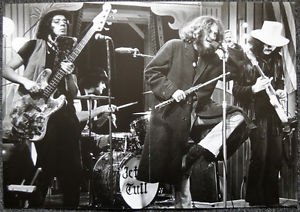
Jethro Tull performing on the Rolling Stones Rock and Roll Circus in December of 1968.  Note Tony Iommi filling in on the mimed guitar for the departed Mick Abrahams.  Martin Barre would take over on the band’s second album.

Contemporary reviews in Melody Maker and New Musical Express were quite positive, whereas Robert Christgau, henceforth to be known as Oscar the Grouch on this blog, hated it.  (Seriously, I’ve had about enough of that guy!)  The album features the traditional tune Cat’s Squirrel, a raucous affair which was a popular live choice for various bands including Cream, who also recorded it for their debut a couple of years earlier.

Most of the songs were written by Anderson or Abrahams, except one traditional tune (Cat’s Squirrel) and one by jazz multi-instrumentalist Rahsaan Roland Kirk (Serenade to a Cuckoo).  Ian Anderson learned the flute from listening to the latter.  The sound of the opener, My Sunday Feeling,  has been compared to that of the Graham Bond Organization (the group where Jack Bruce and Ginger resided pre-Cream).  In my mind it has a hint of Davey Graham as well.  In other words, it’s very English sounding blues.
1968-claude-nobs-archves-jethro-tull-pp-104-105_0.jpg

Concert staple Dharma for One features a Clive Bunker drum solo I find more interesting than most rock drum solos, especially on studio recordings.  Anderson’s A Song for Jeffrey is the most widely known track of the bunch, as the band partially mimed it for their performance on the Rolling Stones Rock and Roll Circus.  I really don’t hear a weak track on this album.  I also think it benefits from the shorter overall length, as did many others at the time.  Jethro Tull came on to the scene, made their first relatively brief statement, and moved on to the next album.  This was alluded to in their choice of the album’s title.  This was what they were, but they would be something different going forward.

Tracklist:

Side One:

  1. My Sunday Feeling
  2. Some Day the Sun Won’t Shine for You
  3. Beggar’s Farm
  4. Move on Alone
  5. Serenade to a Cuckoo

Side Two:

  1. Dharma for One
  2. It’s Breaking Me Up
  3. Cat’s Squirrel
  4. A Song for Jeffrey
  5. Round

-Stephen

https://en.wikipedia.org/wiki/This_Was

http://www.bbc.co.uk/music/reviews/m3bd/

https://www.allmusic.com/album/this-was-mw0000190507

October ’68 – All That Nazz

Nazz – Nazz

Nazz was formed in Philadelphia in 1967 by Todd Rundgren and Carson Van Osten.  They released this, their eponymous debut, in October of 1968.  The band took its name from the Yardbirds song The Nazz Are Blue, which was a reflection of the heavy influence they took from 1960’s British rock.  The album was not a big seller (though it did receive heavy airplay in places like Philly and Boston), but it does feature the fantastic single Open My Eyes b/w the original version of Rundgren’s Hello It’s Me, the definitive version of which he would re-record for his 1972 solo album, Something/Anything?.

download.jpg

In his AllMusic review, Stephen Thomas Erlewine suggests the album was a blueprint for American power pop bands that followed, and that even though some of its songs haven’t aged well, it’s still a good album worth listening to because of its place in music history.  He writes:

…they just like to try a lot of different styles, cross-breeding their favorite bands in a blatant act of fanboy worship. At their best, the results of this approach are flat-out stunning, as on the lead cut “Open My Eyes,” which twists the Who’s “I Can’t Explain” around until it winds up in Roy Wood (founding member of both The Move and ELO) territory.

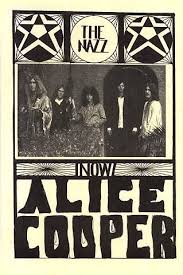
Interestingly, another band called Nazz formed around the same time, and when they learned of Rundgren and Van Osten’s group, they changed their name to Alice Cooper.

images.jpg

Tracklist:

Side One:

  1. Open My Eyes
  2. Back of Your Mind
  3. See What You Can Be
  4. Hello It’s Me
  5. Wildwood Blues

Side Two:

  1. If That’s the Way You Feel
  2. When I Get My Plane
  3. Lemming Song
  4. Crowded
  5. She’s Goin’ Down

-Stephen

https://en.wikipedia.org/wiki/Nazz_(album)

https://en.wikipedia.org/wiki/Nazz

https://www.allmusic.com/album/nazz-mw0000653248

October ’68 – Another Traffic Jam

Traffic – Traffic

Today we’re revisiting an album that further put Traffic’s unique stamp on the rock music world in the late 1960’s.  In October of 1968 the band released its followup to their 1967’s debut Mr. Fantasy with a self-titled album which features two distinctly different songwriting styles brought together by the group’s excellent musicianship.

traffic-circa-1968-resize.jpg
(L-R) Chris Wood, Dave Mason, Steve Winwood, and Jim Capaldi

Band co-founder Dave Mason had left the band by the time their debut was released a year earlier due to artistic differences.  He was more interested in simpler folk-rock and pop compositions compared with the longer form, more jazz-oriented songs preferred by Steve Winwood, Jim Capaldi, and Chris Wood.  Mason subsequently produced the debut album by Family (which included future Traffic bassist Ric Grech), but was invited back to Traffic in early ’68 in time to contribute to roughly half the tracks on their second LP.  As with Mr. Fantasy, by the time Traffic was released 50 years ago this month, Mason had once again departed the group.

wVtcezBcqCzyAENeEBDFDS-320-80.jpg

Traffic, produced by Jimmy Miller, received positive reviews upon release and is considered to have aged well.  Critics such as AllMusic’s William Ruhlmann seem to agree that the album achieved a nice balance between Mason’s contributions and the more complex tracks featuring Winwood’s keyboard based melodies, Wood’s reed instruments, and Capaldi’s “exotic” percussion.  He notes that Mason’s pop oriented songs like You Can All Join In, which leads off the record, and Feelin’ Alright are more commercially appealing, whereas the others’ compositions were more enjoyable for their musicianship, including Winwood’s soulful vocals.

images.jpg

Despite the directional differences between Dave Mason and the others, this is a cohesive album with their songs mixed together as opposed to isolated on two sides.  There are a few highlights for me, beginning Mason’s bouncy You Can All Join In, which welcomes the listener in for what’s to follow.  Pearly Queen features Winwood at his multi-instrumentalist best on vocals, Hammond organ, lead guitar, and bass.  Winwood and Capaldi’s Forty Thousand Headmen is one of my favorite track due to Capaldi’s percussion and Woods’s hypnotic flute.  Cryin’ to be Heard might be the best example of what this original Traffic lineup sounded like as a cohesive unit, with its heavy drums and Winwood’s keyboards standing out.  Mason’s original Feelin’ Alright is also a good one, but I feel Joe Cocker recorded the definitive version.  Interestingly, of the five tracks not written by Dave Mason, he only appears on one, No Time to Live.

Tracklist:

Side One:

  1. You Can All Join In
  2. Pearly Queen
  3. Don’t Be Sad
  4. Who Knows What Tomorrow May Bring
  5. Feelin’ Alright?

Side Two:

  1. Vagabond Virgin
  2. Forty Thousand Headmen
  3. Cryin’ to Be Heard
  4. No Time to Live
  5. Means to an End

-Stephen

https://en.wikipedia.org/wiki/Traffic_(Traffic_album)

https://www.allmusic.com/album/traffic-mw0000651445

http://ultimateclassicrock.com/traffic-second-album/


10/18/18 – Celebrating Jake

So, are you a dog person now?  –A friend of mine to me over the phone a few years back after regaling him with stories about my new buddy.

This morning my wife, Janis, and I said goodbye to our little Jake.  Janis took him home in the spring of 2008, five years before we met.  They shared a bond that, despite the loss I feel right now, was deeper than I know.  Her dogs are her kids.  When she had a serious illness before we met, Jake helped nurse her back to health.  He was all she had at the time.  He was her family.

IMG_0246[1319].JPG

Jake was truly a “city mouse” when I met him, as he and Janis lived in a twelfth floor apartment in the heart of downtown Dallas.  Fortunately for me, they both liked being “country mice” with me, five miles as the crow flies from downtown at White Rock Lake from where their old home is in view.  As I entered middle age, Jake became the first dog I’d ever had.  We became fast friends.

IMG_0099[1323].JPG
7:00 a.m. before leaving for work?  A perfect time to lie down on the floor and take a selfie with my bud!
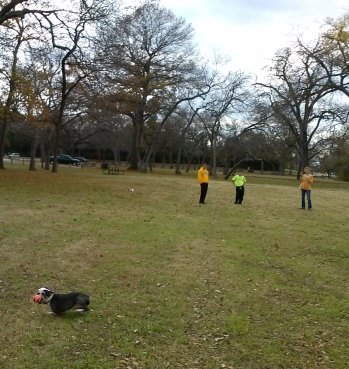
Jake was the perfect running partner.  After we’d finish the full 9.25 miles around the lake it was always abundantly clear he could keep right on going if I’d wanted to.  His energy was boundless.  Probably his favorite activity, though, was chasing his ball or a Frisbee.  He was a great Frisbee dog!

IMG_0153[1325].JPG
Cold weather running is the best!
img_02581355.jpg

When my sons Liam and Colin came from Missouri for visits, Jake latched onto them.  From day one they were family.  Each visit the day before their arrival, we’d say “Jake, your brothers are coming to see you tomorrow!” and he would light up.  He knew.

IMG_0034[1360].JPG
The moment my sons met Jake for the first time five years ago.
img_00421351.jpg
The country mouse running free with my wife and sons in the background.

But after putting in a hard day of playing, even Boston Terriers like to chill.

IMG_0151[1317].JPG

56131637379__C82CD4D9-67D5-488C-909A-3E9308CD7C17[1357].jpeg

Like most of us, Jake had his quirks.  He was very standoff-ish with larger dogs and with unfamiliar people, especially men wearing hats.  But he was playful with smaller dogs and was very good with children.  Like Janis and me, he seemed to have a soft spot for underdogs as well.  Once he knew you, he was very affectionate.  He loved being gently gnawed-at on his cheek.

IMG_0896[1327].jpg

Jake had a good sense of humor.  You kind of need one in order to live with me.  He was also a music fan like us.  He dug the Beatles, especially the Magical Mystery Tour album.  Whether I was singing along or playing air guitar, I’d watch him out of the corner of my eye as he would get excited.  Then I’d hear a low-pitched grumble just before he’d let out an ongoing howl of joy and excitement which might last a full minute.  He’d have us in stitches.

IMG_0147[1353].JPG
Sooo…do I get a treat now?
He was a big brother to two Siamese cats for the first couple years of his life, but was an only child until two years ago when we brought him a little sister named Penny Lane.  Again, he was my first dog, and it was fascinating to me to watch him teach Penny the ropes of Boston Terrierdom.  He was an awesome big brother to her.

jake 1.jpg
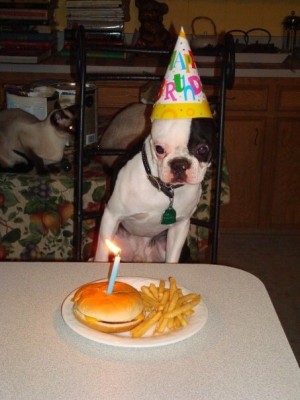
Jake’s first birthday.  He ate healthier than most humans on a daily basis, but he partied hard with a Happy Meal on his special day.
img_09191329.jpg
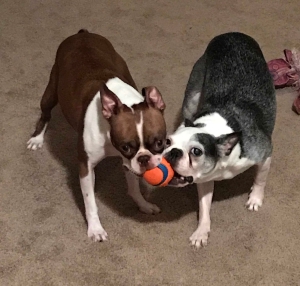
Jake and Penny in recent days doing what he loved the most.

I’m so grateful Janis brought Jake into my world.  I love them both so much.

IMG_0012[1311].JPG
Jake and Janis, a few months after they came into my life.
Jake slowed down a lot over the past couple of months, but showed no signs of suffering.  Just last night he played with Penny, then cozied up on the couch with us and we loved on him not knowing we were so close to the end of our time with him.  At some point in the night he went to his “safe spot”  – a rug in the bathroom  – and checked out.  We should all be so fortunate when our time comes.

We’re going to miss you, Jake.  Thank you for all the unconditional love.


October 16 – Jimi Hendrix’s Magnum Opus

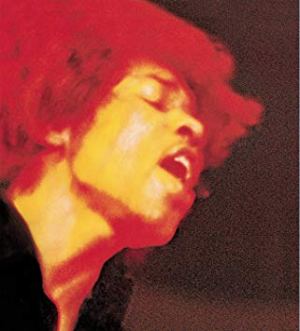
The Jimi Hendrix Experience – Electric Ladyland

If there’s such a thing as the quintessential 1968 album, I believe this would be it.  A recurring theme among many of these 50-year-old albums is the blending of 60’s pop and the trendy, fashionable, and overall quite brief psychedelic phase of rock and pop with harder rock, blues, and roots in general.  It continues to amaze me how quickly music evolved in the 1960’s, and it’s a testament to how great the music is despite the short periods some of the sub-genres lasted in terms of their actual creation.  The 1967 debut Are You Experienced may have been a Flower Power creation, and it’s continuing shelf life speaks for itself.  But with the epic Electric Ladyland, we have what critics have deemed to be the full realization of Hendrix’s vision – a combination of all the aforementioned elements into a beautifully un-cohesive double album.

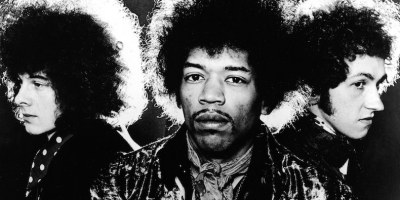
The-Jimi-Hendrix-Experience.jpg

Ambitious and experimental, Electric Ladyland is the third and final album by the Jimi Hendrix Experience.  It’s also the only one where Hendrix is credited as producer.  Recording sessions took place over numerous months beginning in July of 1967 at Olympic Studios in London and at the Record Plant and Mayfair studios in New York.  Chas Chandler, producer of the band’s first two albums, began overseeing the New York sessions but left the project as it dragged on due to Hendrix’s demands for repeated takes as well as the party atmosphere in the studio with many of Jimi’s friends and hangers-on.

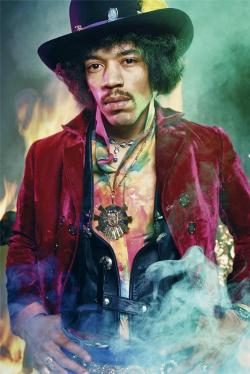
Jimi-Hendrix-strat.jpg

Out of the chaos arose a double album that confused some critics at the time as being all over the place to its detriment, but one which you might have difficulty finding retrospective reviews of fewer than five stars.  Much of the credit belongs to engineer Eddie Kramer, who is lauded for his experimentation with new mic techniques, echos, and backward tapes which were considered groundbreaking at the level of Phil Spector just a few years earlier.  The album is a combination of the more psychedelic sound of their first two albums with the more blues and funk of the Band of Gypsys which followed.

And as a result of Jimi’s love for late-night jam sessions, there’s quite an array of guest musicians credited, including Jack Casady (bass on Voodoo Chile), Steve Winwood (Hammond organ on Voodoo Chile), Dave Mason (12-string on All Along the Watchtower), Chris Wood, Buddy Miles, Brian Jones (percussion on All Along the Watchtower), and Al Kooper (piano on Long Hot Summer – of course Al Kooper’s on this record!).  By mid-November, Electric Ladyland was the #1 album in the US and #6 in the UK.

lwfnqs2huqm01.jpg

Arguably the most famous track from the album is Hendrix’s rendition of Bob Dylan’s All Along the Watchtower, which became the Jimi Hendrix Experience’s highest selling single.  Dylan offered the highest praise possible for Hendrix’s version, which he’s stated Jimi made his own.  Dylan described his own reaction:  “I liked Jimi Hendrix’s record of this and ever since he died I’ve been doing it that way… Strange how when I sing it, I always feel it’s a tribute to him in some kind of way.”  Bob has also stated,

It overwhelmed me, really. He had such talent, he could find things inside a song and vigorously develop them. He found things that other people wouldn’t think of finding in there. He probably improved upon it by the spaces he was using. I took license with the song from his version, actually, and continue to do it to this day. 

rs-8305-73907424-624x420-1354902883.jpg

Perhaps on the other end of the album’s spectrum is the mid-60’s Brit Pop sounding tune sung by Noel Redding, Little Miss Strange.  Tony Glover, in his original Rolling Stone review, considered this song to be the most commercial sounding track on the album, which is a testament to how well the album has aged since that song is probably not at the top of most people’s list of favorites from the release, yet it’s still good.

And everything in-between?  It ranges from the standard length guitar driven classics Crosstown Traffic and Voodoo Child (Slight Return) and the less celebrated but still very solid Come On (Pt. 1) and House Burning Down, to the epic jam that is Voodoo Chile and the experimental and fascinating 1983 (A Merman I Should Turn to Be).  My favorite stretch of the album is Side Three, which begins with the jazzy, stoney Rainy Day, Dream Away.  Having mainly listened to the album on CD, this segment extends for me into the first song on Side Four, Still Raining, Still Dreaming, with the final segment consisting of the three songs after it.  As Glover wrote, Electric Ladyland is “an extended look into Hendrix’s head.”  It seems Jimi had lots of twists and turns happening between the ears, which resulted in what is considered one of the greatest albums of all time.

81ulYvd6icL._SY355_.jpg

A few years back, in addition to my daytime “real” job,  I kept a part-time gig at a used music store.  Employees took turns playing CDs of their choice and, as is the case in life, we didn’t all share the same tastes.  In an effort to stave-off one of the many inevitable 35 minute discs of show tunes one of my co-workers was fond of, I’d pull the single-disc remaster (i.e., a full hour and fifteen minute disc) of this one off the shelf when it was in stock and let it rip.  When my sons come for a visit, my 17-year-old heads straight for the Zeppelin and Hendrix.  He mostly learned about them on his own.

I like to add YouTube album links to my posts, but not surprisingly only fragments of this one are available online.  The Hendrix estate keeps a rather tight rein on his material.  But if you like it, you probably own it.  If you don’t own it, get it!

Tracklist:

Side One:

  1. And the Gods Made Love
  2. Have You Ever Been (To Electric Ladyland)
  3. Crosstown Traffic
  4. Voodoo Chile

Side Two:

  1. Little Miss Strange
  2. Long Hot Summer Night
  3. Come On (Pt. 1)
  4. Gypsy Eyes
  5. Burning of the Midnight Lamp

Side Three:

  1. Rainy Day, Dream Away
  2. 1983…(A Merman I Should Turn to Be)
  3. Moon, Turn the Tides…Gently Gently Away

Side Four:

  1. Still Raining, Still Dreaming
  2. House Burning Down
  3. All Along the Watchtower
  4. Voodoo Child (Slight Return)

-Stephen

https://en.wikipedia.org/wiki/Electric_Ladyland

https://en.wikipedia.org/wiki/All_Along_the_Watchtower

https://www.allmusic.com/album/electric-ladyland-mw0000527658

https://www.rollingstone.com/music/music-album-reviews/electric-ladyland-183197/

October 15 – Stevie Wonder Growin’ Up

Stevie Wonder – Single:  For Once in My Life

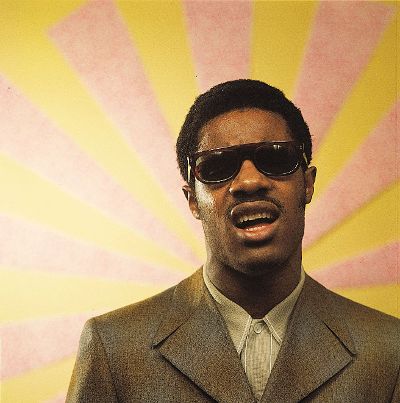
When this track was released 50 years ago today, “Little Stevie Wonder” had turned 18 and his music was becoming more interesting.  He was not the first artist to record this Ron Miller and Orlando Murden song; Barbara McNair, Jean DuShon, The Four Tops, Diana Ross, Tony Bennett, and the Temptations also took a stab at it.

MI0003653636.jpg

Berry Gordy passed on Wonder’s version when it was recorded in 1967, but relented in 1968 with great results:  The song reached #2 on both the Billboard Pop Singles chart and the Billboard R&B Singles chart.  It was held out of the #1 spot on both charts by another Motown track originally vetoed by Gordy which I’ll feature soon.

Side A:  For Once in My Life

Side B:  Angie Girl

-Stephen

https://en.wikipedia.org/wiki/For_Once_in_My_Life

October ’68 – Dillard and Clark: A Most Exellent Journey

Dillard & Clark – The Fantastic Expedition of Dillard and Clark

Continuing from my previous post featuring the great songwriter and Byrds co-founder Gene Clark, today we’re celebrating the second Clark record after setting out on his own, though technically it’s not a solo album.  The Fantastic Expedition of Dillard and Clark was released 50 years ago this month, just a couple of months after what is widely considered the seminal introduction to the country rock genre – the Byrds’ Sweetheart of the Rodeo – and a few months after the lesser-known Safe at Home by Gram Parsons’ International Submarine Band.  The album features a collaboration of Clark with banjo and fiddle virtuoso Doug Dillard of the famous bluegrass family and group, the Dillards, as well as future Burrito Brother and Eagle, Bernie Leadon.

fantastic-expedition-of-dillard-and-clark_4563025.jpg

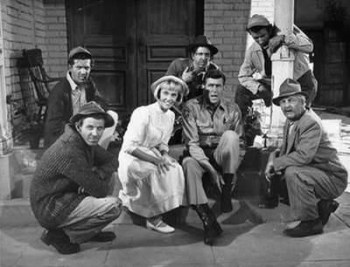
I shared some background on Clark in my tribute here, and in Doug Dillard he found not only a freewheelin’ partner in crime in the emerging country rock genre, but also a fellow native of the Show Me State of Missouri.  Dillard (1937-2012) hailed from Salem, a couple of hilly hours away from Clark’s hometown of Tipton.  The Dillards were an established bluegrass act in the early 1960’s when they landed a recurring role as the fictional bluegrass group The Darlings on the Andy Griffith Show, appearing at various times from 1963-66.

1darlings.jpg
The Dillards as The Darlings on the Andy Griffith Show.  Doug is at bottom left.

This first Dillard and Clark album was a collaborative effort.  Though Clark took on the bulk of the songwriting, credits were shared with the multi-instrumentalist Dillard, as well as Leadon, who added banjo and guitar – the connection being Leadon’s previous involvement in the same San Diego teen bluegrass band as future Byrds member and Clark band mate Chris Hillman, who also contributes mandolin on two tracks on this album.

download (1).jpg

Due to the group’s personnel and timing of its release, The Fantastic Expedition… has understandably been compared with the Byrds great country rock achievement, not to mention that of the Flying Burrito Bros. the following year.  No doubt, Sweetheart of the Rodeo, this Dillard and Clark debut, and the Gilded Palace of Sin make for a great triple listening experience.  But whereas the Byrds and Burritos albums lean heavily on the pure country element, The Fantastic Expedition… features more of a bluegrass flavor complimented by vintage country.

maxresdefault.jpg

This album flows beautifully.  While Sweetheart of the Rodeo, as great as it is, does sound to me like a rock band playing country – especially on the tracks where McGuinn’s vocals are recorded over Parsons’ original takes – Dillard and Clark sound more seasoned at what they were doing, and they were.  In his AllMusic review, Mark Deming writes, “…they created a mature and confident sound that was exciting, thoughtful, and deeply soulful in a way those better-known albums were not.”

download.jpg

Have a listen to the opening track, Clark’s Out on the Side, for example.  I wrote in an earlier post that I don’t comprehend exactly what Gram Parsons’ term “Cosmic American Music” means, but crank this track or listen through headphones.  Its harmonies and heavy-yet-quiet pattering drums are as “cosmic” as anything you’ll hear in the country rock genre.  Frankly, the same goes for the the second song, She Darked the Sun, with its lyric:

She walked into my life with her cold evil eyes
With the length of her mind she darked the sun

From there the tracks vary in tempo, and it’s hard to imagine the musicians having anything but a great time laying them down.  The whole album is a perfect combination of virtuoso playing and some of the strongest singing of Gene Clark’s career.  Other favorites for me are Train Leaves Here This Morning – a song which makes me think of riverboats on the Mighty Mississippi during simpler times – featuring Donald Beck’s mandolin, With Care from Someone and The Radio Song, both with Andy Belling’s cool electric harpsichord, and In the Plan with its fantastic harmonies.

download.jpg
On stage at the Troubadour (L-R):  Bernie Leadon, Michael Clarke, Gene Clark, Doug Dillard.

Because of Clark’s refusal to tour due to his fear of flying, Dillard and Clark’s live presence was limited to a few notoriously drunken performances at L.A.’s Troubadour.  They would follow-up with a second and final album a year later which was less acclaimed but still very good.  As a common theme running throughout the work of Gene Clark, The Fantastic Expedition of Dillard and Clark was a bolt of lightning and clap of thunder that relatively few people saw or heard.  It came about as a result of informal jamming between Gene and Doug, and with the rest of the band they fine tuned their sound into something timeless.  Again from AllMusic’s Deming:

Time has been kinder to this album than most of the genre’s founding works, and it’s a work rooted in tradition while reveling in freedom and new ideas and making the most of them all.

Cosmic, man.

Tracklist:

Side One:

  1. Out on the Side
  2. She Darked the Sun
  3. Don’t Come Rollin’
  4. Train Leaves Here This Morning

Side Two:

  1. With Care from Someone
  2. The Radio Song
  3. Git It On Brother
  4. In the Plan
  5. Something’s Wrong

-Stephen

https://en.wikipedia.org/wiki/The_Fantastic_Expedition_of_Dillard_%26_Clark

https://www.allmusic.com/album/the-fantastic-expedition-of-dillard-clark-mw0000783755

https://en.wikipedia.org/wiki/Dillard_%26_Clark

https://en.wikipedia.org/wiki/The_Dillards

Gene Clark: The Byrd Who Wouldn’t Fly

It’s a rainy day in early October 2018, and Gene Clark still hasn’t received his full due.  It is happening, though.  Slowly but surely.  And, it’s somewhat remarkable considering we’re over 50 years removed from the first hits which he wrote, and it’s mostly the result of extremely well curated archival releases on small labels, well-written biographies and video documentaries, acknowledgements from current artists, and good ‘ol grass-roots efforts.

geneclark33-578x289.jpg

I must admit, I’m symbolic of how Gene has been overlooked by mainstream music fans over the years.  Though I was born a few years after Clark’s first and most important stint with the Byrds, I became a fan of that band at a young age – yet I had no idea until the 1990’s that Gene Clark was from my home state of Missouri and that he had written some of the Byrds’ earliest hits.  So, how did he become another unsung troubadour, a “songwriter’s songwriter,” who died too young, a somewhat obscure figure to the masses?  Call it a combination of personal choices, phobias, and bad luck.

Gene Clark was born in the small, central Missouri town of Tipton on November 17, 1944.  Early on, his family moved to the Kansas City area.  By the time he graduated from Bonner Springs High School he was a folk music convert in a band called the Surf Riders.  While playing a gig in Kansas City, he was discovered late one evening by members of the New Christy Minstrels (whose lineup included Barry McGuire) who hired him on the spot and with whom he recorded two albums in the early-mid 1960’s.  Upon hearing the Beatles for the first time, he quit the group and moved to L.A. where he met Jim McGuinn at the Troubadour Club, and the seeds of the Byrds were sewn.

the-byrds-1965.jpg
The classic Byrds lineup (L-R):  Hillman, Crosby, Michael Clarke, McGuinn, and Gene Clark.

From 1964-66, the biggest singles recorded by the Byrds not written by Bob Dylan were written by Clark, including Set You Free This Time, I’ll Feel a Whole Lot Better, Eight Miles High, and She Don’t Care About Time.  But internal issues within the Byrds led to Clark quitting just as the band took flight.  These included their management’s decision that McGuinn would sing the major singles, including the Dylan covers.  Additionally, Clark’s fear of flying (which Crosby alluded to in the song Psychodrama City) was an obvious hindrance to touring.  Finally, there was resentment of the others toward Clark due to the songwriting royalties he was receiving while they were still struggling – something McGuinn, Crosby, and Hillman acknowledge today as due to their immaturity at the time.  They were all so young and talented, and extremely ambitious.  Something had to give.

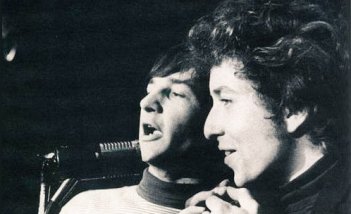
genedylanclose.jpg
Clark, showing the master where the new direction of music was headed.

Clark’s first solo album (though co-credited), Gene Clark with the Gosdin Brothers, was a critical success.  It’s a fully realized, damn-near perfect country rock album right out of the gate.  Unfortunately, it was not promoted well and was released very close to the same time as his former band the Byrds’ Younger than Yesterday, which meant his record was mostly overlooked by the media and public.  Add to this his refusal to tour, and his fate as a solo artist was mostly set.

Going forward, he would release six more critically acclaimed albums, including his next two with Doug Dillard.  He also returned, along with David Crosby, to the Byrds for one final attempt at a reunion album in 1973, but it was a flop.  Additionally, he joined McGuinn and Hillman for a brief period.  But by the 1970’s, Gene’s time in the studio became sporadic.  He purchased a home in northern California and mostly avoided the L.A. scene, living off Byrds royalties.  He married and started a family, but his consumption of alcohol and other substances which drag a fellow down increased until he was mostly forgotten.

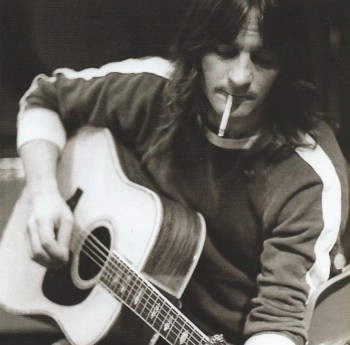
gene-clark.jpg
Clark, circa 1974

Sadly, his final straw came about as a result of something which should’ve been the instigation of a Gene Clark revival:  the release of Tom Petty’s version of I’ll Feel a Whole Lot Better on his 1989 Full Moon Fever album.  Clark became flush with cash from songwriting royalties thanks to Petty, but he was also heavily addicted, and there his money and health went.  In January of 1991, all five original Byrds put aside their differences and took the stage for their Rock and Roll Hall of Fame induction.  Four months later, on May 24, 1991, Gene Clark died of heart failure at the age of 46.

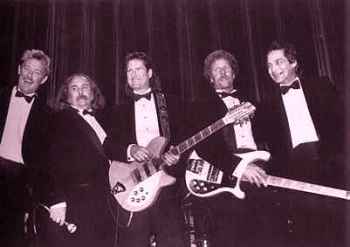
bild12.jpg
One final hurrah:  the original Byrds lineup at the R&R Hall induction in January 1991.  Four month later, Clark (far right) was no longer with us.

There would be no latter career mega-group participation for him, nor would there be well orchestrated, 21st century, sober, smaller theater tours for the next generation (or two) of his fans to express their appreciation for the brilliant music he made.  There would be, however, a legion of fans and critical acclaim, both growing by the day, as well as a legacy of some of the greatest songwriting of all time.  Some of this can be heard on two recent releases consisting of amazing, previously unheard Clark recordings.

There would also be inevitable comparisons to other songwriting troubadours who left us too soon, namely Gram Parsons.  The thing is, if you aren’t already familiar with Gene Clark, you’ll have to discover him on your own.  Like Gram, Townes Van Zandt, Tim Buckley, Nick Drake, etc., you’re not likely to hear Gene Clark on the radio.  But he’s not hard to find.  In fact, his music’s been around us all along.

3660af3c7c62c3dd3ed69805b34737a3.jpg
Full Circle:  Gene Clark’s final resting place in Tipton, MO, a couple of country miles from where I grew up.

As the main theme of my blog, begun in 2018, is 50th anniversaries of album releases, I missed out on celebrating Clark’s first solo album released in 1967 which I mentioned above.  Here it is in all its 28 minute folk/country/psychedelic/baroque-pop glory:

Tracklist:

Side One:

  1. Echoes
  2. Think I’m Gonna Feel Better
  3. Tried So Hard
  4. Is Yours Is Mine
  5. Keep on Pushin’
  6. I Found You

Side Two:

  1. So You Say You Lost Your Baby
  2. Elevator Operator
  3. The Same One
  4. Couldn’t Believe Her
  5. Needing Someone
51zClchM+sL._SY445_.jpg
A very nice documentary by Four Suns Productions, complete with interviews with McGuinn, Crosby, and Hillman.

918dKYSmbsL.jpg

-Stephen

https://en.wikipedia.org/wiki/Gene_Clark

http://foursunsproductions.com/Gene-Clark-Documentary/

https://en.wikipedia.org/wiki/Gene_Clark_with_the_Gosdin_Brothers

https://en.wikipedia.org/wiki/The_Byrds#Ersatz_Byrds_and_further_reunions_(1989%E2%80%9391;_2000)


October 7 – Tim Buckley’s Dream Letter

Tim Buckley – Dream Letter Live in London 1968

Today’s featured album is a live recording by Tim Buckley made on this day 50 years ago at Queen Elizabeth Hall in London, though it wasn’t released until 1990.  It captures Buckley shifting into mid-career, stylistically speaking, and contains mostly songs from his second album, Goodbye and Hello, and his then yet-to-be-released third album, Happy Sad.

download.jpg

Buckley had one of the most distinctive voices in music, featuring a very dynamic vocal range – something that would also be heard from his estranged son years after Tim’s death.  He was exposed to jazz music by his mother and grandmother at a very young age, and as he developed as a musician and songwriter his muse took him places in the realm of jazz and avant-garde that all but ensured his commercial failure.  Despite this, much of his catalog is highly regarded by critics (and this fan).

But at the time of this performance Buckley was still in folk-jazz mode, and he performed with a band featuring Lee Underwood on guitar, David Friedman on vibraphone, and Pentangle’s Danny Thompson on stand-up bass.  The recording also shows Buckley had a sense of humor, judging from the between-song banter.  On the whole, I consider Dream Letter to be a very enjoyable listen.  Standouts for me include Buzzin’ Fly, Phantasmagoria in Two, Carnival Song/Hi Lily, Hi LoDream Letter/Happy Time, and Wayfaring Stranger/You Got Me Running.  This is a beautifully recorded concert, delivered in full on this release.

p01bqnwl.jpg

Tim Buckley seems to have been “one of those artists” for whom things just didn’t fall into place, and he also didn’t help himself when it came to album sales and expanding his audience.  He was shy and not friendly with the media, and his rather extreme stylistic changes, which almost seemed to be made out of spite, only alienated what fan base he did have as the 1970’s ensued.  When he died of a heroin overdose in 1975, he was broke and had met his young son and future shooting star, Jeff, one time.

Tracklist:

Disc One:

  1. Introduction
  2. Buzzin’ Fly
  3. Phantasmagoria in Two
  4. Morning Glory
  5. Dolphins
  6. I’ve Been Out Walking
  7. The Earth is Broken
  8. Who Do You Love?
  9. Pleasant Street/You Keep Me Hanging On

Disc Two:

  1. Love from Room 109/Strange Feelin’
  2. Carnival Song/Hi Lily, Hi Lo
  3. Hallucinations
  4. Troubadour
  5. Dream Letter/Happy Time
  6. Wayfaring Stranger/You Got Me Runnin’
  7. Once I Was

-Stephen

https://en.wikipedia.org/wiki/Dream_Letter:_Live_in_London_1968

https://en.wikipedia.org/wiki/Tim_Buckley

https://www.allmusic.com/album/dream-letter-live-in-london-1968-mw0000308470


October ’68 – The Steve Miller Band Sails On

The Steve Miller Band – Sailor

Are there albums you enjoy from start to finish, yet because they don’t necessarily contain much in the realm of the dynamic they’re not often on your radar?  For me, the Steve Miller Band’s Sailor, their second album of 1968 and second overall, is just that.  Released 50 years ago this month, this offering of West Coast psychedelic blues rock is a nice reminder after years of subjecting myself to the same handful of Miller’s 1970’s hits on classic rock radio to the point of switching stations whenever a song like Jungle Love comes on, that Miller, Boz Scaggs, and company were making very good records from day one.

69 SMB 19 8 Group best corpr.jpg

Sailor is a nice combination of blues and psychedelic rock which featured the first contributions from Miller’s Dallas prep school buddy Boz Scaggs.  Of its opening track Song for Our Ancestors, AllMusic critic Amy Hanson suggests that it sounds so much like Pink Floyd’s track Echoes, released three years later, that “one wonders how much (Pink Floyd) enjoyed Miller’s own wild ride.”  The beautiful Dear Mary sounds like a song Lenny Kravitz might have channeled years later, and the drums on Lucky Man are really cool in their heavy but not overly loud mix.  Glyn Johns was responsible for that, as well as the rest of the album’s production (as he was with the band’s first album earlier in the year).  Living in the U.S.A. and Johnny “Guitar” Watson’s Gangster of Love are the more famous tracks here, as well as Quicksilver Girl due to its inclusion in the 1983 movie The Big Chill.

download.jpg

This is the kind of music that sounds like it’s being played by extremely gifted musicians and songwriters who are not overly concerned with stardom.  Like Mike Bloomfield before him, Steve Miller has a passion for the blues, and his fame was a by-product of his genuine love for what he was doing.  The Joker and Fly Like an Eagle may have been his meal ticket (just as Silk Degrees was for Boz Scaggs), but I don’t know that it got any better than the Steve Miller Band’s first four or five albums, all from 1970 or earlier.

Tracklist:

Side One:

  1. Song for Our Ancestors
  2. Dear Mary
  3. My Friend
  4. Living in the U.S.A.

Side Two:

  1. Quicksilver Girl
  2. Lucky Man
  3. Gangster of Love
  4. You’re So Fine
  5. Overdrive
  6. Dime-a-Dance Romance

-Stephen

https://en.wikipedia.org/wiki/Sailor_(album)

https://www.allmusic.com/album/sailor-mw0000689837

https://en.wikipedia.org/wiki/Steve_Miller_Band_discography