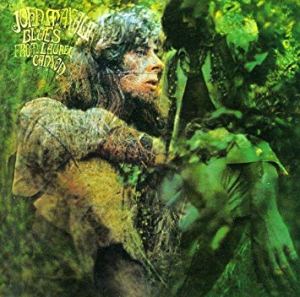
It seems I’m in a Laurel Canyon state of mind. By 1968, an artistically idyllic diaspora had developed in L.A. which would shape much of the popular music world for the next decade or so. One name I wouldn’t normally associate with that scene is John Mayall, but he had visited L.A. earlier in the year and subsequently moved from his native England to Laurel Canyon the following year. Mayall lived there for ten years (a brush fire destroyed his home and much archival material in 1979). Fifty years ago this month he released his acclaimed Blues from Laurel Canyon, featuring 19-year-old guitarist Mick Taylor. It was his first album after the breakup of the Bluesbreakers earlier in the year.
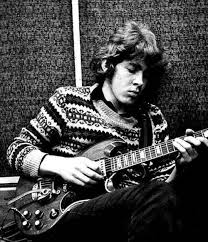
Mayall handles the vocals throughout. He also plays guitar, harmonica, and keyboards. Mick Taylor, who would soon join the Rolling Stones, plays some blistering lead guitar as well as pedal steel on the album. Steve Thompson, all of 18, plays bass, and Colin Allen is on drums. Peter Green, late of Mayall’s Bluesbreakers and at the time the leader of Fleetwood Mac, added guitar to the track First Time Alone.
Mayall
The album is considered innovative in the blues genre, as songs segue into the next or otherwise stop on a chord just before the next song begins. We also hear a tabla – not an oft-employed instrument in blues music but one which fit well pretty much anywhere in the late ’60s. The tracks tell the story of Mayall’s visit to L.A. prior to his move there, which actually makes it a bit of a concept album. But there’s nothing to do with flower power or the burgeoning singer/songwriter genre on this record. It’s all blues, and it only took three days in August of ’68 to record. At the age of 35, Mayall was a senior citizen in the music world by that time and wasn’t going to be swayed much by what the younger musicians were doing.
Mick Taylor
There are some really good moments on this record. The opening track, Vacation, begins with the sound of a jet landing (like another opening track to a major album release that same month), i.e., Mayall’s arrival in L.A., and features a more-accomplished-than-his-years solo by Mick Taylor. Taylor also plays some tasty slide on 2401, which was inspired by Mayall’s visit with Frank (and daughter Moon Unit) Zappa and also features nice keyboard work by Mayall. Someone’s Acting like a child is a classic blues track with great guitar and harmonica. The Bear, with Mayall’s great boogie piano track, is based upon his meeting with Canned Heat (it opens with a riff from On the Road Again), and Taylor plays some outstanding improvisations on the song about Mayall mentally preparing to go home to England (before permanently moving to Laurel Canyon for the next decade) on the aptly titled Fly Tomorrow.
At a time when white blues guitar players like Clapton and Page were stretching their playing into heavier forms, Mayall stayed truer to traditional blues than most. It’s interesting to me that L.A. appealed to him at that point in his career. But then again, what wasn’t to like from a perch in Laurel Canyon, looking down over the Sunset Strip and its happening venues? Warm, sunny days, an exploding music scene in the late 1960s, etc. Good times.
Is there a historical time and place you’ve ever thought might’ve been great to have been around for whatever reasons? The combination of the lens of history and the imagination can make the grass appear quite green in different bygone scenes. For me, Paris in the 1920’s, Greenwich Village in the late-1950’s/early 60’s, and Swinging London in the mid/late 60’s are a few which stoke my imagination.
Another is Laurel Canyon for that brief moment in the late 60’s when the music world was shifting faster than people could keep up with. Thankfully there were artists and record company executives willing to take chances. Granted, the “free” in my title is subjective; artists enjoyed leeway to record and perform as they liked, but massive egos are a hinderance to freedom in the spiritual sense, and there was no shortage of those in the Canyon.
But it was a snapshot in time just before the money got absurd and the drugs too hard, and it’s not likely to ever be repeated. Today it’s snapshots I’d like to share in a manner which deviates from my usual format. Rock photography became a major art form itself and crucial to the music industry around this time, and in L.A. Henry Diltz, among others, was a major contributor among the emerging folk and rock glitterati. Perhaps I’ll explore that topic another time.
For now, picture yourself in a canyon in 1968 L.A., with tangerine trees and smoggy skies…
Frank Zappa with daughter Moon Unit. Getty ImagesThe unofficial hostess of Laurel Canyon, Mama Cass. Henry Diltz photo
Mama Cass may have been the unofficial hostess, but pictorially and musically speaking, to me the most interesting road in the canyon led to Joni Mitchell’s house:
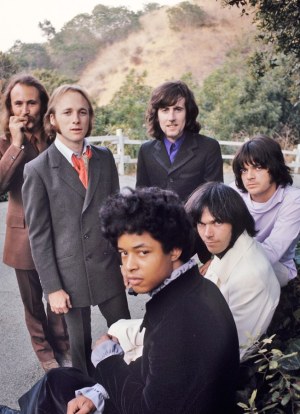
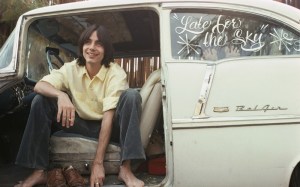
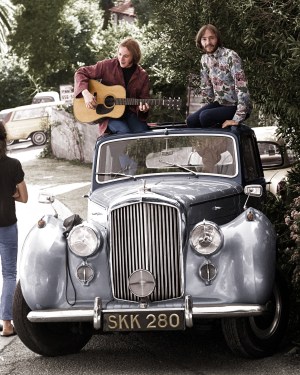
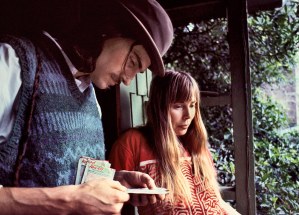
Joni Mitchell, David Crosby, Eric Clapton, and Mama Cass’s baby. Henry Diltz photoCrosby, Stills, Nash, Dallas Taylor, Young, and Greg Reeves. Henry Diltz photoJim Morrison, standing outside his Laurel Canyon home. Paul Ferrara photoJackson Browne in his ’57 Chevy. Henry Diltz photoLinda Ronstadt, then of the Stone Poneys. Henry Diltz photoStephen Stills and Peter Tork.Judy Collins and Joni in Mitchell’s Lookout Mountain home, Laurel Canyon. Rowland Scherman photoJames Taylor and Joni.John MayallThe Canyon Country Store, where the ladies (and gentlemen) of the canyon gathered.
I recommend the following books to anyone interested in learning more about the Laurel Canyon scene in the 1960s and 70s:
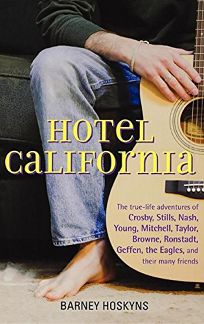
Laurel Canyon: The Inside Story of Rock-and-Roll’s Legendary Neighborhood – by Michael WalkerCanyon of Dreams: The Magic and the Music of Laurel Canyon – by Harvey KubernikHotel California: The True-Life Adventures of Crosby, Stills, Nash, Young, Mitchell, Taylor, Browne, Ronstadt, Geffen, the Eagles, and Their Many Friends – by Barney Hoskyns
This classic, written by Muscle Shoals composers John Hurley and Ronnie Wilkins, was originally intended for Aretha Franklin. Franklin did record it, but producer Jerry Wexler determined it wasn’t the right fit for her album. Wexler, Tom Dowd, and Arif Mardin then produced Springfield’s version, released 50 years ago today, and it was a major international hit from her album Dusty in Memphis. The song reached #10 in the US and #9 in her native UK. It’s considered one of the all-time greatest singles by a number of music publications. It’s also quite popular with sorority girls, as I found out a number of years ago when working as a party-pic photographer in a college town.
The Incredible String Band – Wee Tam and the Big Huge
By the time the Scottish psychedelic folk group the Incredible String Band began recording their fourth album in the spring of 1968, their audience was growing both in the UK and US having completed successful tours and selling out venues such as the Fillmore and the Royal Albert Hall. Their March ’68 release, The Hangman’s Beautiful Daughter, was met with critical acclaim. With the double album Wee Tam and the Big Huge, released 50 years ago this month, Robin Williamson and Mike Heron honed their creative process, and the result is considered by many, along with their previous album, to be their apex.
L-R: Mike Heron, Rose Simpson, Robin Williamson, and Christina “Licorice” McKechnie
Williamson and Heron became more involved in each other’s songwriting. They also became more of a band as opposed to a duo, as girlfriends Christina “Licorice” McKechnie and Rose Simpson took on more significant roles. Of the fifteen or so instruments played on the record, McKechnie and Simpson contributed on the violin, Irish Harp, percussion, and bass guitar during live performances in addition to their hippie siren backing vocals. Though not quite as much as its predecessors, Wee Tam is experimental to the point of avant-garde in some places. Its lyrics are full of allusions to self-awareness, religion, and pagan mythology (they were indeed an influence on Robert Plant). This was mostly Williamson’s contribution, whereas Heron wrote more simplistically about nature.
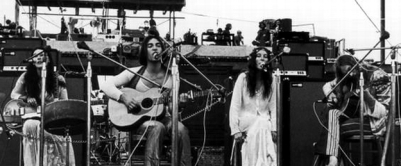
The following summer at Woodstock, (L-R): Simpson, Heron, McKechnie, and Williamson
The title is an allusion to a small human (Wee Tam) contemplating the vastness of the universe (the Big Huge), and that theme plays out on the album’s four sides. Unfortunately, Elektra Records released it simultaneously as two separate albums in the US, using the front and back covers for each release. The result of this decision was the disruption of the work’s continuity, as well as negatively impacting sales. Off the top of my head, I cannot think of another such example other than Bruce Springsteen releasing two different albums on the same day. But those were never meant to be a double album, and time has shown they would’ve been better as one single record. I digress.
The contrasting approaches of Heron and Williamson mesh really well on this release. With each listen, I notice different instruments or vocal dynamics I hadn’t heard before. The songs continue to use a Western folk structure, but are complimented with Eastern sounds of the sitar and sarangi. The lyrics and backing vocals are exotic instruments in themselves. The opening track, Job’s Tears, is surreal and serene with Williamson’s vocal intertwined with the backing vocals. You Get Brighter is another favorite of mine. Along with its guitar and harpsichord track, I hear a beautiful melody with simple, repeated lyrics: “Krishna colors on the wall, You taught me how to love you…” And, the sprawling Maya, which opens the second disc, sets the tone for the remaining tracks which are mostly dominated by Williamson’s surreal lyrics.
The Wee Tam portion is considered more accessible than the second disc, but to me it’s a cohesive, four-sided, aery and dreamlike sequence. It’s considered less ambitious than TheHangman’s Beautiful Daughter, but not to my ears. One minute you’re at a ghat in Varanasi hearing sitars wafting in the wind, the next you’re sitting in an ancient Scottish church with a pipe organist playing a mournful dirge. It takes an investment of time and attention to hear all there is to absorb with it, but not in the same vein of, say, Captain Beefheart’s Trout Mask Replica, other than to say these guys were from some place else, artistically speaking. As Tony Hardy wrote in his appreciation on consequencesofsound.net:
As much as the playing shimmered with virtuosity, there was also a coy, amateurish side to the band, which was endearing to fans and annoying to everyone else. Their ramshackle approach, particularly on stage, was a real part of the band’s charm and what made them one man’s meat… It is nature’s roller coaster ride. It’s green before its time, haunting and plaintiff, spiritual and uplifting, funny and sad, baffling and informed, and it should be in everyone’s record collection.
Continuing a busy day of significant 1968 album releases, British folk rock group the Pentangle released their second album of the year and second overall on this date fifty years ago, and on it they proved they were no one-album wonder. Sweet Child is a double album; half of it was recorded live at the Royal Festival Hall, London, in June of ’68, the other half in the studio.
L-R: John Renbourn, Danny Thompson (standing), Terry Cox, Jacqui McShee, Bert Jansch
In addition to the folk and rock element, the Pentangle added experimental jazz and blues to their repertoire – something which set them apart from contemporaries Fairport Convention. To illustrate how prolific they were at the time, the live half of the album on the original release contains only one song from their debut earlier in the year, with the rest of it and the second disc being completely new material. Its tracks’ origins run the gamut, from traditional songs, to jazz and blues from the likes of Charles Mingus and Furry Lewis, to originals by the group. The album jacket was designed by Peter Blake, of Sgt. Pepper fame.
In his AllMusic review, Matthew Greenwald calls Sweet Child “an awesome and delightful collection, and probably their finest hour.” It’s also an hour for which I’ve arrived quite late. When it comes to British folk rock groups, I’ve always favored Fairport Convention while giving short shrift to the Pentangle. My only explanation is that I prefer Sandy Denny’s vocals to Jacqui McShee’s.
But I’m acquiring a taste for her singing, and there’s so much more to this group anyway with dual virtuoso guitarists John Renbourn and Bert Jansch (not to mention the latter’s vocals), as well as Danny Thompson’s jazz-infused stand up bass. I’ve been enjoying solo Renbourn and Jansch for a while now, so it’s a no-brainer. I’m finally waking up to this amazing group.
Tracklist:
Side One:
Market Song
No More My Lord
Turn Your Money Green
Haitian Fight Song
A Woman Like You
Goodbye Pork-Pie Hat
Side Two:
Three Dances: a) Brentzel Gay b) La Rotta c) The Earl of Salisbury
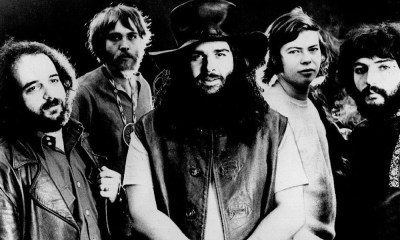
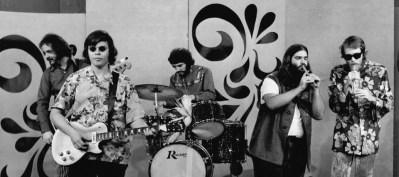
Why do I continue to take Canned Heat’s music for granted? Every time I listen to them I’m blown away at their combination of simplicity and virtuosity. As with other well-known artists of the day, Canned Heat paid homage to the greats with their style of blues ‘n boogie. But theirs was a uniquely American sound. And as the world found out the following summer, they were just as at-home in front of massive audiences as they were in bars.
The classic lineup’s double LP Living the Blues, their second album of 1968 and third overall, was released on this date with guest appearances by John Mayall (piano on Walking by Myself) and Dr. John (Boogie Music). And with it, they continued to make their mark on the late-60’s music scene while bringing a classic American genre to the fore.
They also showed on this release that they could stretch it out and jam with the best of them. While Alan “Blind Owl” Wilson’s Going Up the Country, along with his On the Road Again from Boogie with Canned Heat earlier in the year, are their trademark tunes with a permanent place on the Counter Culture’s Greatest Hits, Canned Heat were so much more. The 20-minute Parthenogenesis which takes up nearly all of side two, and the 41-minute Refried Boogie, which consumes the entire second disc of the album, showed they could bring serious crunch to the blues. Other great tracks here are Charley Patton’s Pony Blues and Blind Lemon Jefferson’s One Kind Favor, both powerfully delivered by Bob Hite.
AllMusic’s Lindsay Planer writes, “Living the Blues stands as a testament to Canned Heat’s prowess as modernizers of the blues and recommended as one of the most cohesive works from this incarnation.” It’s pure, unpretentious, joyful music.
Tracklist:
Side One:
Pony Blues
My Mistake
Sandy’s Blues
Going Up the Country
Walking by Myself
Boogie Music
Side Two:
One Kind Favor
Parthenogenesis: I. Nebulosity II. Rollin’ and Tumblin’ III. Five Owls IV. Bear -Wires V. Snooky Flowers VI. Sunflower Power (RMS is Truth) VII. Raga Kafi VII. Icebag IX. Childhood’s End
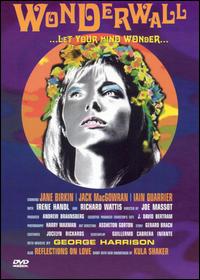
In the world of film scores, some rather clearly need to be heard while watching the film in order to appreciate them. Some are enjoyable regardless of the context in which they’re being listened to. One such example for me is the Eurythmics soundtrack to the film 1984. I also find the soundtracks to Wes Anderson’s films to be eclectic and enjoyable. But a case where I can see how it could go either way for the listener is George Harrison’s score to the Joe Massot movie Wonderwall, titled Wonderwall Music, released this day 50 years ago. It was the first solo album by a member of the Beatles, and the first recording released on their Apple label.
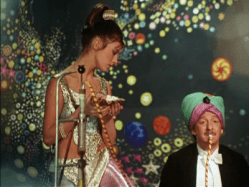
Harrison viewed Massot’s work, a movie full of psychedelic pop art (with sets created by the Fool) and dream sequences starring Jane Birkin and Jack MacGowran, at Twickenham Studios. He took notes on the timing of its scenes, and then composed the music to fit accordingly. That music would include Hindustani classical, psychedelic rock, cowboy western movie theme music, and even Ragtime. The film itself is a metaphor for the generation gap as experienced in Swinging London, and Harrison saw it as an opportunity to examine through his compositions the gap between the West and the East, between materialism and spirituality. As described by AllMusic’s Richard S. Ginell, the album was “a minor eruption of the pent-up energies of George Harrison.”
Jane BirkinJack MacGowran
Harrison, who along with the other three Beatles was experiencing newfound creative independence after the death of manager Brian Epstein in late August of 1967, was given full artistic control by Massot. He composed the music on piano and organ, and played guitar on much of the album, though on the original release he was only credited as producer, writer, and arranger. He also collaborated with top Indian musicians as well as classical pianist and arranger, John Barham, a fellow classical Indian music enthusiast.
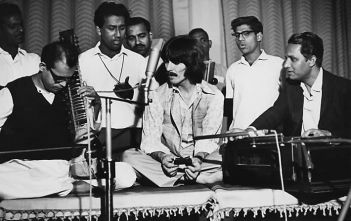
Harrison wanted to expand upon the Indian instrumentation that he’d utilized with the Beatles already. In addition to the sitar and tabla, he now employed the oboe-like shehnai, the sarod, and the hammered dulcimer-like santoor, among others. The Western tracks utilized tape loops, backward guitar sound, and wah-wah effects in addition to the more straight forward instrumentation.
Some of both the Western and Indian portions were recorded in London at EMI and De Lane Lea Studios from November ’67 to January ’68. These sessions included Liverpool band the Remo Four, as well as Ringo and Eric Clapton (credited under the pseudonym “Eddie Clayton”). Peter Tork played banjo on a track which was not included on the soundtrack.
Harrison and Tork, with Remo Four guitarist Colin Manley at left and Mal Evans behind Tork
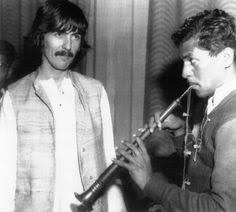
The rest of the Indian sections were recorded in Bombay at HMV Studios from January 9-13, 1968. It was in Bombay that the instrumental track to George’s future B-side The Inner Light was recorded. The majority of the Western music was recorded upon Harrison’s return to London in January. Final mixing with Ken Scott began on January 31, and two weeks later George returned to India with the Beatles, their wives and significant others for their retreat with the Maharishi in Rishikesh.
Harrison in Bombay, January 1968
The album would mark the end of Harrison’s immersion in Indian music as a composer and musician. After spending time with Ravi Shankar in L.A. a few months later, he decided to concentrate on the guitar and Western music. This period did inspire him later in his work with Ravi Shankar on the latter’s Music Festival from India and the East/West fusion of Harrison’s 1974 North American Tour, where he worked again with some of the musicians from the January ’68 sessions.
Contemporary reviews of the score were favorable. There are sequences in the film with little to no dialogue, and it’s been noted that the music effectively takes the place of speaking parts. Retrospective reviews also find much merit in Harrison’s efforts on the album. It’s been described as a stew of music that’s altogether “spacey,” “esoteric,” “rollicking,” and “a beguiling tapestry of sound.” Of course, there are different strokes for different folks. Rolling Stone lazily included it in its “20 Terrible Debut Albums by Great Artists” issue. RS writer Keith Harris: “The best thing you can say about Wonderwall Music is that it’s probably more historically significant than the LP of experimental twaddle John Lennon released a month later – after all, Oasis never wrote a hit song called ‘Two Virgins.'” The reality is, there are just many westerners who don’t care for Indian music. And that’s o.k., because there are many of us who do. And for many if not most of us, it’s due to George Harrison introducing us to it.
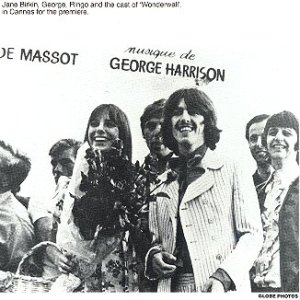
Harrison, Jane Birkin, and Ringo at the debut of Wonderwall in Cannes
Short and sweet, but great: Ski-ing, featuring Eddie Clayton, a.k.a., Eric Clapton –
On the Bed: probably my favorite track from the album –
Left off the original release, but fortunately added later: In the First Place, featuring the Remo Four –
An alternate take of the instrumental track to The Inner Light, which George produced while in Bombay in January of 1968 –
What a nice month October has been! With the month full of great 50th album anniversaries (and cooler weather, of course), we’re headed into the final stretch of the year. But before we get to the point in the year when north Texans are prone to running roughshod over local grocery stores, emptying their shelves of fake fire logs and bottled water whenever there’s a 2% chance of snow flurries, let’s close out October on this fine Halloween with a few final notably notable notables.
October: The Osmonds – The Wonderful World of the Osmond Brothers Yeah, no.
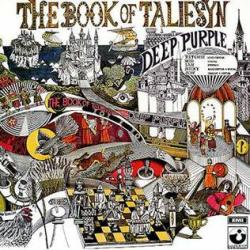
October: Deep Purple – The Book of Taliesyn
Deep Purple gave us their second album 50 years ago this month (released in June of ’69 in the UK). The Book of Taliesyn was released just in time for the band’s first US tour. It was recorded only three months after their debut, Shades of Deep Purple, and hurriedly released by request of their label as their debut material was seen as insufficient to tour with. As with their debut, it’s a mix of originals and rearranged covers including Neil Diamond’s Kentucky Woman. Also similarly to their previous record, it was received well by critics in the US where they were still being called the “British Vanilla Fudge,” but once again ignored in the UK.
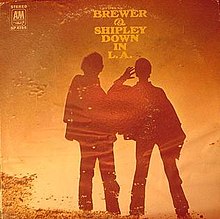
October: Brewer and Shipley – Down in L.A.
The duo from the Midwest released their debut album 50 years ago this month with a little help from Jim Gordon, Hal Blaine, Jim Messina, and others.
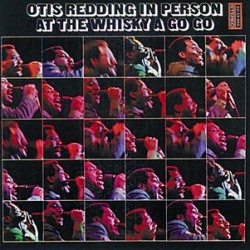
10/1/68: Otis Redding – Otis Redding In Person at the Whiskey a Go Go
Another great posthumous Redding release, At the Whiskey a Go Go was recorded in 1966 prior to his rapid rise to fame due to his appearance at the Monterey Pop Festival a year later.
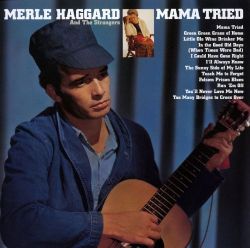
10/3/68: Merle Haggard – Mama Tried
Merle’s critically acclaimed album featuring the hit title track reached #4 on Billboard’s Country album chart. It was a continuation of his themes of crime and hardships.
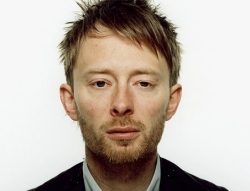
10/7/68: Thom Yorke born
The Radiohead frontman turned 50 this month.
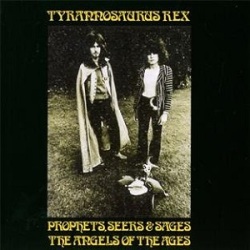
10/14/68: Tyrannosaurus Rex – Prophets, Seers and Sages: The Angels of the Ages
This is the second album by the band later to be known simply as T. Rex. An AllMusic retrospective review refers to it as the most underrated of their four albums. As I probably said with the first one earlier this year, I’m going to have to give it a listen one of these days.
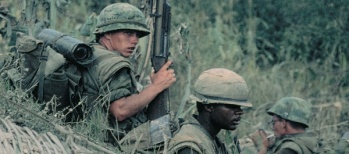
10/14/68: Dept. of Defense announces it is sending back 24,000 troops to Vietnam for involuntary second tours
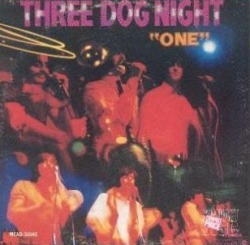
10/16/68: Three Dog Night – One
One is the debut of Three Dog Night. Oddly, their #5 single of the same title wasn’t included on the original album release. Robert Christgau, Life Cereal’s “Mikey” of rock music critics, actually liked it.
10/17/68: Ziggy Marley born
Ziggy has outlived his father by 14 years.
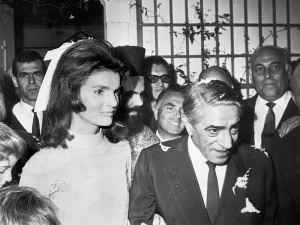
10/30/68: Jackie Kennedy becomes Jackie Onassis
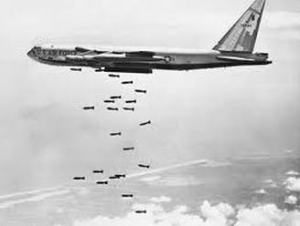
10/31/68: LBJ announces complete halt to bombing in North Vietnam
Marvin Gaye – Single: I Heard it Through the Grapevine
This Motown classic was written in 1966 by Norman Whitfield and Barrett Strong, and originally recorded by Gladys Knight & the Pips in 1967 when it reached #2. The Miracles recorded a version in 1968, as did Marvin Gaye, and CCR did a sprawling rendition for their 1970 album Cosmo’s Factory. As with Stevie Wonder’s hit For Once in My Life a couple of weeks back, Berry Gordy originally vetoed Grapevine as a single before relenting in October of ’68. It was released this day 50 years ago, and was a #1 smash in the US and UK.
The song went on to become part of the American music fabric, and was inducted into the Grammy Hall of Fame for “historical, artistic, and significant” value. It also had a resurgence in popularity in the 1980’s after it was included in the Big Chill movie soundtrack (1983) and in a California Raisins advertisement in 1986 (this version mirrored Gaye’s, but featured Buddy Miles as the vocalist – something I wasn’t aware of until reading up on the song). In the mid-1980’s Gaye’s version seemed almost as ubiquitous as anything by Michael Jackson or Madonna. It’s one of those timeless tunes that could see another resurgence at any point in the future.
Side A: I Heard it Through the Grapevine
Side B: You’re What’s Happening (in the World Today)
WARNING: Reading about or listening to the New Barbarians may cause a context buzz.
Rock and pop music collaborations come and go. Some of them have had lasting impacts, and we might refer to them as supergroups. Cream and the Traveling Wilburys are a couple of obvious examples. Many of the ones we think of were singles releases as opposed to full albums. Queen/Bowie, Elton/Lennon, and McCartney/Jackson come to mind, among many others. There are also less heralded musical associations which are nonetheless interesting, such as Ginger Baker’s Air Force. Then we have the somewhat curious case of the blur known as the New Barbarians; curious because they never recorded a studio album yet they carried out a significant North American tour, and a blur because the group consisted of members of two of the hardest living rock bands on the planet: Faces and the Rolling Stones.
The seed of the New Barbarians was planted in 1974 after the release of Ronnie Wood’s solo album I’ve Got My Own Album to Do. In an effort to promote the album, Wood enlisted the help of Keith Richards, his Faces band mates Ian McLagan and Rod Stewart, plus bassist Willie Weeks and drummer Andy Newmark, for a gig at the Gaumont State Theatre, Kilburn, in northwest London. The following year, Wood joined the Stones for a stint of 43 years and counting.
Ronnie, Rod, and Keith, later known as First Barbarians, at Kilburn, 1974.Ronnie in his rare role as front man.
Five years later Ronnie needed a vehicle to promote his third LP, Gimme Some Neck, so he revisited the idea of putting together a group of buddies and heading out on the road. The Rolling Stones were on hiatus, so Keith got on board. They were joined once again by McLagan, as well as Stones saxophonist Bobby Keys, fusion bassist Stanley Clarke, and drummer Joseph “Zigaboo” Modeliste of New Orleans group the Meters, who, as pointed out by author Rob Chapman, was not exactly a rock drummer but who joined at the recommendation of Charlie Watts (who apparently wanted nothing to do with what was sure to be another debauched musical excursion).
The New Barbarians, 1979 (L-R): Joseph “Zigaboo” Modeliste, Bobby Keys, Stanley Clarke, Ian McLagan, Keith Richards, and Ronnie Wood.
Jeff Beck and Jimmy Page were also considered, but their management made arrangements too much of a challenge for Wood. Neil Young attended a couple of their rehearsals in L.A. and almost joined the group, but had other responsibilities at the time including the birth of his son and the editing of his concert documentary Rust Never Sleeps. Neil did give the band its moniker as a parting gift though, by referring to them as a bunch of barbarians. They added “New” to the name after learning of another band with the same name; thus was born the first “pub rock super group” as writer Jeff Giles called them. Only they played basketball arenas and not Buddy’s Saloon on the outskirts of town.
The would-be Barbarians – Beck, Page, and Young in 1979 (I know which one I would’ve predicted wouldn’t have survived a tour with Keith…):
The shows would also serve a second purpose, at least initially. As part of his sentence for his 1977 heroin bust in Toronto (on my sixth birthday), Richards was ordered to perform a couple of charity shows benefiting the Canadian National Institute for the Blind. So, the first two New Barbarians shows took place in Oshawa near Toronto in April 1979 – as the support act for the Rolling Stones. From there they dropped down to the lower 48 for 18 US dates lasting into May. In order to mitigate any trouble Keith might run into in Canada, tour management booked the group into the Playboy Club in Lake Geneva, Wisconsin. They would headquarter there for the Toronto and Midwestern US dates, flying in and out for each gig. (Wha-I-um-how-oh, nevermind. On with the story…)
Keith and common-law wife Anita Pallenberg heading to court in ’77.
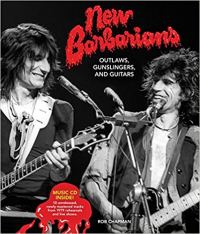
Their sets combined rock ‘n’ roll, R&B, blues, and country, including a few Stones songs. Wood sang lead on most songs (the tour was to promote his album, after all), with Keith providing lead vocals on a few numbers. The shows have been described as “ragged,” “addled,” “sloppy,” “wired,” “half party, half rock show,” and as possessing a unique blend of “deceptively ramshackle grace” – kind of like Rock ‘n’ Roll Hall of Fame jam sessions, but much more soulful, raunchier, and with very naughty behavior taking place just off stage. Rob Chapman, in his book New Barbarians: Outlaws, Gunslingers, and Guitars, shares a funny anecdote as described by bassist Stanley Clarke: On one occasion Clarke offered Richards a health shake, to which Keith responded simply, “Stanley, Stanley…”
As with any outlaw rock band worth its salt, trouble was not far away from the New Barbarians. Rumors were instigated by Wood’s management and promoters that “special guests” would appear to add a little more excitement to a show that featured mostly Ronnie singing his original songs (again, they were tasked with filling arenas, not taverns or small clubs). But neither Mick, nor Dylan, nor Page appeared as many concertgoers had hoped. At the Mecca in Milwaukee this caused a riot and 81 arrests. (A makeup show took place the following year with a somewhat bizarre lineup which included Andy Newmark, Reggie McBride, Johnny Lee Schell, and…MacKenzie Phillips. No Clark, Modeliste, or Richards.)
And, of course, there was heavy consumption of various substances. Another stipulation of Richards’s drug sentence was that he attend rehabilitation counseling, but this tour was the extreme opposite. Author Stephen Davis paints a rather bleak picture in his book Old Gods Almost Dead:
Living on alcohol and cocaine, Keith assumed a particularly spectral appearance as his hair began to gray and his face caved in, and rumors of his impending demise again spread through the music industry…Keith and Woody’s brotherly bond began to strain under financial pressures (they personally funded the tour’s excesses) and Wood’s rapid ascent into drugdom’s First Division.
Yet, a splendid time seems to have been had by all. As Stanley Clarke later described it, it was his “100% rock ‘n’ roll experience.” A few months later in August of ’79, the New Barbarians took the stage one final time (other than the Milwaukee make up show), on a Knebworth bill which included Southside Johnny and the Asbury Jukes, Todd Rundgren, and Led Zeppelin. And with that, the “ramshackle grace” of the New Barbarians slipped into oblivion until 2006, when the two-disc Buried Alive: Live in Maryland was released. Two years later, the 1974 Kilburn show was released under the title TheFirst Barbarians: Live from Kilburn.
I stumbled upon the Kilburn show when it was released ten years ago. I’d never heard of the group or tour before, but it just seemed like something I’d listened to all along. It sounds like an audience tape or a soundboard bootleg at best, and for a show such as this it’s actually a perfect representation of the group as opposed to a clean live recording which might get a final studio polishing before its release. The sound quality of the Maryland show is actually quite good by comparison. There are those days (and very late nights) when these albums just hit the spot. I was very familiar with Wood’s song Mystifies Me from Son Volt’s 1995 version which I knew and loved, but I was not aware that it was a Ronnie Wood song or that it was on that impressive list of tunes which all share the same muse.
Long time pals Ronnie and Pattie
First Barbarians in 1974, performing yet another ode to Pattie Boyd:
The full show at Kilburn, 1974:
Sloppily yet elegantly wasted – a full New Barbarians show from the 1979 tour:
2017 book by Rob Chapman – New Barbarians: Outlaws, Gunslingers, and Guitars




















 50th Music Anniversaries and Other Musings