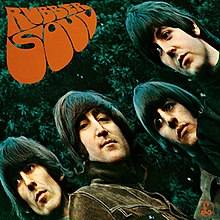
Desert Island Album Draft, Round 2: Rubber Soul

I’m participating in an album draft with nine other bloggers, organized by Hanspostcard. There will be ten rounds, with draft order determined randomly by round. I was the ninth to select in this round, and I scored one of my favorite Beatles albums.
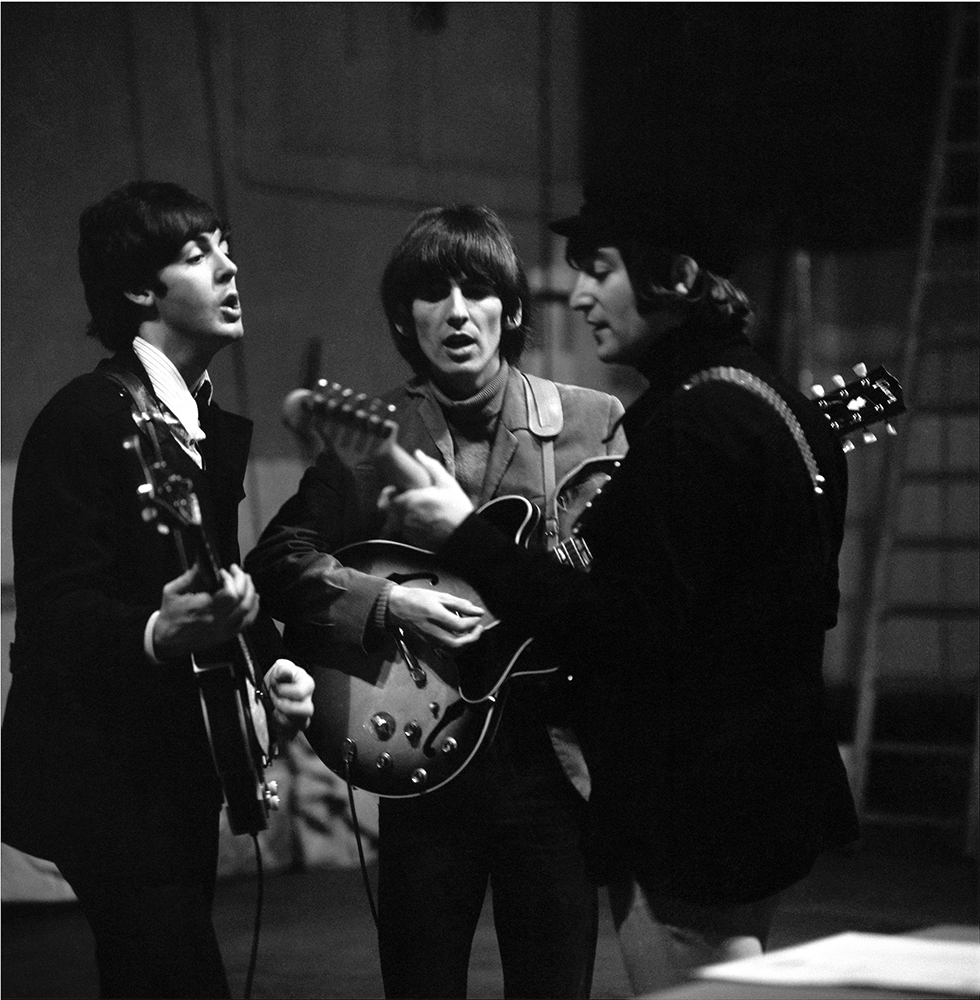
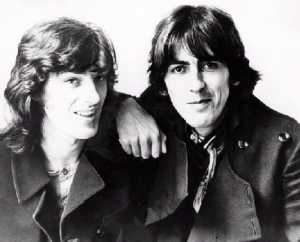
Bob Whitaker: Three Beatles – Snap Galleries Limited

There was no doubt that my second pick would be a Beatles album. It was only a matter of what was still available to choose from. Twenty years ago, Rubber Soul would’ve been at the top of my Beatles list. Today it’s second by a hair, but I’ll still gladly add it to All Things Must Pass in my fledgling desert isle collection. Rubber Soul is another of their albums which saw two releases on separate labels with different track lists and song totals. I grew up with the U.S. (Capitol) version, which does have its positives despite being two tracks shorter. However, in my adult life I’ve only listened to the Parlophone version which was standard across most of the planet outside the U.S., and for the purposes of the draft that’s the one I’m going with.

Rubber Soul Sessions 1965 — The Beatles in 3D

By 1965 the Beatles were progressing at lightning speed as writers and as individuals, more so than what their heavily promoted mop top image – or what was left of it at that point – might’ve suggested. It’s astounding to me when looking at it in terms of a timeline just how rapidly they evolved. During their month long U.S. tour that summer they met Dylan in New York, dropped acid with The Byrds in L.A. (with Paul famously abstaining for the time being), listened to a lot of Motown and Stax music on the radio, and smoked pot for breakfast (John would even describe Rubber Soul as “the pot album”). They returned to the U.K. inspired to write a new batch of songs reflective of these experiences, which they began recording a short time later in October. Rubber Soul was released – along with its accompanying smash double A-sided single, Day Tripper/We Can Work it Out – on December 3. It was their second album of all original material, still somewhat unheard of in rock and pop music at the time. Whew!
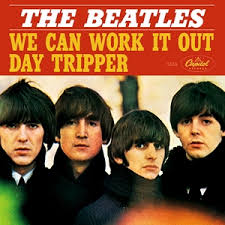
day tripper.jpg

The title pokes fun at themselves for not having “authentic” soul like the American R&B artists they admired, but when the needle hits the grooves, it’s anything but phony. The themes are more serious and much less bubblegum than on previous albums, and for many younger fans whose lives hadn’t changed so drastically and in such a short period of time, this was a shock. There are beautifully written songs of lament (You Won’t See Me, Wait, I’m Looking Through You, Girl), and sentimental retrospection (In My Life). We also start to hear their “later” personalities and influences come to the fore, especially with Harrison. There’s stern advice from “grumpy George” (Think for Yourself) as well as the sweet, jangly sound of his 12-string Rickenbacker on the Byrds-influenced If I Needed Someone (he’s no longer saying “I need you,” but only “If…”). Norwegian Wood (This Bird Has Flown), written by John about an extramarital affair and played in the style of Dylan, was not only the first Beatles song on which George played sitar, it was the first rock record to do so, period. This song alone spawned “raga rock” and brought Hindustani classical music – particularly that of Ravi Shankar and his associates – to Western ears like never before. John had laid bare his feelings of despair earlier in the year on his song Help!, but few heard it as he meant it. With Nowhere Man listeners now understood there was complexity behind Lennon’s goofy, sometimes acerbic façade.

69 Years Ago Today … – The Kitty Packard Pictorial

I realize it’s silly to second guess what the Beatles did on their albums, but there are a couple of nicks in Rubber Soul’s vinyl in my view. It’s been written, and boasted about somewhat by McCartney, that they were a very democratic band, and to a great extent they were. Yet at times it was a bit to their detriment. While I wouldn’t have wanted anyone but Ringo as the drummer for the Beatles, looking at it today it seems rather misguided for them to designate a slot on their albums for a Ringo song. What Goes On, if only briefly, disrupts the vibe and flow of the album. Other than perhaps his White Album tracks, Ringo’s songs should’ve been B-sides only. And beginning with their next album it made even less sense as George was writing a lot more yet was still allotted only one or two tracks per record. Additionally, Run for Your Life has a regrettable set of lyrics despite being an otherwise fun track instrumentally speaking. Even John disavowed it later.

BEATLES - Ringo Starr in 1965 Stock Photo - Alamy

1965 was a transitional time all the way around for the Beatles and on Rubber Soul in particular, but not in a way to suggest anything was lacking. Almost everything they did, whether with their music or their group image and as individuals, had a major impact on popular culture. And if one is inclined to hear this album and Revolver as companion pieces as George Harrison did, it could be argued that it was their peak.
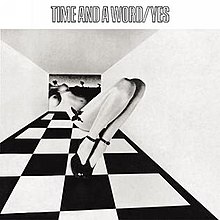
 

July 24 – A Second Offering from Yes

7/24/70: Yes – Time and a Word

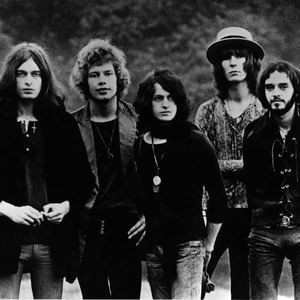
Yes’s second album, released on Atlantic 50 years ago today, was recorded during the band’s touring breaks and continued the evolution of their classic early/mid 70’s sound (and lineup). A small brass and string section was employed on most of the album which sets it apart from Yes’s other albums, a move which guitarist Peter Banks did not approve of and which hastened his departure from the group before Time and a Word‘s release. He was replaced by Steve Howe, who was added to the group photo on the album’s jacket which was released in the U.S. because the original U.K. jacket was deemed inappropriate for release across the Atlantic.

Original US cover featuring Steve Howe (far right)

There’s simply no doubt who you’re listening to from the opening notes of Tony Kaye’s Hammond organ on No Opportunity Necessary, No Experience Needed, a very interesting take on Richie Havens’s original which is also notable to me as a Havens fan because Richie was known better for being an interpreter of others’ tracks rather than the one being covered. Yes’s version has an Aaron Coplandesque bombast of strings and brass, giving it a bit of an American flavor. Other favorites of mine include their reading of Stephen Stills’s Everydays, which starts out spacey before kicking into an extended jam before returning to where it began, plus Jon Anderson & David Foster’s Sweet Dreams, which points the way to future Yes albums, and Anderson’s Astral Traveller, a standout track for drummer Bill Bruford. Dear Father is probably the only song on this album that doesn’t really do anything for me.

Yes

Time and a Word is considered by prog and specifically Yes aficionados to be the weakest of their 1970’s albums. I consider myself to be a casual Yes fan, and I find it to be a very enjoyable listening experience despite its status as a transitional work. The Yes Album, Fragile, Close to the Edge, and Relayer it is not. Probably not Tales from Topographic Oceans, either. But to me that says more about their depth of quality albums in those years. Take away the occasional overuse of strings and it would probably be more on par with those others.

Tracklist

Side One:

  1. No Opportunity Necessary, No Experience Needed
  2. Then
  3. Everydays
  4. Sweet Dreams

Side Two:

  1. The Prophet
  2. Clear Days
  3. Astral Traveller
  4. Time and a Word

-Stephen

https://www.allmusic.com/album/time-and-a-word-mw0001948160

https://en.wikipedia.org/wiki/Time_and_a_Word

http://www.prog-sphere.com/specials/yes-time-word/


When Sir Douglas Quintet Let the Good Times Roll

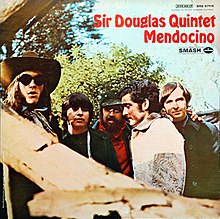
April 1969: Sir Douglas Quintet – Mendocino

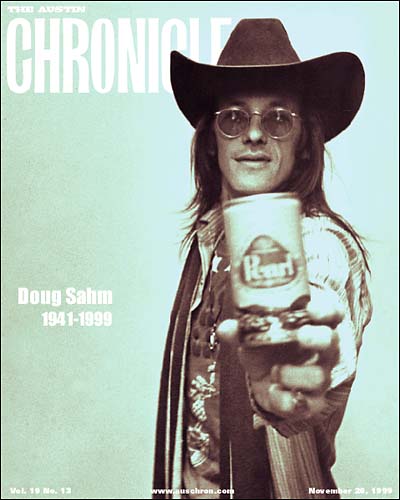
Sir Douglas Quintet was formed in San Antonio in 1964 by Doug Sahm with his friend Augie Meyer. Sahm began his professional career as a child playing country (he played with Hank Williams, Sr. during his final performance), but gradually incorporated blues and R&B into his repertoire. As SDQ became well known in their native Texas, their music became a hybrid of sounds prominent in the southern part of the state, including Mexican, Polish, Czech, German, Cajun, and African American. Then they added a measure of Beatles before scoring a hit in 1965 with She’s About a Mover, which is one of their two best known songs. Its similarities to the Fabs’ She’s a Woman are no coincidence. Like their fellow native Texan Janis Joplin, they headed west and landed in the heart of psychedelic San Francisco, where they recorded their fantastic Mendocino album.

Sir Douglas Quintet | rocktourdatabase.com

The music on this release is pretty straight forward country rock and Tex-Mex, with its signature sound being Augie Meyer’s Vox Continental organ complimenting acoustic and jangly electric guitars. The title track, the group’s other most famous tune, spent fifteen weeks in the Billboard Hot 100. I Don’t Want is probably the most au courant tune in the set. It could’ve been on a Byrds album. She’s About a Mover makes another appearance here in an updated version, though it’s not far from their original four years prior. At the Crossroads and Texas Me are great examples of Sahm’s soulful vocals, the former bringing to mind the Grateful Dead’s version of Morning Dew, the latter a lament of a man far from home:

Now I’m up in Sausilito, Wonder where I ought to be, An’ I wonder what happened to that man inside, The real old Texas me…

The Resurrection of Doug Sahm: Sneak peak at SXSW Film biopic plus deets on  SXSW Music blowout - Music - The Austin Chronicle

The album clocks in at 31:05, and closes out with Oh, Baby, It Just Don’t Matter, a burst of distorted, grungy goodness. I’m not a native Texan, and no matter how long I end up living here I doubt I’ll ever feel like one. The closest connection I feel to this state is when I listen to music like this. There’s such an attitude embedded in Mendocino’s grooves. It was so original, inclusive, and downright cool. It’s unpretentious country rock in the best ways. It’s for hippies, rednecks, and plain ol’ dudes like me. It can be served up with a six pack of Lone Star Beer or Sierra Nevada Pale Ale. Like the man sang, it just don’t matter.

Tracklist

Side One:

  1. Mendocino
  2. I Don’t Want
  3. I Wanna Be Your Mama Again
  4. At the Crossroads
  5. If You Really Want Me to I’ll Go

Side Two:

  1. And it Didn’t Even Bring Me Down
  2. Lawd, I’m Just a Country Boy in this Great Big Freaky City
  3. She’s About a Mover
  4. Texas Me
  5. Oh, Baby, It Just Don’t Matter

-Stephen

https://www.allmusic.com/album/mendocino-mw0000453380

https://www.nodepression.com/review-doug-sahm-and-the-sir-douglas-quintet-the-complete-mercury-recordings-box-5cd-hip-o-select-2006/

https://en.wikipedia.org/wiki/Sir_Douglas_Quintet

https://en.wikipedia.org/wiki/Mendocino_(album)

Jackie Lomax: A Lost Classic – Sour Milk Sea

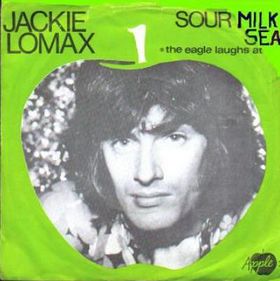
8/26/68: Jackie Lomax – Single: Sour Milk Sea

I had stepped away from my blog for a bit when the 50th anniversary of Jackie Lomax’s 1969 album Is This What You Want? came and went. It wasn’t a great album despite its connections, but there is one standout track that I want to acknowledge. Sour Milk Sea is a fairly well known song to Beatles fans despite the fact that it wasn’t on any of their albums (unless one counts The Esher Demos). I’ve mentioned it before, on the White Album‘s 50th. Written by George Harrison, who also produced the Lomax album for the Apple label after recording his own demo, in my mind its rightful place was on the White Album as a proper full-on Beatles song. Perhaps this post is an attempt at excising the topic from my mind so that I can just enjoy Lomax’s very good version.

220px-Lomax_IsThisWhatYouWant__cover.jpg

Sour Milk Sea was written by Harrison during the Beatles’ retreat with the Maharishi Mahesh Yogi at his ashram in Rishikesh, India in early 1968. He drew inspiration for the song from a picture depicting a Hindu theme regarding “the geological theory of the evolution of organic life on earth.” The Sour Milk Sea represents a fallow period between Earth’s evolutionary cycles. The point of all of it being, in order to evolve we must seek God through meditation.

MAHARISHI MAHESH YOGI DVD 1968 - "SPIRITUAL ADVISOR TO THE BEATLES."

While the thematic influence is from the East, Sour Milk Sea is not raga rock. No sitar, no tablas. This is straight forward 1968 British blues rock, and what a backing band Lomax had here: Harrison and Clapton on guitars, McCartney on bass, Ringo on drums, and Nicky Hopkins on piano. The Hammond organ is uncredited. This was the first Harrison written song that he gave away to another artist. It’s also the only song to feature more than two Beatles on someone else’s recording.

1727 Sour Milk Sea – Jackie Lomax (1968) | Songs We Were Singing

I wrote ‘Sour Milk Sea’ in Rishikesh, India…it’s based on Vishvasara Tantra, from Trantric art…It’s a picture, and the picture is called ‘Sour Milk Sea’ – ‘Kalladadi Samudra’ in Sanskrit. I used Sour Milk Sea as the idea of – if you’re in the shit, don’t go around moaning about it: do something about it.

-George Harrison, from his autobiography I Me Mine

If your life’s not right, doesn’t satisfy you
You don’t get the breaks like some of us do
Better work it out, find where you’ve gone wrong
Better do it soon as you don’t have long
Get out of sour milk sea
You don’t belong there
Get back to where you should be
Find out what’s going on there
If you want the most from everything you do
In the shortest time your dreams will come true
In no time at all makes you more aware
A very simple process takes you there
Chorus
Looking for release from limitation
There’s nothing much without illumination
Can fool around with every different cult
There’s only one way really brings results
Chorus

Side A: Sour Milk Sea

Side B: The Eagle Laughs at You

An interesting “outfake,” a mashup of the Lomax instrumental track with the Harrison Esher Demo vocal:


-Stephen

Sour Milk Sea

https://en.wikipedia.org/wiki/Sour_Milk_Sea

Mungo Jerry’s Summertime Classic 50 Years On

1970: Mungo Jerry – Single: In the Summertime

I thought that today I’d salute a fun, whimsical tune which celebrate’s its 50th anniversary this year. I’m unable to locate the specific release date other than the year, but I’m going to assume it’s not February or November. Regardless, it’s Friday, it’s mid-July, it’s hot outside, and I need a break from the world’s madness for a few minutes. With that, I  present to you a summertime one-hit wonder classic, Mungo Jerry’s In the Summertime.

So Exactly What Is A Mungo Jerry? – Geezer Music Club

This is one of those tunes that takes me back to childhood, and I still enjoy hearing it this time of year the same way I like hearing Seals & Crofts’ version of Summer Breeze during the dog days and McCartney’s Wonderful Christmastime in December. Yes, I’m a bit of a sentimentalist. As for this track, it was written by Ray Dorset, front man for this band which is technically still active with a revolving door of members. The name of the band was inspired by a T.S. Eliot poem, Mungojerrie and Rumpleteazer.

Ray Dorset of Mungo Jerry: I spun my No 1 hit into a gold‑disc ...

Besides the carefree days of childhood, In the Summertime also reminds me of a friend and former co-worker of mine from our days at a chain retail furniture store. The company would distribute CDs to its stores to be played on a loop, and one of them had this track on it. Therefore, we usually heard it 2-3 times per shift, and she absolutely hated it, and of course I teased her about it. I dedicate this blog post to you, Cindy. 🙂

Apparently the Mungo Jerry camp takes its copyright semi-seriously, as I’ve not found a clip on YouTube which doesn’t edit out the words “In the summertime.” You probably know how it goes….

Side A: In the Summertime

Side B: Mighty Man

-Stephen

https://en.wikipedia.org/wiki/Mungo_Jerry

https://en.wikipedia.org/wiki/In_the_Summertime

July 16 – Cosmo’s Factory Hits 50

7/16/70: Creedence Clearwater Revival – Cosmo’s Factory

The year 1970 is exactly in the middle of my favorite ten-year stretch of rock music. When I think of the “biggest” bands or my absolute favorite albums and bands from roughly ’69-’71, admittedly CCR is not the first to pop into my mind. Until a couple of years ago they’d always been a greatest hits band in my mind (and collection) – a very good one, but one whose full albums I hadn’t paid much attention to. Yet, is there really much argument against the opinion that CCR and their album Cosmo’s Factory – released on this day 50 years ago – don’t form part of the core of what makes rock music from that era great?

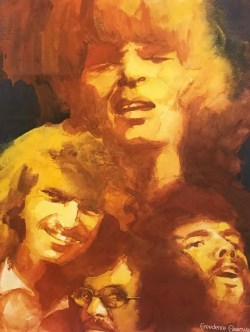
CCR 1970 – Bravo Posters

The album’s title came from the converted warehouse where the band was known to relentlessly rehearse (drummer Doug Clifford’s nickname is “Cosmo”), and was rather amazingly the band’s fifth album in two years. It is loaded with hits. Cosmo’s Factory spawned three highly rated double A-sided singles. Travelin’ Band/Who’ll Stop the Rain each reached number two on the Billboard Hot 100, Run Through the Jungle/Up Around the Bend reached two and four, respectively, and Lookin’ Out My Back Door/Long as I Can See the Light both climbed to number two. By December it was certified gold, and twenty years later 4 x platinum.

ccr.jpg

CCR weren’t known for creating the most diverse soundscapes. Their niche was straight-forward guitar-driven rock. That is to say, a (swampy) goulash of R&B, country, soul, blues, and rockabilly. Yet their sound is very distinctive. Perhaps it’s their stripped down, no frills brand of rock and roll – not unlike that of The Band and the Grateful Dead beginning with Workingman’s… – that was a major part of their appeal at the tail end of the psychedelic era.

CCR - They Really Did Get To Woodstock - uDiscover

One of my personal favorites on this album is Ramble Tamble, which leads off. It starts off in a rockabilly vein before a sudden turn two minutes in to a heavy, post-psychedelic instrumental for four minutes before returning to the original tune. The original Rolling Stone review refers to this track as “unsatisfying.” Pfft. Run Through the Jungle is as close to the Mekong Delta in 1970 as I’d want to be (though it was great to visit in 2000) – a great track. Their eleven minute version of Heard it Through the Grapevine might be considered monotonous to some, but it’s a groove I can get locked into. Travelin’ Band is always a fun two-minute adrenaline rush, and lastly, Long as I Can See the Light is a perfect, soulful ending to a classic album with no real weak links.

Tracklist

Side One:

  1. Ramble Tamble
  2. Before You Accuse Me
  3. Travelin’ Band
  4. Ooby Dooby
  5. Lookin’ Out My Back Door
  6. Run Through the Jungle

Side Two:

  1. Up Around the Bend
  2. My Baby Left Me
  3. Who’ll Stop the Rain
  4. I Heard it Through the Grapevine
  5. Long as I Can See the Light

-Stephen

https://www.allmusic.com/album/cosmos-factory-mw0000232241

Cosmo’s Factory

https://en.wikipedia.org/wiki/Cosmo%27s_Factory

Desert Island Album Draft, Round 1: All Things Must Pass

I’m participating in an album draft with nine other bloggers, organized by Hanspostcard. There will be ten rounds, with draft order determined randomly by round. I was the last to select in the first round, but my #1 choice was still available: George Harrison’s All Things Must Pass. I’ll probably end up doing an extended series on this album when its 50th anniversary comes up later this year.

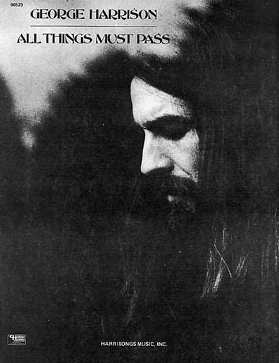
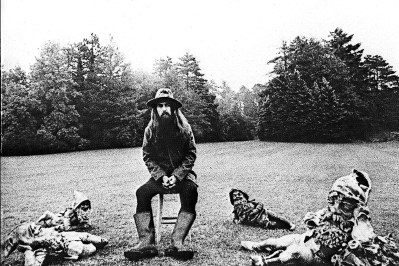
George-Harrison-All-Things-Must-Pass.jpg

Where to start with George’s 1970 triple album opus, and how to explain concisely why this album means so much to me in a manner that doesn’t make me sound full of myself? I’m counting on the fact that we’re all music nuts here and can, at least to some extent, relate. Despite the fact that I have no clue what it’s like to be musically gifted, internationally famous (never mind an ex-Beatle), wealthy, etc., if there’s one artist who I think I can relate to as a person, it’s George. I wear my heart on my sleeve like he did, and if I were ever to experience any degree of fame I’d probably react to it similarly to him. That is to say, “’Hari Krishna,’ now please get off my lawn while I enjoy this piece of cake.” Maybe it’s because I’m a fellow Pisces, I don’t know. And if there’s one album of his which displays his full range of emotions relating to personal relationships and spiritual longing, and is presented in beautifully crafted songs with fantastic musicianship from start to finish, it’s All Things Must Pass.

Due to the limits he faced with regard to his songs making it onto Beatles albums, Harrison had been stockpiling them since roughly 1966. After starting 1968 by staying in India longer than the other Beatles, in the fall of that year George spent time with Dylan and The Band at Woodstock, which was perhaps the final nail in the Beatles’ coffin as far as George was concerned. Their influence is all over this solo debut album, which was an artistic and emotional purging for Harrison.

There are songs of human love for friends, including the Dylan co-written I’d Have You Anytime, and George’s attempt at coaxing Bob out of his self-imposed exile on Behind That Locked Door. Apple Scruffs is his humorous love song to his loyal fans who waited daily outside the recording studio, and What is Life is one of a number of George’s uniquely ambiguous love songs over the course of his solo years which leaves it up to the listener to decide if it’s about human or Godly love.

There are songs of lament over friendships on the wane. Wah-Wah was written when George walked out of the Get Back sessions. It’s a double entendre which refers to the guitar effect as well as the headache John and Paul had caused him. Run of the Mill, too, was written out of his sadness over the Beatles’ slow dissolution. Isn’t it a Pity, to me, is the most powerful track on this emotional roller coaster of an album. I can’t watch Eric Clapton and Billy Preston sing it on The Concert for George without tears. Just thinking about it…

And, there are the songs which focus on George’s spiritual journey. The smash hit, of course, was My Sweet Lord, which includes a Vedic chant for which Harrison took heat from Christian fundamentalists for supposedly trying to subliminally indoctrinate America’s youth into heathen Eastern religion. As with his organizing the Concert for Bangladesh a year later, it took nerve (and Phil Spector’s insistence) for him to put this song out as a single, but it paid off. The Art of Dying had its genesis around 1966 when Lennon’s Tomorrow Never Knows was the Tibetan Book of the Dead-influenced song to make the cut on Revolver. To the uninitiated, it can be a dark or frightening song. It’s not. As with The Art of Dying, Awaiting on You All is Harrison encouraging us to wake up to what’s real and eschew that which isn’t. And lastly, after all the madness, fame, and fortune of his Beatles experience left him emotionally and spiritually frayed, there’s George’s bare bones plea in Hear Me Lord. For such a private man, it doesn’t get any more open and sincere than this.

I know I need to wrap this up despite the fact that I could go on (other tracks, the plagiarism lawsuit, Apple Jam, the session players, the cover, etc.). I would, however, like to comment briefly on Phil Spector’s production. As with Let it Be, this is the version we grew up with, and I love it just like it is. Perhaps when the deluxe 50th anniversary edition comes out this fall, it will include alternate versions and demos with toned down production. Some of it is already available on bootlegs and YouTube.

Thanks for reading.

-Stephen

July 1970 – Dave Mason Alone (Together with a Bunch of Friends)

July 1970: Dave Mason – Alone Together

There are individuals in my world of music interests whose names I heard or read often as a younger adult, who are considered to have made important contributions and are highly regarded musicians, songwriters, etc., yet when it came down to it I knew next to nothing about them or their work for a long time. Dave Mason was one of those artists. Even after I discovered Traffic for myself in the late 80’s and learned Mason was on their first few albums it still didn’t click. His best known Traffic song, Feelin’ Alright?, in my opinion is not in the same league as Joe Cocker’s cover. In my mind rightly or wrongly (o.k., wrongly), Traffic was Winwood, Capaldi, and Wood, period. Fully acknowledging my ignorance, Mason was the guy who sang 1977’s We Just Disagree, and that was about it. Yet there his name appeared in liner notes of albums by Jimi Hendrix, the Stones, Delaney & Bonnie, George Harrison, Crosby & Nash, and many others. It was a long time before I had my “ah-ha” moment with Mason, and it came a year or so ago when listening for the first time to his debut solo album Alone Together, released 50 years ago this month.

Roots Vinyl Guide

The instrumental tracks were of the somewhat standard fare for 1970, with rhythm section, keyboards, and mostly acoustic guitars and just the right touches of electric guitars on top. The best known track on the album is Only You Know and I Know, a song which Delaney & Bonnie covered. Highlights for me include the uptempo gospel influenced Waitin’ On You, the tasty acoustic guitar and keyboards of World in Changes, the acoustic guitar and piano combined on the wistful Sad and Deep as You, and the powerful closer Look at You Look at Me, which combines the best of most everything on the album onto its longest track at 7:38. My favorite track of all is Shouldn’t Have Took More Than You Gave, which closes out side one and, somewhat ironically, harkens back to Traffic. I realize I’ve just listed almost every track on the album, but yeah, it’s one of those releases. It sounds rather organic, straight forward and unfussy. It’s a solid rock album of its time, and it has aged very well.

Dave Mason – Wikipédia, a enciclopédia livre

There was much cross-pollenation on albums around this time among artists such as Delaney & Bonnie and George Harrison (on whose albums Mason appeared that same year), as well as Joe Cocker, Eric Clapton, and Leon Russell. Mason had help on this album with a list of well known musicians whose names popped up frequently around the turn of 1970’s, including drummers John Barbata, Jim Capaldi, Jim Gordon, and Jim Keltner. There were also contributions by Don Preston (Mothers of Invention, Plastic Ono Band) on keyboards, bassists Chris Ethridge (Flying Burrito Bros., Gene Clark, and many others), Larry Knechtel (see Wrecking Crew), and Carl Radle, as well as the aforementioned Delaney & Bonnie, Leon Russell and, of course, the then-ubiquitous vocalist/muse Rita Coolidge. But other than the Capaldi co-credit on the closing track, Mason was the sole songwriter. What set the better albums apart during the album rock explosion of the era was just the right batch of songs combined with just the right session players (on solo albums) and production. With Alone Together it all came together for Dave Mason. It was his peak. This one should’ve been on my shelf with those others all along.

Tracklist

Side One:

  1. Only You Know and I Know
  2. Can’t Stop Worrying, Can’t Stop Loving
  3. Waitin’ On You
  4. Shouldn’t Have Took More Than You Gave

Side Two:

  1. World in Changes
  2. Sad and Deep as You
  3. Just a Song
  4. Look at You Look at Me

-Stephen

https://www.allmusic.com/album/alone-together-mw0000193512

https://en.wikipedia.org/wiki/Alone_Together_(Dave_Mason_album)

https://en.wikipedia.org/wiki/We_Just_Disagree

https://en.wikipedia.org/wiki/Dave_Mason#Discography

July 1970 – James Gang, Independence Day, and American Music

July 1970: James Gang – James Gang Rides Again

It’s the morning of Independence Day in the U.S.A., and it’s such a strange time. I awoke early and stepped out on the back patio to visit with my wild friend Ginny for a bit and enjoy some fresh air before temps reach triple digits later today. I’m pondering what the Fourth of July means to me now with so much uncertainty in the air. It occurred to me that the best way for me to enjoy the day is to indulge in my favorite pastime, listening to music. Today, it’s 100% American music: Gershwin, Copeland, Miles, Bird, Dylan, Willie, Muddy, Bruce…you get the picture.

ginny.jpg

I didn’t have to put this post together today. James Gang’s second album, James Gang Rides Again (a.k.a. Rides Again), was released some time in July of 1970, but I’ve not been able to locate the exact 50th anniversary among my usual sources. I doubt it was released on July 4, but today seems as good a day as any to celebrate it as the album is a quintessential early 1970’s recording by a classic American band.

James Gang Look Back on 'Rides Again' at 45: Exclusive Interview

Rides Again contains one of the band’s two hits, Funk #49 (the other being Walk Away), but every track on it is quality rock music that features Joe Walsh’s fantastic, multidiminsional songwriting and musicianship, as well as that of bassist Dale Peters and drummer Jim Fox. Other than the driving Funk #49, my favorite song is The Bomber. The band ran into a bit of a legal dispute early on over this track due to its unauthorized inclusion of a rendition of Ravel’s Boléro, which was removed after initial pressings. It was restored on recent CD releases.

James Gang, The | Nostalgia Central

The organ on Tend My Garden adds another diminsion to the band’s sound that fades into the mellow folk of Garden Gate. This gives way to the country rock of There I Go Again which features Rusty Young on pedal steel guitar. Walsh has acknowledged that he only sang because the band needed a vocalist after their original singer quit the band and audiences responded well to him. He says he developed a lead/rhythm guitar style à la his friend Pete Townshend in order to allow him to sing effectively. As an aside, and speaking of Pete, James Gang opened for The Who on a few U.S. dates that same year.

James Gang - Wikipedia

*Non Music-Related Editorial Alert*

I’ve gone back and forth on whether or not to do this, but I feel the need to express something on this American holiday that’s supposed to be a cause for celebration. I don’t claim to speak for any other Americans who might read this, but to those of you from other parts of the planet who follow my blog, I’m disgusted with what is happening to my country right now and apologize for any negative impact it’s having internationally. Whether it’s Covid 19 or race-related, the absolute lack of leadership at the highest levels of my government and the shocking levels of selfishness and willful ignorance among much of the American population is sad and unnerving to me. This is not the United States I grew up in, nor is it representative of what I believe to be the vast majority of my fellow Americans.

Happy Fourth of July. Thanks for reading.

-Stephen

Tracklist

Side One:

  1. Funk # 49
  2. Asshtonpark
  3. Woman
  4. The Bomber: Closet Queen/Boléro/Cast Your Fate to the Wind

Side Two:

  1. Tend My Garden
  2. Garden Gate
  3. There I Go Again
  4. Thanks
  5. Ashes the Rain and I

https://www.allmusic.com/album/rides-again-mw0000194237

https://en.wikipedia.org/wiki/James_Gang_Rides_Again

https://ultimateclassicrock.com/james-gang-interview-2015/


July 1 – The Traffic Album that Made Me a Fan

7/1/70: Traffic – John Barleycorn Must Die

Traffic represents, to me, the quintessential turn of the 1970’s band and sound, especially one originating in the U.K. Today marks the 50th anniversary of the release of my favorite album by that band, John Barleycorn Must Die.

Traffic had dissolved after 1968’s eponymous album, with Dave Mason leaving a second time prior to its completion. Steve Winwood joined Blind Faith, and along with Chris Wood took part in Ginger Baker’s Air Force project. Wood and Jim Capaldi also did session work. Early in 1970, Winwood, still only 22 years old, returned to the studio to fulfill a contract obligation with a new solo album. But before it was completed he’d brought in fellow Traffic alumni Wood and Capaldi, and it became a new Traffic album instead, their fourth. This core trio would go on to release three additional albums.

TRAFFIC - JOHN BARLEYCORN MUST DIE DELUXE EDITION | UNCUT

The music on this album was a vehicle for Winwood’s vocals and instrumental work from keyboards to guitar, and the jazz, folk, and progressive rock influence on these sessions gave them plenty of room to spread out. Four of the album’s six songs which make up the original release exceed six minutes, but do not reach the running time of some tracks by their full on prog cousins. John Barleycorn Must Die peaked at number 5 on the Billboard 200 and was certified gold, but surprisingly only reached number 11 in the U.K.

Traffic - 1970 - Nights At The Roundtable - Past Daily: News ...

Dave Lifton, in his 45th anniversary review of the album in Ultimate Classic Rock, notes the similar vibe of the opening track, Glad, to that of jazz great Ramsey Lewis’s 1965 hit The In Crowd, and I can hear it. Glad, Freedom Rider, Empty Pages, and John Barleycorn Must Die are the songs that keep me coming back to this album, but there’s not a weak link. Chris Wood’s reed instruments are a perfect compliment to Winwood’s keyboards and vocals, as well as Capaldi’s percussion, the latter also contributing with four songwriting co-credits. The title track – a traditional British folk tune dating to the 16th century – might be my favorite as it combines all the aforementioned elements. It was covered by many British artists including Jethro Tull, Fairport Convention, and Pentangle. I was unaware until preparing this post that the song is not about a person, but the personification of a type of barley used in brewing beer and whiskey distillation.

Steve Winwood: "I always felt the need to work with the people ...

Showing my age relative to the music I cover as I tend to do, I was a Winwood fan from 1981’s Arc of a Diver onward when I was a kid. But as a youth, though I was familiar with the songs Dear Mr. Fantasy and The Low Spark of High Heeled Boys, I was mostly unaware of Traffic until my later teen years. Those were the two songs that got me interested in this band in the late-80’s, but John Barleycorn Must Die was the album that did it for me. It’s a complete package, a great album, and certainly one of my favorites by anyone in 1970.

Tracklist

Side One:

  1. Glad
  2. Freedom Rider
  3. Empty Pages

Side Two:

  1. Stranger to Himself
  2. John Barleycorn (Must Die)
  3. Every Mother’s Son

-Stephen

https://www.allmusic.com/album/john-barleycorn-must-die-mw0000197791#:~:text=Fantasy%2C%22%20but%20four%20of%20the,typical%20of%20earlier%20Capaldi%20sentiments.

https://www.bbc.co.uk/music/reviews/cfq4/

https://ultimateclassicrock.com/traffic-john-barleycorn-must-die/

https://en.wikipedia.org/wiki/John_Barleycorn_Must_Die

https://en.wikipedia.org/wiki/John_Barleycorn#Versions_and_variants