Desert Island Album Draft, Round 6: Gene Clark – No Other

I’m participating in an album draft with nine other bloggers, organized by Hanspostcard. There will be ten rounds, with draft order determined randomly by round. My round six pick is an album that should be as well known as any of the great releases from the early-mid 70’s, or from any era for that matter.

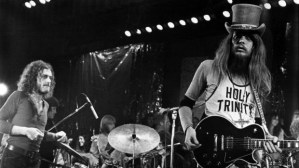
Gene Clark | thebluemoment.com

But I know if  you sell your soul, To brighten your role, You might be disappointed in the lights… – Gene Clark: Some Misunderstanding

At some point around the turn of the 21st century it slowly dawned on me that there’s an astounding amount of good music from “classic rock era” that I was still unfamiliar with. I discovered much of it for myself in the pages of MOJO, on music forums, and in more recent years, the blogosphere. Occasionally the term “lost classic” is assigned by those in the know to describe an album which, for whatever reason(s), didn’t get its due upon release. My pick for this round is one of these, though over the years there’s been a bit of a Gene Clark revival to the extent that his masterpiece, No Other, is becoming more widely known by the day. The same goes for Gene himself, who has languished in obscurity except to those who have been shouting about him from mountain tops for years. If you’re unfamiliar with Gene and would like a little more context, I wrote an appreciation of him a while back.

Between his departure from The Byrds, the band he co-founded, and No Other, Gene released three solo albums and two with the brilliant bluegrass musician Doug Dillard (with two songs from that collaboration covered on the smash album by Robert Plant and Alison Krauss, Raising Sand). Frankly, all of those albums are lost classics as well. Clark re-joined the other four original Byrds in 1972 for an ill-fated reunion album, Byrds. However, as with the earliest Byrds hits not written by Bob Dylan, the brightest spots on the album were the songs written by Gene, which resulted in David Geffen signing him to Asylum as a solo artist.

Byrd Lives: Cult Hero Gene Clark's 21 Best Songs - Rolling Stone

Clark composed most of No Other from his home in Mendocino. He drew inspiration from Stevie Wonder’s Innervisions and the Stones’ Goats Head Soup, two seemingly opposite poles, musically and spiritually speaking. Clark was searching, and it’s very evident on No Other‘s somewhat esoteric tracks. It’s a stew of folk rock, country rock, gospel, and soul, with plenty of tasteful overdubbed harmonies and instrumental textures produced by Thomas Jefferson Kaye. His supporting cast of musicians included some well-known names such as Danny Kortchmar, Leland Sklar, Russ Kunkel, Jesse Ed Davis, Timothy B. Schmit, Craig Doerge, Butch Trucks, Chris Hillman, Joe Lala, Ben Keith, and backing vocalists including the ubiquitous Clydie King.

Gene Clark's 'No Other' Deluxe Reissue: Album Review - Rolling Stone

The album, released in September of 1974, received contemporary praise from Billboard and today generally garners five star retrospective reviews. So, what caused No Other to be “lost?” The CliffsNotes version is this: The album was turned in quite over budget and with too few songs (eight) and not enough commercial appeal for Geffen’s liking. It was not anything close to what the label boss expected as an updated Byrds sound for the mid-1970’s, e.g., The Eagles. It was released with next to zero promotion by Asylum and taken out of print two years later, with conflicting accounts of a subsequent run-in between Gene and Geffen in an L.A. restaurant. Gene went on to release a few more albums, but sadly this was his unheralded peak. His career and life trajectory trended downward from there on. The good news: Awareness of this and Clark’s other great albums continues to increase. The bad news: It has happened posthumously. For example, in 2014 an all-star group formed calling themselves the Gene Clark No Other Band, consisting of members of Fleet Foxes and other indie bands, plus Iain Matthews of Fairport Convention, performing the album live in its entirety a number of times.
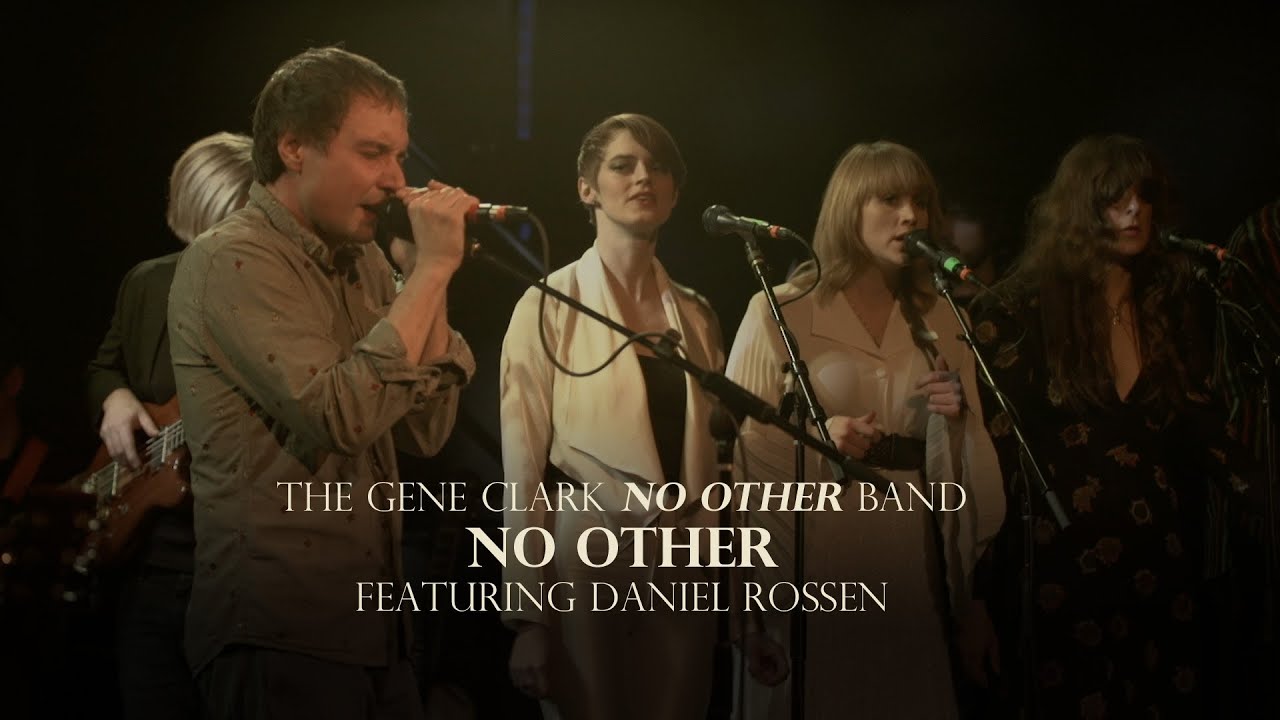
The Gene Clark No Other Band - "No Other" Ft. Daniel Rossen - YouTube

I bought No Other about 15 years ago without having heard it, based solely on word of mouth praise from some of Gene Clark’s most dedicated torch bearers. I gave it a couple of cursory listens and thought it was o.k. I listened more closely a few times, and it clicked. The individual tracks are wonderful, but it’s best listened to as an entire work. What I discovered after a few listens is the way in which the intensity and emotion build throughout – with a brief respite near the end with the contemporary/conventional sounding The True One – leaving me somewhat spent at the end. Yet No Other is one of a small number of albums that I usually listen to at least twice in the same sitting when possible. There’s so much soul and otherworldly writing in these songs, and the production takes it somewhere altogether different from anything else of its time.

3660af3c7c62c3dd3ed69805b34737a3.jpg

I can’t bring myself to post just a couple of tracks for you to sample, as there’s no singular song that defines the No Other sound. The title track, plus Silver Raven, Strength of Strings, From a Silver Phial, and the ethereal Lady of the North do feature some of my favorite writing and production, if I’m forced to choose. I like the music of Gram Parsons, but if there really is any such thing as “Cosmic American Music,” it’s this album. If you’ve got 43 minutes to spare, give it a listen. Then do it again.

Tracklist

Side One:

  1. Life’s Greatest Fool
  2. Silver Raven
  3. No Other
  4. Strength of Strings

Side Two:

  1. From a Silver Phial
  2. Some Misunderstanding
  3. The True One
  4. Lady of the North

-Stephen


Desert Island Album Draft, Round 5: Sticky Fingers

I’m participating in an album draft with nine other bloggers, organized by Hanspostcard. There will be ten rounds, with draft order determined randomly by round. My fifth round selection is the Rolling Stones’ Sticky Fingers.

March 26, 1971: Rolling Stones Tongue Logo Debuts | Best Classic Bands

It’s just that demon life has got me in its sway…

When it comes to filthy, gritty, living in the moment, above the law, unforgiving, unapologetic rock bands, the Rolling Stones are the original standard bearers. Within their unlikely and absurdly long life as a group – fast approaching 60 years – the stretch of albums loosely termed by many fans as the “Mick Taylor years” stand out for their return to basics, while at the same time cranking it up about 100 notches (I also include the pre-Taylor Beggars Banquet with these releases). For me, at the top of the heap, even if only by a few degrees, is Sticky Fingers. This is the one. This album represents everything I love about the Stones, Brian Jones’s unique contributions notwithstanding.

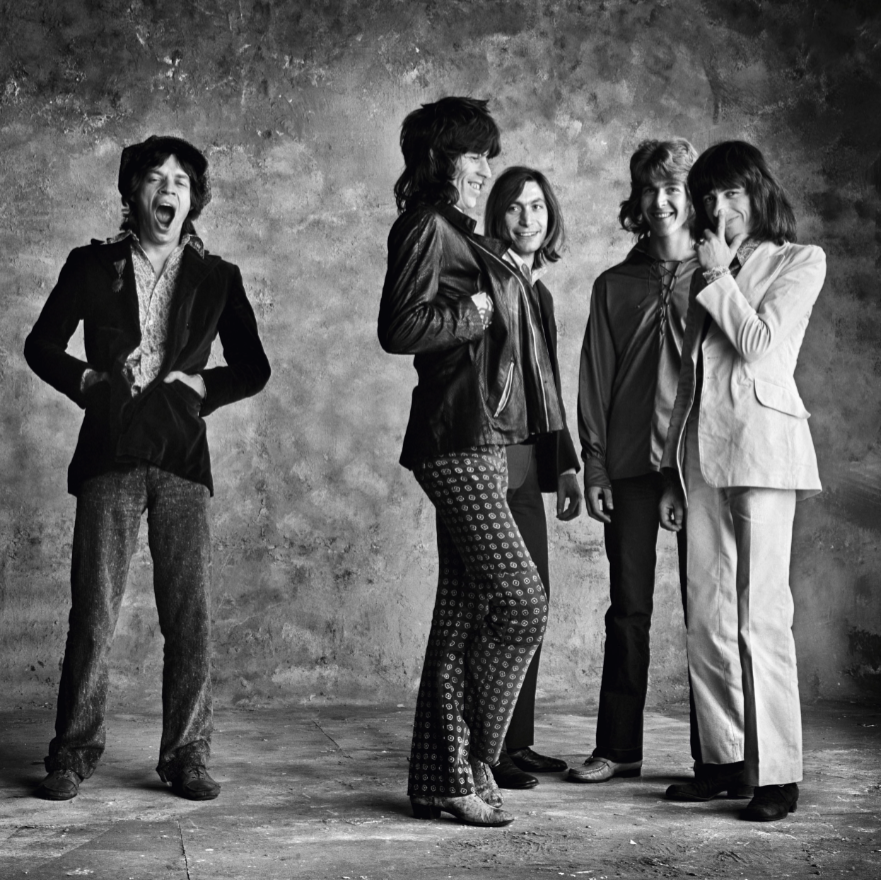
Sticky Fingers: The Lost Session – Snap Galleries Limited

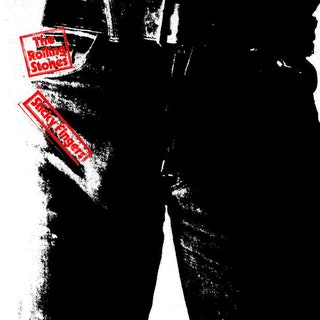
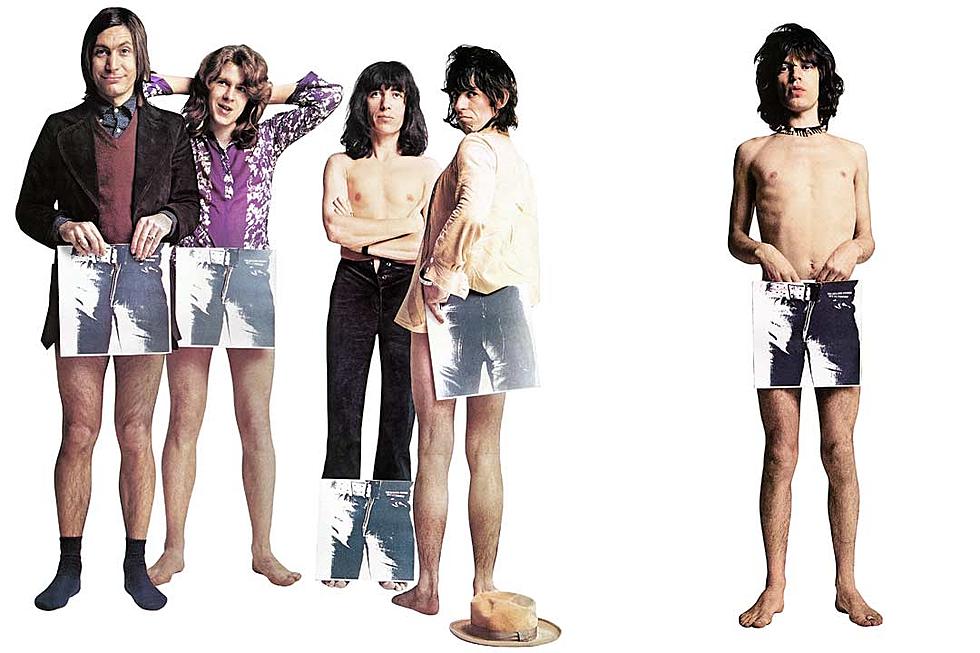
There were a couple of periods of recording beginning in early 1969, with the bulk of studio work taking place the following year, concluding in December 1970. It was released on April 23, 1971. The album, with its distinctive Andy Warhol Factory designed cover which included, on initial pressings, an actual functioning zipper, topped the charts worldwide soon after. Sticky Fingers was the band’s first album of the 1970’s, and the first on their Rolling Stones label featuring the iconic tongue and lips logo. But, as always, it’s about the MUSIC, maaaan. 

How the Rolling Stones Launched a New Era With 'Sticky Fingers'

And the vibe. To my ears, the vibe or tone of the album is actually set with the count in to the second track, Sway, and it never lets up. Chances are you know this album well, or are at least familiar with it, and you know what I mean. And let’s give major credit where it’s due right now: The session players on Sticky Fingers were an all-star band in themselves, and are just as important to this record as the principals. Bobby Keys and Jim Price brought crucial sax and trumpet contributions. They rocked on tracks like Bitch, and displayed soul on the Stax ballad inspired I Got the Blues along with Billy Preston on the organ. Price also added the beautiful piano part to Moonlight Mile, with only he and the two Micks on the main track.

billy preston | seventies music

Other major contributions include Ry Cooder’s slide guitar and Jack Nitzsche’s piano on Sister Morphine (co-credited to Marianne Faithfull), and Paul Buckmaster’s string arrangements on Sway and Moonlight Mile. Other session players included stalwarts Nicky Hopkins, Rocky Dijon, Jim Dickinson, and Ian Stewart, and though he didn’t play on the album, Sticky Fingers wouldn’t have been what it is without the influence of Gram Parsons. The evidence is on Wild Horses and Dead Flowers. If we’re to include alternate versions, Eric Clapton and Al Kooper can be heard on the looser 2015 bonus disc cut of Brown Sugar. But the core, as always, was Mick and Keith and the boys, now including Mick Taylor, and it’s Taylor’s lead guitar interacting with Richards’s and Jagger’s rhythm playing that took the band’s sound to a place it hadn’t been before his arrival and hasn’t returned to in the 46 years since his departure, with all due respect to Brian Jones and Ronnie Wood.

Mick Taylor - Wikiwand

I don’t know why, but I’m fascinated by bands from that era that stretched and often broke the rules and not only kept it together but seemed to thrive on the chaos. Perhaps guys like Elvis, Hank, and others raised eyebrows earlier, but the Stones flaunted damn near every taboo in society’s face in these songs and said what of it, mate? These years found them defying not only the law, but the Grim Reaper as well, bless Keith’s heart (and veins), and they survived. Sticky Fingers is truly a fly on the wall album for anyone who wants to know what they were about without the visual horrors of watching the cinéma vérité documentary of their 1972 U.S. tour, Cocksucker Blues, that make one want to take a shower after viewing (just remember, I didn’t tell you to watch it). It’s not the first “sex, drugs, and rock ‘n’ roll” album, but along with Let it Bleed, Exile on Main St. and the others, it’s about as extreme as it gets, especially considering when it came out. It’s an album that makes Steven Tyler and Joe Perry, and certainly latter day examples like the Gallagher and Robinson brothers of Oasis and the Black Crows, respectively – great rock artists that they all are – look like silly wannabes (and I like all of those bands, too). It’s a perfect rock album, and it’s on my island if you want to kayak over and listen some time.

Tracklist

Side One:

  1. Brown Sugar
  2. Sway
  3. Wild Horses
  4. Can’t You Hear Me Knocking
  5. You Gotta Move

Side Two:

  1. Bitch
  2. I Got the Blues
  3. Sister Morphine
  4. Dead Flowers
  5. Moonlight Mile

-Stephen


August 16 – Clapton’s Solo Debut

8/16/70: Eric Clapton – Eric Clapton

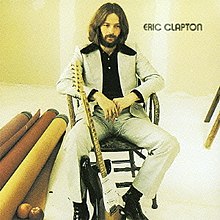
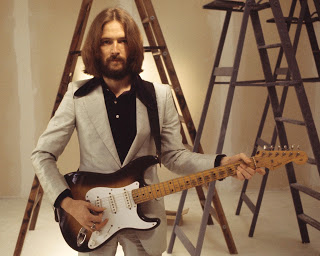
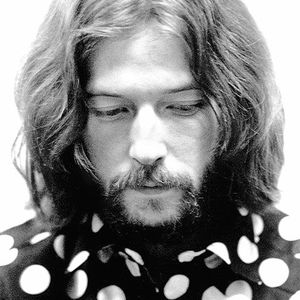
The 1970 album party continues today with our ringleaders, Delaney & Bonnie Bramlett. Eric Clapton, fresh off the road with the American couple, released his self-titled solo debut on this date 50 years ago. His supporting cast of characters was largely made up of the usual suspects from D&B’s travelling band of American crazies, including Leon Russell, Rita Coolidge, Bobby Keys, Jim Price, Carl Radle, Jim Gordon, Bobby Whitlock, plus Stephen Stills. This album, recorded November 1969-March ’70 in London and L.A., seems to fall under the Clapton radar for many casual listeners, as does the rest of his 1970’s catalog not titled Layla and Other Assorted Love Songs or Slowhand. These albums are simultaneously praised and reviled. I’m in the former camp. I feel no need to compare Eric Clapton, 461 Ocean Blvd., Backless or any of his others from that decade with his work with the Yardbirds, John Mayall, or Cream. To me, Eric Clapton is enjoyable beyond its tracks that ended up on the Crossroads box set. Produced by Delaney Bramlett, its songs fuse rock, blues, R&B, gospel, country, and pop elements. Three singles from the album, After Midnight, Blues Power, and Let it Rain, became Clapton classics.

Eric Clapton's Solo Debut LP: A Long Way From Home | Best Classic Bands

If his time and music with Cream and Blind Faith were tension-filled, this album definitely has a looser feel with an emphasis on the songs over extended solos. This was undoubtedly made possible by his supporting cast despite the backdrop of ongoing personal turmoil in Clapton’s world. Additionally, he was under the spell of the perceived idyllic music and overall orbit of The Band who, from afar, could be included in this roving cast of musicians so widely heard 50 years ago across albums by D&B, Joe Cocker, Dave Mason, George Harrison, and Clapton. Rolling Stone’s contemporary review noted that it was Bramlett who encouraged Eric to develop confidence in his singing voice, which quickly becomes apparent after the opening instrumental when his voice bursts out on Bad Boy. It continues on the next track, After Midnight, one of the album’s “tambourine shakers” as RS’s Ed Ward referred to it in his write up. Eric recorded a couple versions of this song in his career. This early one is up-tempo and gospel-inflected, the later 80’s version sounding every bit the slick Michelob Beer commercial jingle it became. I prefer this earlier rendition, but neither tops J.J. Cale’s original in my book. The acoustic Easy Now is a nice interlude from the more raucous material, and I can’t help but wonder if Alex Chilton and Chris Bell derived any inspiration from it in the run up to the first Big Star album. Fan favorites and 1970’s concert staples Blues Power and Bottle of Red Wine have aged well.

13 ERIC CLAPTON The Early Years 1964 to 1970 by Trans Reality Air | Mixcloud

Lovin’ You Lovin’ Me and I’ve Told You for the Last Time are a bit pedestrian, but are saved by the backing vocals which became an integral element of his early solo albums. Don’t Know Why pulls everything together with nice Stratocaster licks, Bobby Keys and Jim Horn brass, and plenty of gospel backing vocals. My favorite song on the album, and indeed one of my favorite Clapton songs of all time, is Let it Rain. It’s a good one to close out the album as he lets loose with both his guitar and vocals on the album’s longest track. It’s one of those facial contortion-causing guitar solos for those of us who have been known to play along on our air axes. I can appreciate that he was trying to get away from the “Guitar God” label with these songs. He took his songwriting in a new direction while not depriving listeners of his guitar virtuosity. Contemporary critics, while generally positive in their reviews, weren’t ready to let go of the Clapton of Cream and wished for a bit more indulgent guitar work. Possibly the main criticism I would wield against the album is its jacket, which seems to betray the sounds emanating from its grooves. It just screams (mumbles?) “I’m really not into this at all.” But clearly, he was. The best of Eric’s solo years was yet to come, but this was an auspicious beginning.

Tracklist

Side One:

  1. Slunky
  2. Bad Boy
  3. Lonesome and a Long Way from Home
  4. After Midnight
  5. Easy Now
  6. Blues Power

Side Two:

  1. Bottle of Red Wine
  2. Lovin’ You Lovin’ Me
  3. Told You For the Last Time
  4. Don’t Know Why
  5. Let it Rain

-Stephen

Eric Clapton

https://www.allmusic.com/album/eric-clapton-mw0000624369

https://en.wikipedia.org/wiki/Eric_Clapton_(album)

August 7 – The Moody Blues Roll On

8/7/70: Moody Blues – A Question of Balance

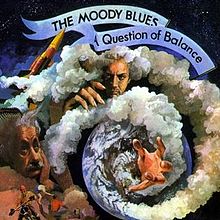
Jumping back across the pond after celebrating Canned Heat a few days ago, today’s feature is the sixth album released by The Moody Blues, A Question of Balance, which was unveiled 50 years ago today.

How Moody Blues Found New Urgency With 'A Question of Balance'

Recorded between January and June of 1970, this release represents a concerted effort to strip down the production present on their previous works for the purpose of being able to perform its songs more effectively live on stage. This is a bit of a misnomer in the greater context of rock music at the time; it’s really only stripped down compared to their own work. A Question of Balance is still quite lush with the Moody’s trademark elements of Mellotron and layered vocals. There wasn’t any question of balance when it came to everyone in this band having their moments to shine, which is one of the really cool features of the Moodys. There’s no drop off in quality when the vocals shift from one member to another, or when the featured instrument switches from guitar to Mellotron or Moog to flute.

The Moody Blues

Its well known opening track, Question, was recorded months earlier. Coincidentally or not, if any song sounds a bit out of place on this release, stylistsically speaking, it’s this one. Its Vietnam-era themed lyrics, however, were right on time. Album title implications aside, it might’ve fit better as the side two opener or as the album’s closer. Yet Justin Hayward has said that the album flowed from that signature opener, so what do I know? As a single, it reached No. 2 in the U.K. and 21 in the U.S. The album received middling grades by some reviewers, but I listen to it within the context of their seven album stretch beginning with 1967’s Days of Future Passed and ending with Seventh Sojourn in 1972. If that string of releases were one song, A Question of Balance is part of its solid bridge in the middle. I can’t think of another band I think of in that frame of reference.

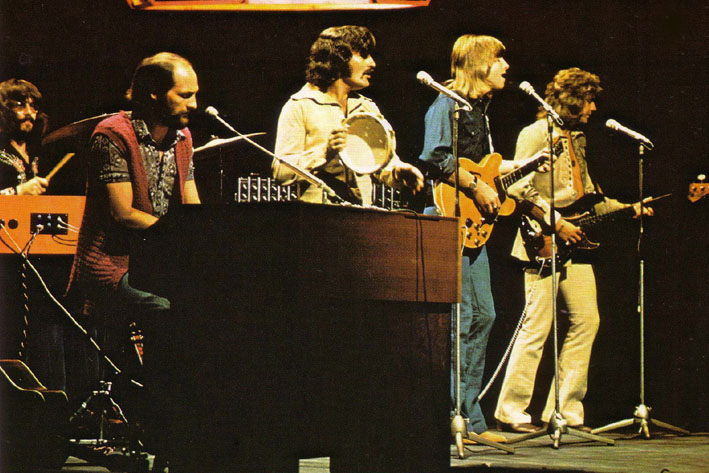
moody-blues-uk-group-in-1970-A6707T.jpg

My favorite tracks on this release include Mike Pinder’s How Is It (We Are Here), which has a subtle-yet-distorted guitar in the midst of its Mellotron-drenched middle. Ray Thomas’s And the Tide Rushes In features beautiful finger picked guitar work. It’s Up to You is perhaps the most straight-forward rock song on the album, and in a way is a nice changeup in the middle of the album. Dawning is the Day highlights Thomas’s flute among acoustic guitars and Justin Hayward’s tasty mandolin, and the closer, The Balance, has Mike Pinder’s spoken-word harkening back to Days of Future Passed. As with The Moody Blues’ other albums from this era, I enjoy A Question of Balance most of all as whole work. Any nitpicks aside, this album is, as John Mendelsohn referred to it in his Rolling Stone review, unexaggerably beautiful.

Tracklist

Side One:

  1. Question
  2. How Is It (We Are Here)
  3. And the Tide Rushes In
  4. Don’t You Feel Small
  5. Tortoise and the Hare

Side Two:

  1. It’s Up to You
  2. Minstrel’s Song
  3. Dawning is the Day
  4. Melancholy Man
  5. The Balance

-Stephen

https://www.allmusic.com/album/a-question-of-balance-mw0000046519

https://ultimateclassicrock.com/moody-blues-question-of-balance/

http://web.archive.org/web/20080606000834/http://www.rollingstone.com/artists/themoodyblues/albums/album/184173/review/6068352/a_question_of_balance

https://en.wikipedia.org/wiki/A_Question_of_Balance

Desert Island Album Draft, Round 4: Blue

I’m participating in an album draft with nine other bloggers, organized by Hanspostcard. There will be ten rounds, with draft order determined randomly by round. With the first pick in round four, I’ve selected the first Joni Mitchell album I ever owned.

Anatomy of a Perfect Album: On Joni Mitchell's Blue | Literary Hub

Judge: “Mr. blogger known as Introgroove, you are accused of musical acculturation in the first degree. How do you plead?” Me: “Guilty as charged.” We’re now into the fourth round, and I realize I could fill my top 50 – never mind 10 – desert island collection with albums from 1965-75 alone. I do have one “modern” album from the 90’s in mind for later, yet even it’s over a quarter century old. It seems strange when I think of it, but I guess I’m just an older soul. Always have been. My choice to kick off this round, for example, was released when I was not quite four months old: Joni Mitchell’s Blue.

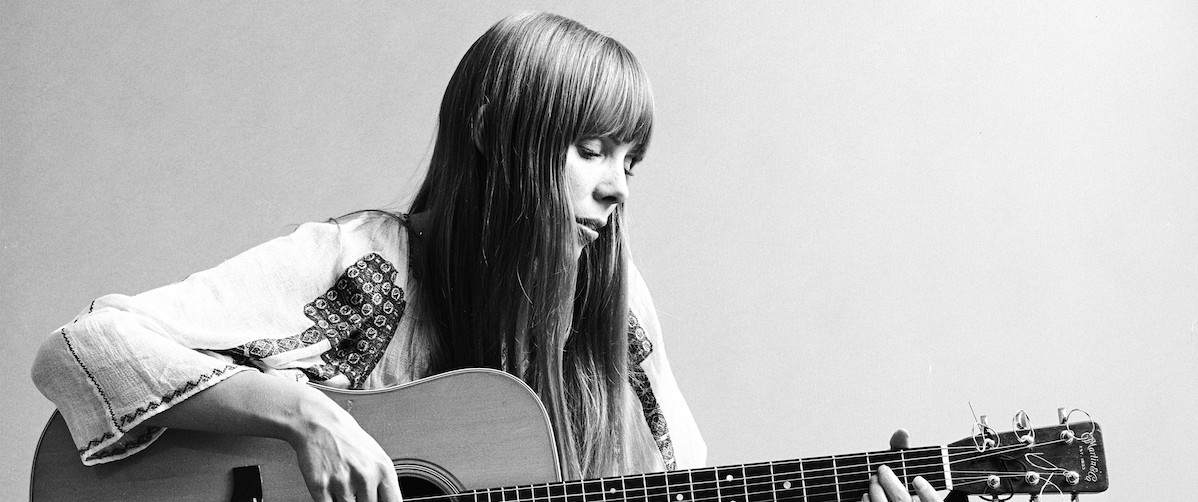
Picture of Joni Mitchell

Other than the handful of Joni’s singles I’d heard on the radio growing up – specifically Big Yellow Taxi, Raised on Robbery, Help Me, and Free Man in Paris – I didn’t know anything about her albums other than that they were held in high esteem by the omniscient scribes at Rolling Stone and MOJO. So at the age of 21 I decided to investigate for myself. I was at Streetside Records one day and ran into an older acquaintance I knew to be knowledgeable about such matters, so I asked him where I should start with Joni Mitchell. Without hesitation he said Blue. I took it home, popped it into the changer, and never looked back. At the time I was in an obsessive Dylan and Neil Young self-education mode, and her music fit my schooling perfectly. These days, I don’t try to categorize her. Especially not after gaining an appreciation for her later Hejira album.

Joni Mitchell's Alternative Tunings

But Blue? Almost everything I love about music from that era is encapsulated on this album: great songwriting, bare bones honest lyrics, a beautiful and unique voice, and unparalleled musicianship. Bob and probably even Neil couldn’t touch her alternate tunings (if I were still categorizing her). But it’s more than that. While the songs are mostly about Mitchell’s relationships past and then-present, some with famous musicians, others not well known, the recordings capture the mood of 1971. That is, it was a come down. Joni didn’t allot many words to political commentary, but in California she summed it up concisely: Reading the news and it sure looks bad, They won’t give peace a chance, That was just a dream some of us had… There’s a melancholy and resignation in those words and in her voice that can be found throughout the landscape of artists at the turn of the 1970’s. It wasn’t always bleak, but the 60’s hangover was hard to avoid, as in the title track: Acid, booze, and ass, Needles, guns, and grass, Lots of laughs…

Joni Mitchell makes appearance at Brandi Carlile tribute - Los Angeles Times
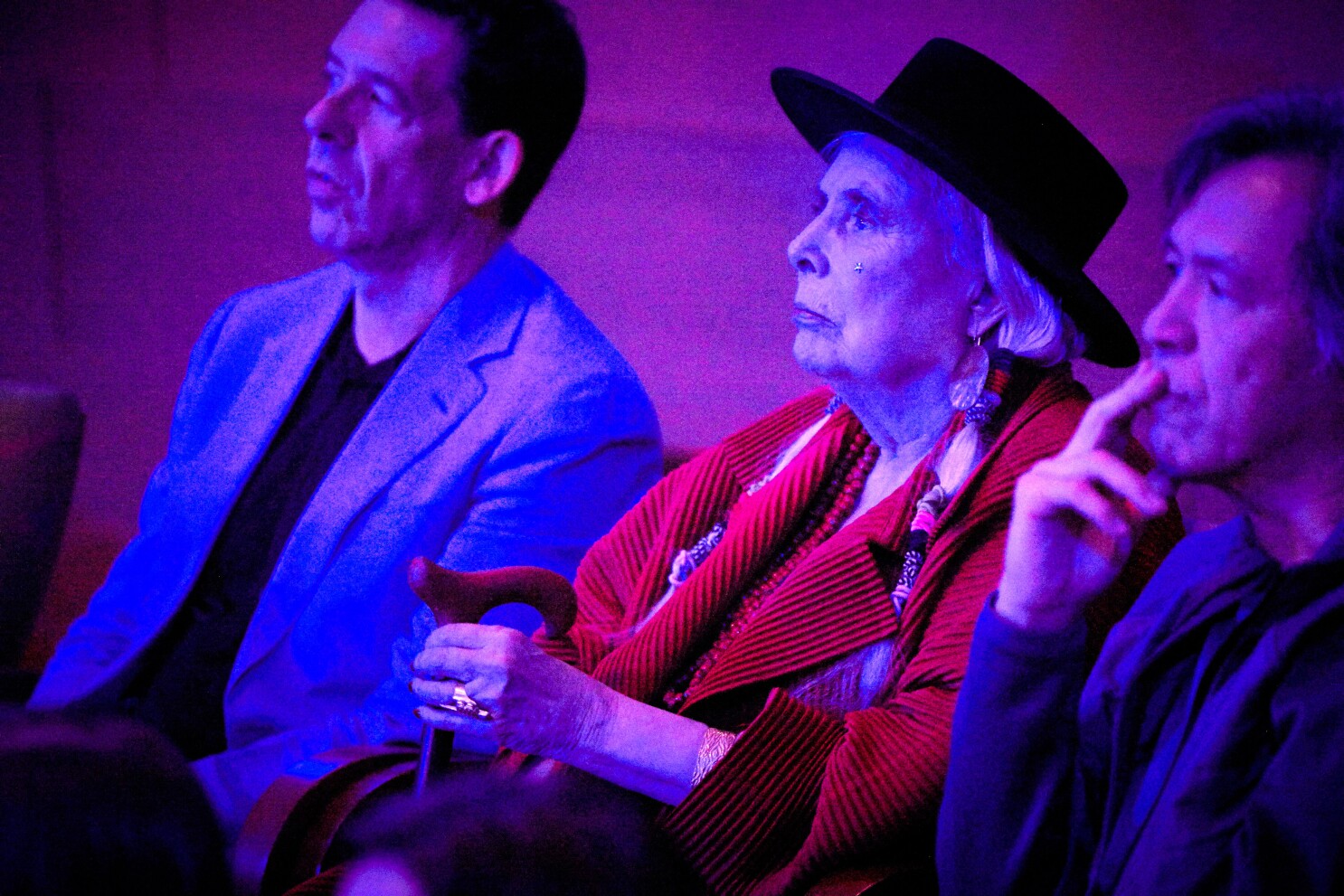
A rare Joni sighting – At Brandi Carlile’s tribute performance of the Blue album in L.A. last October

As we trudge through a summer of uncertainty and discontent, Blue maintains a contemporary feel. For me there’s something visceral about Joni’s music. As much as or more than other artists whom I admire but was born too late to listen to while they were in their prime, I feel like I was there when I listen to her. It’s 1971, except I’m 23 years old. I’m lounging at some dingy outdoor cafe with a buddy who’s just returned from Vietnam, unsure of what to do with his life. Return to school? Morocco sounds better. Or maybe the roles are reversed. Then again, maybe it’s just 2020 and we’re waist-deep in our own troubled times, but thinking about it in 50 year old terms makes it seem more palatable. Either way, Mitchell’s music is deep but accessible. This and her other early albums earned Joni the well-intended accolade from various critics, “Best Female Songwriter/Musician,” which rankled her and rightly so. She’s one of the best, most innovative songwriters, singers, and musicians ever, male or female, period.

Tracklist

Side One:

  1. All I Want
  2. My Old Man
  3. Little Green
  4. Carey
  5. Blue

Side Two:

  1. California
  2. This Flight Tonight
  3. River
  4. A Case of You
  5. The Last Time I Saw Richard

-Stephen

August 3 – The End of an Era for Canned Heat

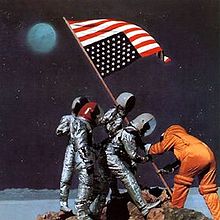
8/3/70: Canned Heat – Future Blues

For two or three years around the turn of the 1970’s, a handful of artists stepped away from the trend of heavy, self-important music to record albums that get the listener up off the couch and into boogie mode. A couple days ago we turned the spotlight on Joe Cocker’s Mad Dogs & Englishmen, which I described as loose and sounding like a party taking place on stage. That album had counterparts in the blues rock idiom at the time such as Delaney & Bonnie: On Tour with Eric Clapton and Canned Heat’s Future Blues, the latter released 50 years ago today.

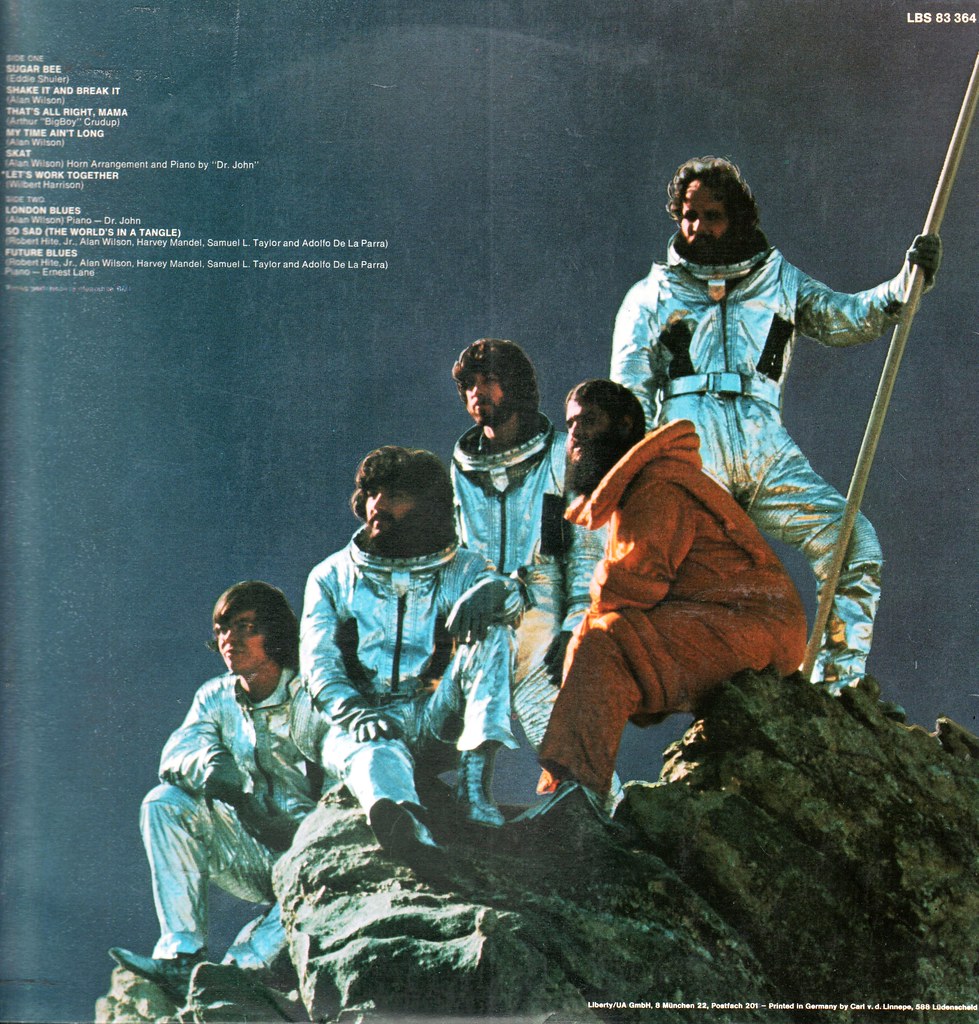
6 - Canned Heat - Future Blues - D - 1970--- | Klaus Hiltscher | Flickr

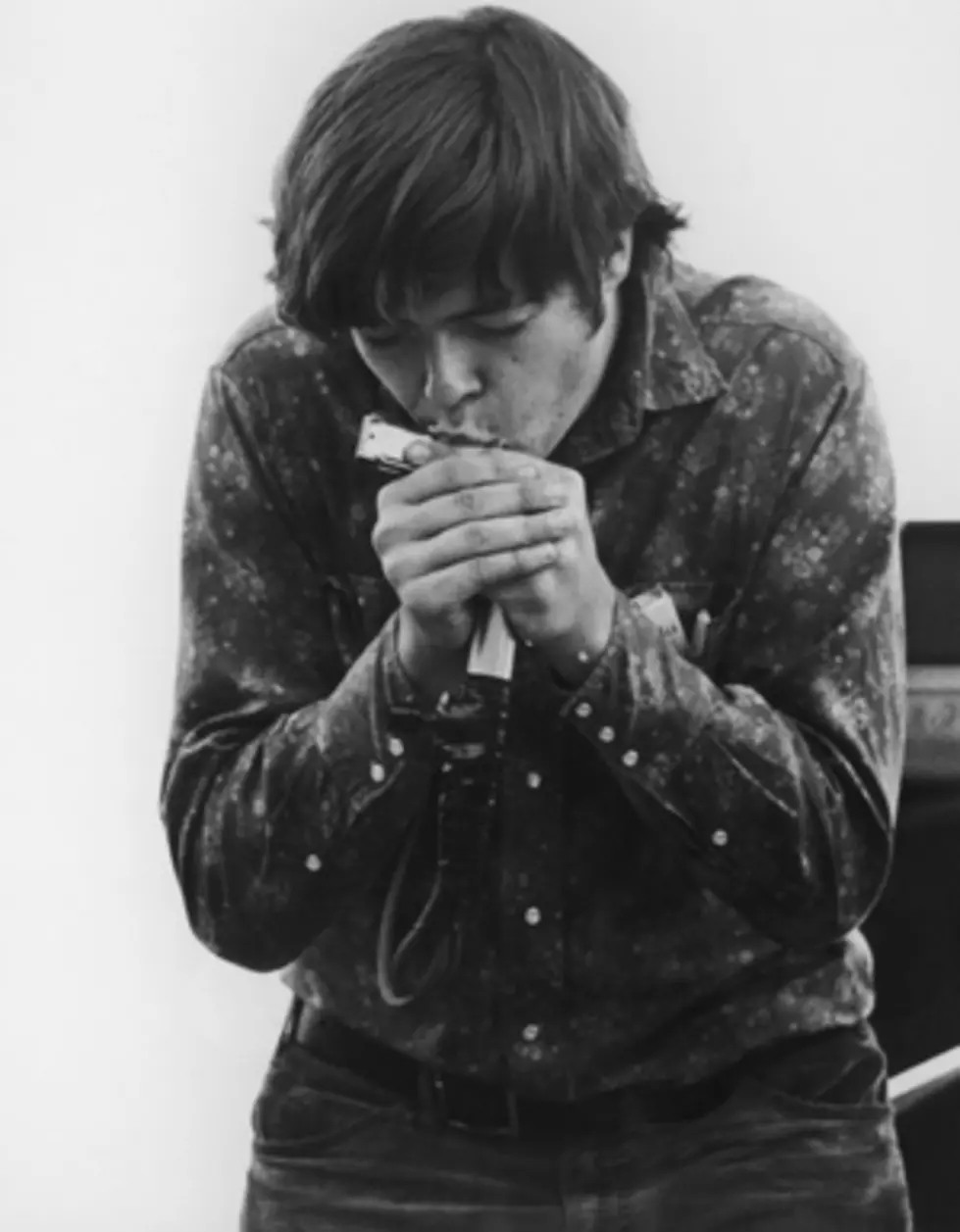
Future Blues was the band’s fifth album, and the last to feature most of the classic lineup. Larry Taylor and Harvey Mandel left the group after its recording and just before its release. Co-founder Alan “Blind Owl” Wilson passed away a month after its release, an unfortunate founding member of the 27 Club.

Alan Wilson of Canned Heat - Rockers Who Died at Age 27

This is widely considered to be one of their best albums. Future Blues was to critic Robert Christgau what Life Cereal was to Mikey… The band eschewed the extended jams they were also known for, sticking with more concise tracks mostly under three minutes long. The whole thing clocks in under 36 minutes as originally released. Future Blues is also noted for its stylistic diversity, from 1940’s jump blues on Skat (with horns arranged by Dr. John), to the darker London Blues (featuring Dr. John on piano) and heavy guitar of its most well known track, Let’s Work Together. This is not to say it’s a dark album, not by a long shot.

Canned Heat - Titel & Alben : Napster

Favorite tracks of mine include the straight forward blues of Sugar Bee and So Sad, both sung by Bob Hite, Charlie Patton’s Shake It and Break It sung by the Blind Owl, Arthur Crudup’s That’s All Right, Mama with Hite’s gravely vocal, as well as Wilson’s rolling but eerily prophetic My Time Ain’t Long and John Lee Hooker-influenced London Blues. When I think of American bands from that time, the “Woodstock Era,” Canned heat is one of the first to come to mind. Their combination of blues n’ boogie was unmatched to my ears. The vocal styles of Bob Hite and Alan Wilson couldn’t have been much more different, yet it was unquestionably Canned Heat regardless of who sang or how long the track was.

Tracklist

Side One:

  1. Sugar Bee
  2. Shake it and Break it
  3. That’s All Right (Mama)
  4. My Time Ain’t Long
  5. Skat
  6. Let’s Work Together

Side Two:

  1. London Blues
  2. So Sad (The World’s in a Tangle)
  3. Future Blues

-Stephen

https://www.allmusic.com/album/release/future-blues-mr0000098435

https://en.wikipedia.org/wiki/Future_Blues_(Canned_Heat_album)

August 1970 – Mad Dogs on the Loose

August 1970: Joe Cocker – Mad Dogs & Englishmen

One of the many unique elements of the late 60’s/early 70’s music scene was emergence of artists who established their solo careers as interpreters of others’ songs. Even more interestingly to me, many of these weren’t fresh takes on 20-30 year old tunes, but contemporary ones. Richie Havens and Rod Stewart come to mind, as does Joe Cocker. The latter released his loose and rollicking live album Mad Dogs & Englishmen from his tour of the same name 50 years ago this month.

File:Joe cocker 1970.JPG - Wikimedia Commons

The tour and album were put together on short notice to meet a contractual obligation, with Cocker assembling his band very quickly and Leon Russell serving as musical director along with his duties on guitar, piano, and vocals. The band was another mix ‘n’ match grouping of usual suspects who appeared in those days on different projects with musicians such as Delaney & Bonnie, George Harrison, and Eric Clapton.  Besides Russell they included Don Preston (guitar), Chris Stainton (keyboards), Carl Radle (bass), Jims Gordon & Keltner (drums), Jim Horn, Bobby Keys, and Jim Price (brass), Rita Coolidge (of course) and a large cast of others on backing vocals.

Sam Recommends: “The Letter” by Joe Cocker//Leon Russell | by Samantha  Lamph | Memoir Mixtapes | Medium

Mad Dogs & Englishmen captures the seat of the pants live music scene of 1970 perfectly. It sounds like a party taking place on stage. It also highlights how crucial Leon Russell’s contributions were in those years. The album is comprised of covers of well known contemporary rock and soul tracks, along with some written by Russell. Favorites of mine from the original release include The Letter, which was recorded during tour rehearsals and released as a single before ultimately finding its way on the album, Cry Me a River, Dave Mason’s Feelin’ Alright, Ashford, Simpson & Armstead’s Let’s Go Get Stoned, Lennon/McCartney’s She Came in Through the Bathroom Window, and Leon’s Delta Lady. A deluxe edition was released in 2005 with about an hour’s worth of additional music, and a year later a six-disc box with four full Fillmore East shows appeared. A concert film from the tour was released in March of 1971.

Tracklist

Side One:

  1. Intro
  2. Honkey Tonk Women
  3. Intro
  4. Sticks and Stones
  5. Cry Me a River
  6. Bird on the Wire

Side Two:

  1. Feelin’ Alright
  2. Superstar (Rita Coolidge)
  3. Intro
  4. Let’s Go Get Stoned

Side Three:

  1. Blue Medley – a) I’ll Drown in My Own Tears b) When Something is Wrong with My Baby c) I’ve Been Loving You Too Long
  2. Intro
  3. Girl from the North Country
  4. Give Peace a Chance

Side Four:

  1. Intro
  2. She Came in Through the Bathroom Window
  3. Space Captain
  4. The Letter
  5. Delta Lady

-Stephen

https://www.allmusic.com/album/mad-dogs-englishmen-mw0000679117

https://ultimateclassicrock.com/joe-cocker-mad-dogs-englishmen/

https://en.wikipedia.org/wiki/Mad_Dogs_%26_Englishmen_(album)


July Music Wrap Up, Pt. 2

Let’s wrap up this, uh, wrap up of July 1970 tunes. Pt. 2 is a little more singles-centric.

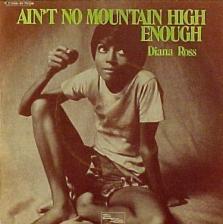
7/16/70: Diana Ross – Single: Ain’t No Mountain High Enough

I think just about any Motown artist could’ve done a successful rendition of this classic Nickolas Ashford & Valerie Simpson-written song. A few of them certainly did. This is the third version behind Marvin Gaye & Tammi Terrell’s original which was followed by the version recorded by Diana and the Supremes with the Temptations. Diana released her solo take 50 years ago this month, and it reached #1 on both the pop and R&B charts. She earned a Grammy nomination for Best Female Pop Vocal Performance.

July 1970: Humble Pie – Humble Pie

Humble Pie released their third album overall and their first on A&M this month in 1970. It’s considered a transition album toward their heavier sound, and it received a middling grade at the time. I don’t know, Marriott, Frampton, Ridley, and Shirley were just a damn solid band to my ears.

Humblepiealbumcover.jpg

July 1970: Funkadelic – Free Your Mind, Your Ass Will Follow

See my comments on Parliament’s debut in my July Music Wrap Up, Pt. 1.

Funkadelic free your mind g.gif

July 1970: Grand Funk Railroad – Single: I’m Your Captain (Closer to Home)

One of those classic rock radio staples that seems on the verge of being forever squeezed out of ever-shrinking playlists these days in favor of more newly christened “classic” songs such as Pour Some Sugar on Me. Ugh.

I'm Your Captain (Closer to Home) - Grand Funk Railroad.jpg

July 1970: James Brown – Single: Get Up (I Feel Like Being a) Sex Machine

Brown released this as a two-part single 50 years ago this month. What can be said, other than he truly was the godfather of soul. I heard a funny interview with Bootsy Collins recently where he was asked if it was true that James fired him for taking acid trips during performances. He responded in the affirmative that while people might’ve been shakin’ their moneymakers in the aisles, he was soaring across the galaxy while somehow playing these funky bass licks.

GetUp(IFeelLikeBeingA)SexMachine.jpg

July 1970: Smokey Robinson & the Miracles – Single: Tears of a Clown

For some reason I’ve always thought of the R&B and soul songs mentioned in this post as being from a few years earlier. This classic from Smokey and the Miracles is no different – it sounds like a companion track to The Tracks of My Tears dating to 1965. It’s irrelevant, but a realization I just had. It goes to show how cool the variety of music overall was in 1970. It wouldn’t be long before Stevie, Marvin and others took soul and R&B in a more serious direction.

Tearsofaclown45.jpg

-Stephen

https://en.wikipedia.org/wiki/Humble_Pie_(album)

https://en.wikipedia.org/wiki/Free_Your_Mind…_and_Your_Ass_Will_Follow

https://en.wikipedia.org/wiki/I%27m_Your_Captain_(Closer_to_Home)

https://en.wikipedia.org/wiki/Get_Up_(I_Feel_Like_Being_a)_Sex_Machine

https://en.wikipedia.org/wiki/The_Tears_of_a_Clown

July 1970 Music Wrap Up, Pt. 1

With everything that’s going on out there these days on top of it being my least favorite time of year, to refer to them as dog days is an insult to dogs everywhere. But the music plays on. If I haven’t said so in the past, these end of the month wrap up posts aren’t simply what I deem to be “leftovers” not worthy of dedicated posts. In many instances they’re an acknowledgement of my ignorance. In other words, I know what I know, but there’s so much music I haven’t absorbed in my 49.5 years, yet I continue to play catch up.

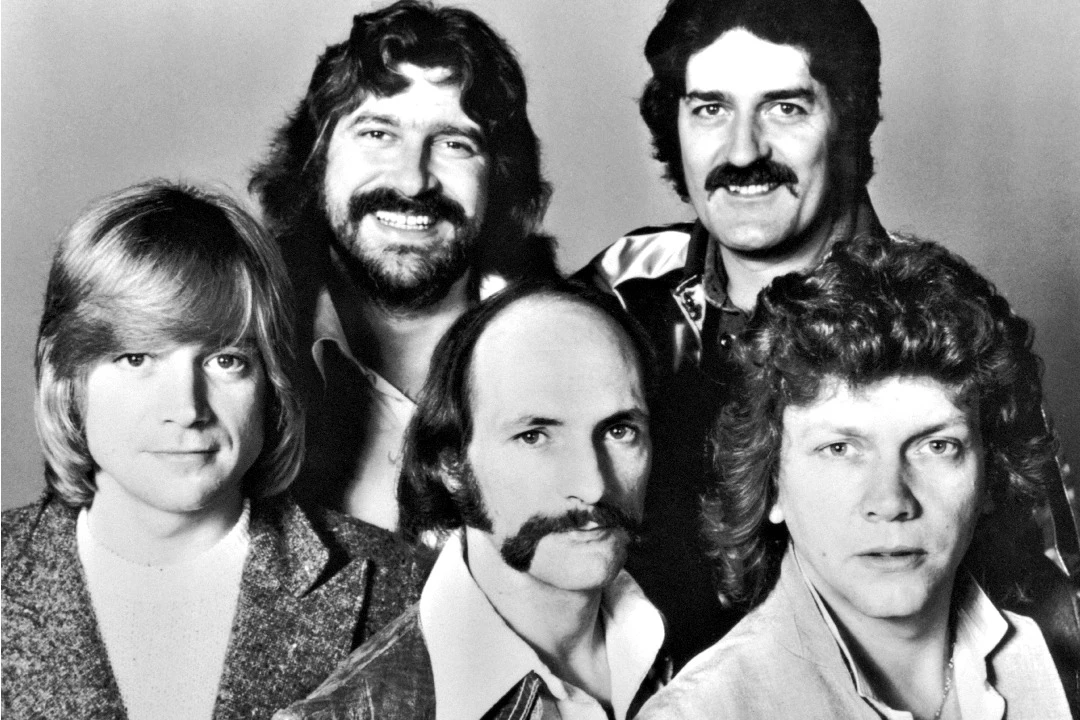
Three cheers to the first person to correctly name the band in that rather nondescript featured image at the top…

7/7/70: Parliament – Osmium

See, this is what I’m talking about. I could spend a year in a Parliament and Funkadelic 101 course and barely scratch the surface. Funkadelic’s Maggot Brain (1971) and Eddie Hazel’s Game, Dames and Guitar Thangs (1977) are in my rotation, but that still leaves, what, thirty or so albums? Anyway, Osmium was Parliament’s debut album, released 50 years ago this month. Osmium is the chemical element of atomic number 76. Duh.

Osmium (album) - Wikipedia

7/8/70: Beck Hansen born
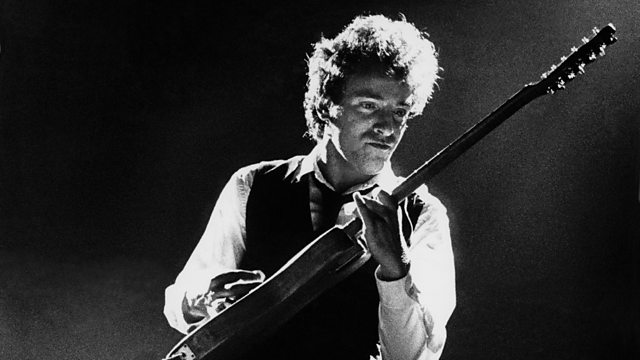
Beck released his first album about 27 years ago, and he’s been doing things his own way ever since. He’s one of the more innovative musicians out there, and is certainly one of my favorite contemporary artists. I tend to gravitate toward albums like Sea Change and Morning Phase. He turned 50 earlier this month. Seems like yesterday that the McCartneys and Jaggers of the world hit the half-century mark.

Beck Hansen Contact Info | Booking Agent, Manager, Publicist

7/14/70: Supertramp – Supertramp

Supertramp’s eponymous debut album was released 50 years ago. It (as well as their second album, Indelibly Stamped) is an album I “should” be more familiar with than a couple of YouTube listens. It’s a bit more on the prog side of life than what they came to be known for, which is why I never heard the album as a kid. I’m a fan of the Roger Hodgson/Rick Davies combo, and I love every release within their five album stretch from 1974’s Crime of the Century to 1980’s live Paris. 1982’s …Famous Last Words has its moments as well. It’s inevitable that I’ll absorb this and its follow up a bit more, probably in the near future.

Supertramp - Supertramp.jpg

7/20/70: The Doors – Absolutely Live

This was the first live Doors album, and it contains performances from mid-1969 to spring of ’70. It received rather poor reviews, but with the Doors one never knows what personal ax a writer might have had to grind with that band. The Doors were a group that people either seem to like or dislike without middle ground. Maybe it was the Celebration of the Lizard that sealed this album’s status among Rolling Stone writers and their ilk. Live at the Hollywood Bowl was my live Doors listening experience during my formative years. Come to think of it, that might be the show they got the Absolutely Live album cover photo from. It’s certainly not representative of the bearded and slightly bloated Jim of 1970. I’m still a fan.

DoorsAbLive1970.jpg

July 1970: Fairport Convention – Full House

Fairport Convention is a band that I’ve raved about, and in a way I’ve patted myself on the back for having discovered them for myself despite my rural Midwest American 1970’s-80’s upbringing. But the reality is I only know and love the albums they did with Sandy Denny, which comprise three of the first four Fairport albums. Full House was their fifth. This was Richard Thompson’s last appearance with the band, and it’s apparently a very good album which follows in the vein of Liege & Lief but without Sandy, who had moved on to form Fotheringay. I just haven’t heard it. Perhaps you can see the dilemma I face when trying to decide what direction to take with my music education: Funkadelic or post-Denny Fairport Convention? Have I reached a point where there’s just not enough time to devote to all the sounds I’ve yet to explore?

Fairport Convention-Full House (album cover).jpg

-Stephen

https://en.wikipedia.org/wiki/Osmium_(album)

https://en.wikipedia.org/wiki/Osmium

https://en.wikipedia.org/wiki/Supertramp_(album)

https://en.wikipedia.org/wiki/Absolutely_Live_(The_Doors_album)

https://en.wikipedia.org/wiki/Full_House_(Fairport_Convention_album)


Desert Island Album Draft, Round 3: Darkness on the Edge of Town

I’m participating in an album draft with nine other bloggers, organized by Hanspostcard. There will be ten rounds, with draft order determined randomly by round. With the third pick in round three, I’ve selected one of my favorite Springsteen albums.

Bruce Springsteen & The E Street Band Release Passaic 1978 Concert Live  Album

What is it about Bruce Springsteen’s music that has earned him one of the largest and most loyal fan bases on the planet? I don’t know the first thing about cars, auto mechanics, or racing. I never worked in a factory or a car wash or on a highway. I never had and lost a job at a lumber yard or slept in an abandoned beach house or in a car because I had nowhere else to go. I never stood in a filthy phone booth for hours on a freezing night talking to my girlfriend until I thought it was safe to go home and face my father. I never ran from a state trooper. I know nothing of life growing up in a coastal town adjacent to once great but now failing boardwalk communities. However, I do possess deeply rooted feelings about friendships and family, past and present. I’m for respecting basic human rights and dignity, and for people having a fair shot in life. I’m for the underdog. I do enjoy the open road, and oh yeah, I love good music. Bruce Springsteen, with and without the E Street Band, checks all those boxes, and I’m happy to be able to add one of his finest albums to my desert island collection.

BBC Four - Bruce Springsteen: Darkness Live 1978

Darkness on the Edge of Town, released in June of 1978 after taking nearly a year to record, was the follow up to Born to Run. Due to Bruce’s ongoing legal dispute with his former manager there was a three year gap between the two. However, this was an extremely productive time for him, as he wrote approximately 70 (!) songs. Some – Because the Night, Fire, Rendezvous, and others – were recorded by other artists. Others ended up on later releases of his such as The River, Tracks, and The Promise. Forty-plus years on, the songs from Darkness remain part of the core of his marathon live sets. Whether on the studio cuts or live versions, the songs from this album are filled with honesty, sincerity, and emotion.

Bruce Springsteen - Darkness on the Edge of Town Lyrics and Tracklist |  Genius

I was not exposed to much of Bruce’s music as a kid. The first Springsteen song I remember hearing was Hungry Heart. In 1984, with the heavy presence of Born in the U.S.A. in the Top 40 and on MTV, suddenly he was everywhere and I was becoming a fan. I had that album, but still had yet to explore his back catalog. Two years later when I was 15, he released the Live 1975-85 box set. A local radio station announced they would play all three albums from the box in their entirety over three consecutive nights, and I was ready with a pack of cheap TDK D-90’s and an even cheaper stereo on which to record it. That was my “ah-ha” experience with Springsteen’s music. I was mesmerized by all that music I’d not heard before, as well as his audiences’ reactions to it. Badlands, Adam Raised a Cain, Candy’s Room, Racing in the Street, Darkness on the Edge of Town…where had this music been all my life?

Bruce Springsteen and the E Street Band 1978 by danwind on DeviantArt

These songs, and all the other pre-Born in the U.S.A. tracks I heard through headphones with my radio reception fading in and out in the basement those three late November nights in 1986, caused my head to spin. This was at a time when, mixed in with my Beatles, Elton, U2, and R.E.M. albums, I also listened to the standard mid-80’s Top 40 fare that average teen sheep like myself played. But after my Springsteen mini-immersion, Madonna, Wang Chung, and Cameo suddenly sounded even sillier than I already knew their music to be (yes, there was some good stuff on the airwaves back then, but you get the picture). Soon after, I made a bee-line to the nearest record store 30 miles away and purchased Born to Run and Darkness on the Edge of Town on LP. A couple years later The River and Nebraska were among the first CD’s I owned. Greetings from Asbury Park, N.J. and The Wild, the Innocent & the E Street Shuffle weren’t far behind. My conversion to Springsteen lifer status was complete.

-Stephen