April 1970 – The McCartney Album 50 Years On

4/17/70 – Paul McCartney – McCartney

To wrap up my makeup work on some of the key 50th album release anniversaries I missed this spring, I thought I’d share some thoughts on the McCartney album.

As a kid I thought this album was titled Bowl of Cherries. I like it a lot, always have. My brother’s copy got a lot of spins when I was growing up, and since it was Paul McCartney I automatically accepted it as good, just as I did with all his solo and Wings albums through Tug of War. There’s definitely a degree of psychology involved in some of our musical preferences, which is another way of saying we like what we like. There are also plenty of folks who don’t like it. They hear some if not all of the songs as weak and sloppily recorded. It’s another example of McCartney’s ego run amok with him playing all the instruments. And worse, he slipped that little “interview” into the album jacket in which he announced the breakup of the Beatles, even though he later claimed that wasn’t his intent.

FEATURE: After The Beatles… Paul McCartney's McCartney at Fifty ...

When artists achieve a certain degree of critical acclaim, they have as a result set a high bar not just for their peers but for themselves as well going forward. The most creative and ambitious among them welcome the challenge, though rarely are those peaks reached again. Though Paul would later attempt to scale those heights in his solo career with varying amounts of success, that’s not what McCartney is about. It was largely a vehicle for Paul to pick himself up again after the Beatles had come undone because he didn’t know what else to do. The McCartneys had retreated to their farm in Scotland after the difficult Get Back sessions in January 1969, and Paul sank into a dark emotional space of fear and depression. That’s a real thing. He was also compelled to reassure the world he was still alive via some uninvited guests on his farm from Life Magazine (hard to believe that was a real thing, too).

mclife69

That’s not to say Paul didn’t care about moving product, because of course he did. With Linda’s help, he pulled himself together and wrote some songs which he combined with a couple he’d already written and demoed with the Beatles. You can hear John mocking Teddy Boy on The Beatles Anthology Vol. 3 during the Get Back sessions, for example.  McCartney also features a couple of tracks in Maybe I’m Amazed and Every Night which I think are up to standard for any McCartney album or Beatles for that matter. Plenty of musicians can only dream of writing two songs that good. But for me as an adult it’s not just that I still enjoy listening to it. As with much of the music from past eras it’s also the context of the creation of this record that interests me after all this time.

2241 Momma Miss America – Paul McCartney (1970) | Songs We Were ...

And what of the other tracks on the album? The lack of flow to me is in itself the flow, beginning with the brief and whimsical The Lovely Linda which opens the album, a song whose inclusion makes perfect sense considering Linda’s role in motivating Paul at the time. In the instrumentals such as Valentine Day Paul shows off a bit of lead guitar work – something he did occasionally in the Beatles but which the casual fan wasn’t very aware of since Paul was “the bass player.” Man We Was Lonely is a goofy autobiographical song, and it’s just now dawning on me as I write that it’s a country song. I’d never thought of it like that. Oo You and Momma Miss America are improvised rockers, the latter with a cool tremolo guitar effect. I like Paul’s drumming on these tracks, simple as it might be. Teddy Boy and Junk are from the same mold as Another Day which was released the following year. And what McCartney fan hasn’t, at least in the privacy of  their home, sung along to the karaoke that is Singalong Junk

The Paul-is-Dead Saga” …And Beatles' Demise:1969-1970 | The Pop ...

My first copy of this album came in the form of a low quality Maxell D-90 cassette onto which I recorded my uncle’s LP. During Momma Miss America the music cuts out and there’s a piercing, high pitched noise that lasts two or three seconds. My uncle later admitted he had inadvertently hit pause while it was recording. It just became part of the song for me for about ten years until I bought a copy on CD.

Tracklist

Side One:

  1. The Lovely Linda
  2. That Would Be Something
  3. Valentine Day
  4. Every Night
  5. Hot as Sun/Glasses
  6. Junk
  7. Man We Was Lonely

Side Two:

  1. Oo You
  2. Momma Miss America
  3. Teddy Boy
  4. Singalong Junk
  5. Maybe I’m Amazed
  6. Kreen-Akrore

-Stephen

https://en.wikipedia.org/wiki/McCartney_(album)


June 14 – The First Time the Grateful Dead Went Mainstream

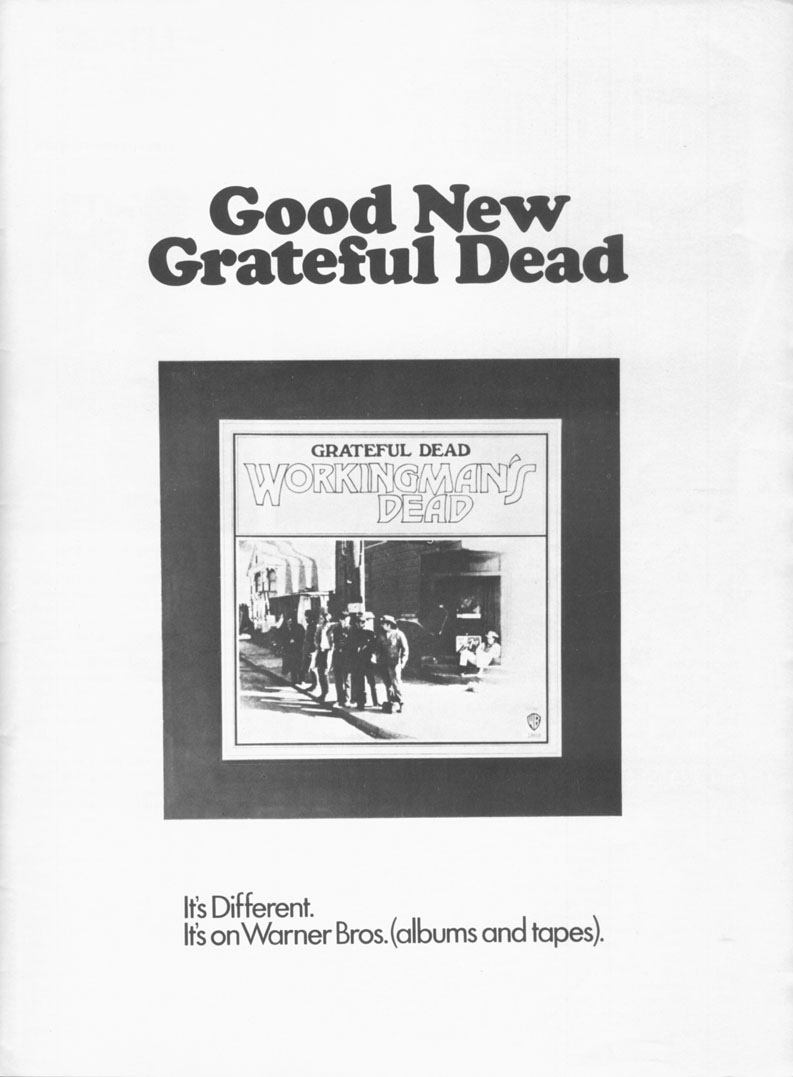
6/14/70: The Grateful Dead – Workingman’s Dead

For their fourth studio album, the Grateful Dead wanted to record in less time and with less fuss and expense than with their previous efforts. This was due in part to please Warner Bros., who hadn’t seen much of a return on their investment in the band, but also because the kind of music the band was gravitating toward demanded it. Workingman’s Dead was recorded over a period of about nine days in February 1970 and released a half-century ago today.

Grateful Dead - Workingman's Dead

The album represented a shift in direction from the psychedelic sounds of their first albums, as well as the mayhem of those recording sessions, to more of a folk/country rock sound. Jerry Garcia and Bob Weir had occasionally played acoustic guitars on tour just prior to going back into the studio, with the former being especially influenced by the Bakersfield sound. Garcia introduced a steel guitar to their music, and vocally the Dead were influenced by CSN’s vocal harmonies. And in a repeated theme of the time across the rock landscape, the influence of The Band’s first two albums crept into the music of the Grateful Dead, specifically with Robert Hunter’s lyrics.

Opinion | The Genius Behind the Grateful Dead - The New York Times
Robert Hunter

In his original Rolling Stone review from July 1970, Andy Zwerling emphasized the album’s warmth resulting from Garcia’s acoustic guitar and the band’s clean harmonies, but predicted “staunch Dead freaks” probably wouldn’t like country flavored songs such as Uncle John’s Band. He also pointed out that even the tracks which aren’t exactly country, such as Casey Jones, have that flavor. The group had dispersed from Haight-Ashbury into quieter and more rural surroundings around Marin County, which in turn also influenced the vibe of the album. While it might’ve seemed like a radical shift in musical direction, the album is a reminder that Garcia’s and Weir’s musical roots, as well as those of lyricist Robert Hunter, were found in places other than the manic psychedelia of the Dead’s first albums. Country, bluegrass, folk, straight forward rock, and blues make up this record.

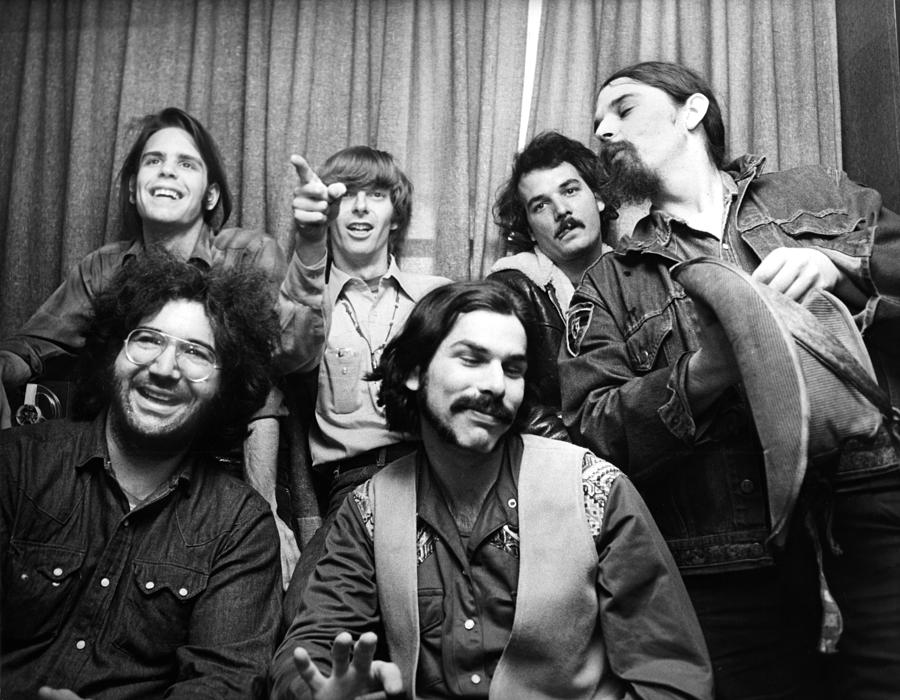
Grateful Dead 1970 London Photograph by Chris Walter

As I’ve probably mentioned in the past, I’m a bit of a tweener when it comes to this band. That is, I enjoy the Grateful Dead as a live act and recognize that they were at home on stage, but I don’t possess the knowledge, passion, commitment, and downright obsession of most Deadheads to fully submerge myself in the vastness of their live documents. Not yet at least, though I’m inching in that direction. But from what I can tell, I might appreciate their studio albums more than those entrenched in the live recordings. What can I say, I’m an album kind of guy I suppose. And on this one, my favorite tracks besides the obvious Uncle John’s Band and Casey Jones are the country tinged High Time and Dire Wolf, plus New Speedway Boogie (Hunter’s commentary on Altamont), and Cumberland Blues with it’s fantastic harmonies.

TUE FEB 25 7:30pm – BPO recreates 1970 Grateful Dead & BPO ...

Workingman’s Dead topped Rolling Stone magazine readers poll for best album of 1970, and contemporary reviews were universally enthusiastic. More significantly, the album and its followup, American Beauty, greatly expanded the Dead’s audience just as In the Dark and the promotional vehicle known as MTV would do 27 years later for better and for worse. As Blair Jackson pointed out in Guitar World: 

“Workingman’s Dead” turned the Dead into a song band, and it was the launch pad for everything that came after it. It was a big gamble, a radical change in direction, but it paid off like a royal flush.”

Tracklist

Side One:

  1. Uncle John’s Band
  2. High Time
  3. Dire Wolf
  4. New Speedway Boogie

Side Two:

  1. Cumberland Blues
  2. Black Peter
  3. Easy Wind
  4. Casey Jones

-Stephen

https://en.wikipedia.org/wiki/Workingman%27s_Dead#Track_listing

https://www.guitarworld.com/artists/workingman-s-dead-grateful-dead-shifted-uncommercial-jam-band-one-worlds-most-popular-acts

Workingman’s Dead

June 12 – Gasoline Alley at 50

6/12/70: Rod Stewart – Gasoline Alley

Rod Stewart, including his work with Faces, is another example of an artist from rock’s late 60s-mid-70s era whose greatness I’ve bemoaned – probably ad nauseam – as not appreciated as it should be in the 21st century as a result of dumbed-down corporate classic rock radio, not to mention his own chosen musical direction in later years. That’s not to say the man has suffered; he’s done quite well for himself in later incarnations as disco Rod and Great American Songbook crooner Rod. Thankfully we can turn directly to the albums for a nice reminder of how good those early releases are, start to finish. Stewart’s second solo album, Gasoline Alley, turns 50 today.

Gasoline Alley (album) - Wikipedia

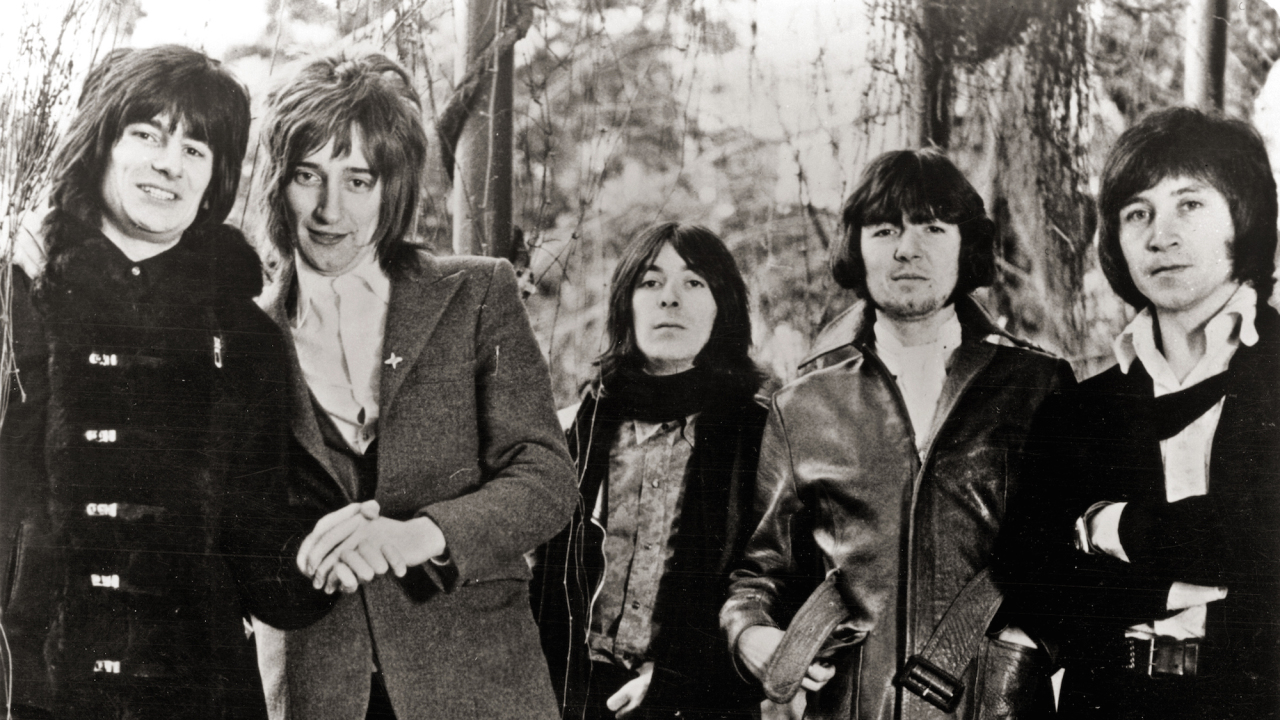
This album, along with his other early solo works, is a consistent blend of folk, blue-eyed soul, country rock, and straight forward rock, mostly with sparse arrangements. All of his Faces bandmates – Ronnie Wood, Ronnie Lane, Ian McLagan, and Kenny Jones – contribute to this album, just as some if not all of them would participate on Stewart’s other early solo albums. Gasoline Alley features powerful bass lines by Ronnie Wood and Ronnie Lane, heavy though not overplayed drums by Mick Waller and Kenney Jones, barrel house piano work by Ian McLagan and Pete Sears, and guitars by Wood and Martin Quittenton. These sounds are augmented with just the right touches of violin (Dennis O’Flynn, Dick Powell) and mandolin (Stanley Matthews).

Small Faces/Faces/Rod Stewart: Box Sets | Louder

Langdon Winner, in his September 1970 review of the album in Rolling Stone, interestingly compared Gasoline Alley and Stewart’s debut album favorably to The Band’s Music from Big Pink for its country rock, or what we now call Americana, flavor. That had never occurred to me, and I don’t disagree. Six of the nine songs are covers, but they all sound like Stewart made them his own. His cover of Bobby and Shirley Jean Womack’s It’s All Over Now is more raucous than the Stones’ version, and dare I say nearly as soulful as the original Valentinos version featuring Womack. His take on the Small Faces’ 1967 song My Way of Giving would’ve fit in even “way back” in psychedelic ’67 just as it did in ’70. Stewart’s version of Elton John and Bernie Taupin’s Country Comfort appeared four months before Elton’s, and his rendition of Dylan’s Only a Hobo was released 21 years before the original. Bob originally recorded the song in late 1962/early ’63 but left it off The Times They Are a-Changin’. It would eventually appear on The Bootleg Series Vols. 1-3 (Rare and Unreleased) in 1991. There were no singles from Gasoline Alley, but it still reached 27 on the pop charts.

Rod Stewart was a 1970s ally - OpenLearn - Open University

I’ll stop short of suggesting Rod Stewart hasn’t been given his due when it comes to being a great rock interpreter of others’ originals because maybe he has. I will say that I didn’t realize it for myself until I listened to these albums all the way through. It’s something that I had never really considered perhaps due to Stewart’s image in my mind based upon growing up hearing songs such as Stay with Me and Hot Legs, whether singing his own songs or interpreting others’. By image I of course mean that of the rock front man diva. I can listen to this and his other early albums and hear them for their musical qualities alone. He belts out the vocals when needed, but there’s a sincere, gravely warmth in his singing on tracks such as Only a Hobo, Lady Day and Jo’s Lament, the latter two being Stewart originals. Again from Winner in his 1970 Rolling Stone review:

The music of Rod Stewart helps us to remember many of the small but extremely important experiences of life which our civilization inclines us to forget. Compassion. Care for small things. The textures of sorrow. Remembrance of times past. Reverence for age. Stewart has a rare sensitivity for the delicate moments in a person’s existence when a crucial but often neglected truth flashes before his eyes and then vanishes. The amazing character of Stewart’s work is largely due to the fact that he can recall these fragile moments of insight to our minds without destroying their essence.

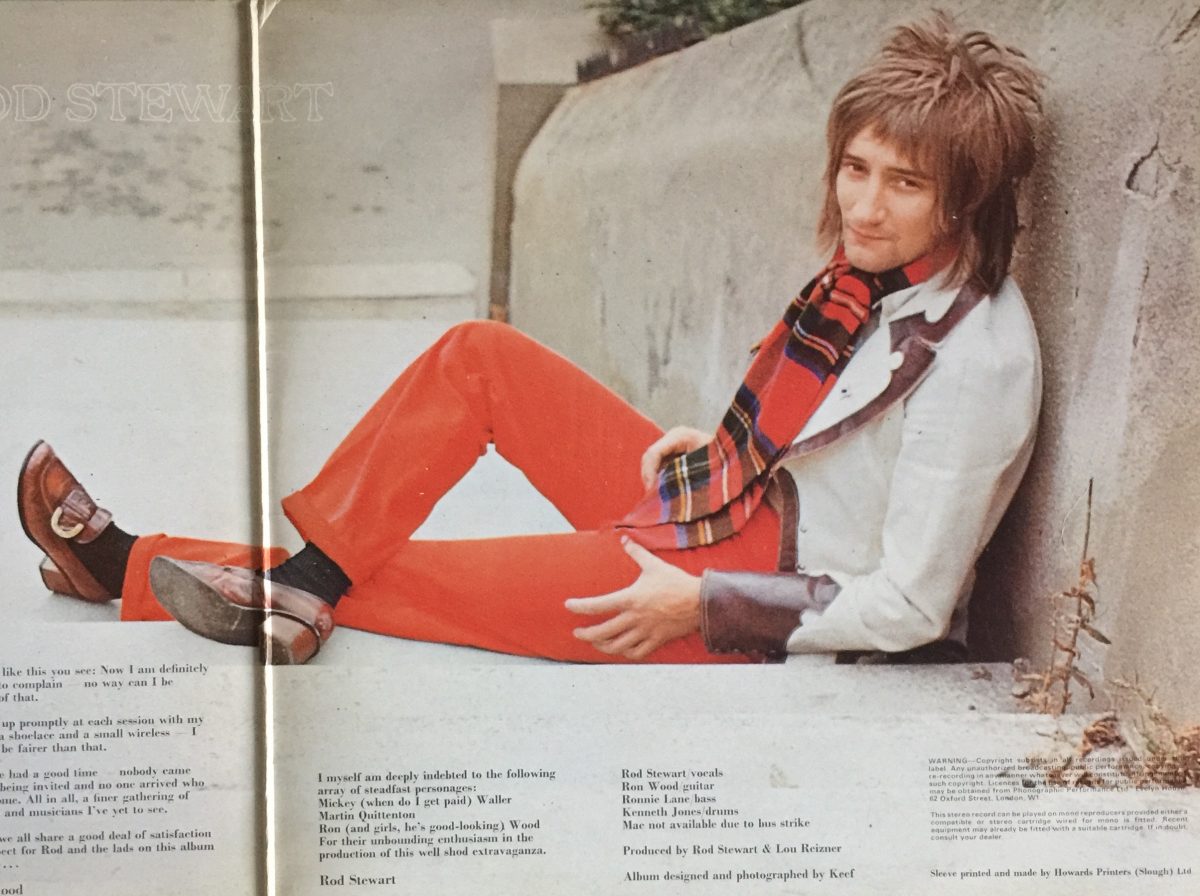
Rod Stewart : The Third Gasoline Alley Jacket - Flashbak

An Ultimate Classic Rock 45th anniversary retrospective review refers to his cover of You’re My Girl (I Don’t Want to Discuss It) as the only “clunker,” but even that track is worth a listen for Ronnie Lane’s driving bass alone. I suppose if there’s a weak link on this album to my ears, it’s Country Comfort. I hear Elton’s version on Tumbleweed Connection a few months down the line as being a fuller, more realized rendition. I’m not breaking any news here, but Stewart’s recorded vocal output between 1969-1973 is remarkable by any standard. For my own perspective I listed the four solo Rod Stewart and four Faces releases – all widely considered good/great – over a period of three years and four months in chronological order. I’ll just leave it:

Stewart – An Old Raincoat Won’t Ever Let You Down (a.k.a. The Rod Stewart Album) – 11/69

Faces – First Step – 3/27/70

Stewart – Gasoline Alley – 6/12/70

Faces – Long Player – 2/71

Stewart – Every Picture Tells a Story – 5/28/71

Faces – A Nod is as Good as a Wink…to a Blind Horse – 11/17/71

Stewart – Never a Dull Moment – 7/21/72

Faces – Ooh La La – 3/73

How would Faces be rated in rock’s pantheon if Stewart’s first four solo albums had been official Faces albums instead?

Tracklist

Side One:

  1. Gasoline Alley
  2. It’s All Over Now
  3. Only a Hobo
  4. My Way of Giving

Side Two:

  1. Country Comfort
  2. Cut Across Shorty
  3. Lady Day
  4. Jo’s Lament
  5. You’re My Girl (I Don’t Want to Discuss It)

-Stephen

https://en.wikipedia.org/wiki/Gasoline_Alley_(album)
https://www.allmusic.com/album/gasoline-alley-mw0000650828

https://ultimateclassicrock.com/rod-stewart-gasoline-alley/

Gasoline Alley

https://en.wikipedia.org/wiki/Rod_Stewart#1969%E2%80%931975:_Solo_career_established_and_Faces_albums

April 1970 – Elton’s Transatlantic Debut

4/10/70: Elton John – Elton John

When Elton John’s eponymous album was released 50 years ago this past April, it was assumed by many in the U.S. to be his debut, not realizing his first album, 1969’s Empty Sky, hadn’t been released in America. That album wouldn’t make it to record store shelves here until 1975, at the peak of Elton mania.

The History of Elton John's 'Your Song'

With this album we hear a significant shift in Bernie Taupin’s lyric writing. While there are hints of the esoteric themes prevalent on Empty Sky such as in First Episode at Hienton and Take Me to the Pilot (a song whose meaning even Taupin has stated he has no idea of), the songs on this second release – tracks such as I Need You to Turn To, The Greatest Discovery, and the instant classic Your Song – are of the variety that listeners can relate to directly. And, the socially conscious Border Song is no less relevant today than it was 50 years ago. Indeed, Elton and Bernie dove right in to what would be loosely termed the singer/songwriter era. In addition to Gus Dudgeon’s production, the album’s immediately recognizable sound is due in large part to the string arrangements of Paul Buckmaster, who I wrote about in a recent post.

50 Years On: Remembering the 'Elton John' Album – Part 1 - Elton John

One of my favorite tracks on this album is Sixty Years On. Elton performed a powerful version of it on his 1979 Russia tour with Ray Cooper. An official album from that tour was released in recent years, but unfortunately this song was left off. As a result, it’s not in my collection.

Elton John was certified gold in February 1971 and received a Grammy nomination for  Album of  the Year. It was inducted into the Grammy Hall of Fame in 2012.  It also spawned a few of Elton’s concert staples over the following five decades. If interested in where I ranked Elton John within his discography, see this series I did a while back.

Tracklist

Side One:

  1. Your Song
  2. I Need You to Turn To
  3. Take Me to the Pilot
  4. No Shoe Strings on Louise
  5. First Episode at Hienton

Side Two:

  1. Sixty Years On
  2. Border Song
  3. The Greatest Discovery
  4. The Cage
  5. The King Must Die

-Stephen

https://en.wikipedia.org/wiki/Elton_John_(album)
Elton John Flashback: Stunning 1970 Live Version of ‘Take Me To The Pilot’

https://ultimateclassicrock.com/elton-john-1970-album/


March 1970 – Bitches Brew: I Like It, Don’t I? Yes. Yes I Do.

3/30/70: Miles Davis – Bitches Brew

When I first began dipping my toe into jazz waters around the age of 19, I went with “safe” choices that even an unlearned, jazz-curious person like me would enjoy, much of which I had heard at least bits of before. You know, the usual suspects: Miles’s Kind of Blue, Brubeck’s Time Out, Ellington at Newport, Monk’s Dream, etc. I kept coming across the title Bitches Brew, reading how its elements of jazz and rock fusion broke down musical barriers, but I didn’t know what that meant. I worked in a jazz-oriented establishment for much of the 1990’s that featured live performances by local and national acts, and slowly my curiosity expanded. One day I finally asked one of my bosses, a knowledgeable jazz fan, his opinion of the album. With a slight grin he responded, “It’s listenable.” Not exactly a ringing endorsement, but fine, I’d just have to buy a copy and decide for myself.

Miles Davis' Bitches Brew Celebrated with Podcast, Unreleased Live ...

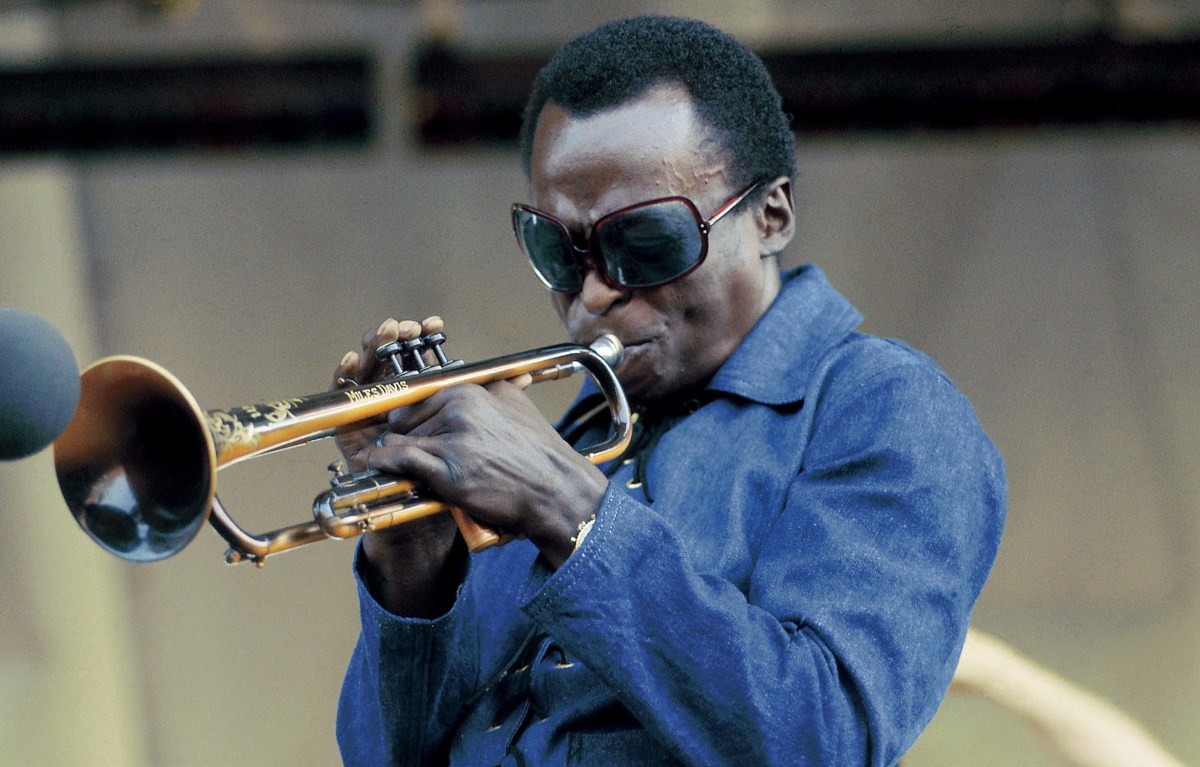
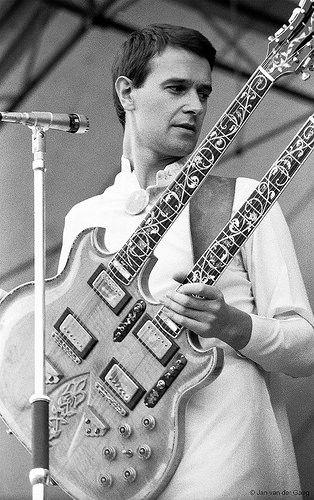
I liked this double album right away, though I couldn’t have told you why. It was unlike anything I’d heard before in jazz or rock. I realize now it was probably due to a combination of the pulsating, somewhat muffled rhythms underlying Davis’s trumpet bursts and delicate piano improvisations by Chick Corea, Larry Young, and Joe Zawinul that it had my attention. I listened again. Gradually I began to appreciate the contributions by fusion guitar master John McLaughlin and soprano saxophonist Wayne Shorter. Pharaoh’s Dance sounds right out of the Dark Continent. The title track which follows puts imagery in my mind of dangerous, deserted early 1970’s New York City streets on top of the tribal rhythms of the opening track. It seems to build upon itself.

Miles Davis “Lost Quintet” : Live in Europe 1969 – Musica ...

Those rhythms. For this album, Davis employed two bassists (Harvey Brooks on one, and Dave Holland on double bass), two to three drummers including Jack DeJohnette from his touring band, two to three electric piano players including Corea, and a percussionist. With some exceptions they all played at the same time. Miles provided his musicians with sketches for them to play whatever they pleased as long as they stayed with Davis’s chosen chord. The opening track of side three, Spanish Key, is one of the funkier ones on the album. Again, the rhythm section pushes intensively while Miles plays on top before an electric piano crescendo brings them together, opening another segment for McLaughlin’s guitar, a little crunchier this time around, then Shorter on alto sax. I listened once again. Finally it dawned on me: This is electric music. Now, I realized this was not a 1950’s piano/bass/drums/saxophone quartet and all, but I didn’t really understand until I stopped comparing it to what relatively little jazz I’d become familiar with. And when I take time to listen to the entire thing, I feel as though I’ve been through something rather intense by the end. As in, worn out.

Download John McLaughlin / Mahavishnu Orchestra, Shakti ...

Bitches Brew, recorded in August of 1969 and released March 30, 1970, opened some musical doors for me. While I’m no connoisseur of free jazz, I was able to enjoy Ornette Coleman’s The Shape of Jazz to Come and Coltrane’s A Love Supreme as a result, the latter combining in a very timely way with my emerging interest in spirituality from the East and West. The Inner Mounting Flame and Birds of Fire by McLaughlin’s Mahavishnu Orchestra became favorites in my small but growing jazz collection. Live Grateful Dead recordings became even more fun to listen to, and Zappa’s Hot Rats made its way into the rotation. Lastly, in checking out his previous two “electric” albums, Filles de Kilimanjaro and In a Silent Way, I was able to hear just how far Miles had taken his new direction in such a short period of time. Great artists who can’t get their ideas recorded quickly enough – I cannot imagine what that’s like. If you don’t know this album but are curious, don’t do as I did and dip your toe in. Dive straight into the deep end.

Tracklist

Side One: Pharaoh’s Dance

Side Two: Bitches Brew

Side Three: Spanish Key, John McLaughlin

Side Four: Miles Runs the Voodoo Down, Sanctuary

-Stephen

Miles Davis and the Making of Bitches Brew: Sorcerer’s Brew

https://en.wikipedia.org/wiki/Bitches_Brew

Bitches Brew

June 3 – Soft Machine’s Third & Musical Comfort Zones

6/3/70: Soft Machine – Third

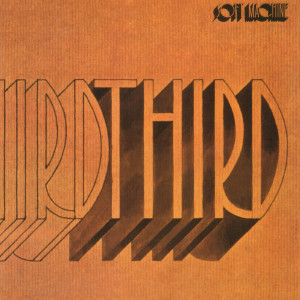
Today we’ve reached the 50th anniversary of the release of one of those albums. I can honestly say I enjoy Soft Machine’s four composition double album Third, but for the life of me I don’t know how to write specifically about it. That tends to be the case for me with prog. If I haven’t made it clear, I’m not a musician, trained or otherwise. The more technical the music, the more difficult it is for me to express myself. If I tried to offer a serious critique of an album such as Third beyond basic perceptions, likes/dislikes, it would quickly become obvious that I’m out of my depth by fans who have known this album for many years and are knowledgeable about this music – underground, prog, the Canterbury scene, jazz, fusion, etc. – from a technical standpoint. But this is such a unique and visionary record that I can’t just relegate it to my end of the month odds ‘n ends roundup. So, what can I say about it? I think what I can express is an appreciation for the overall artistic vision, effort and musicianship itself that went into creating it.

Soft Machine - Wikipedia

It’s an admiration that keeps me veering out of my comfort zone and onto different musical rabbit trails and listening with fascination for what goes into creating. That “what” is something I can only understand as beginning as a seed in someone’s mind and/or heart and expanding from there. Sometimes that seed is in the form of a dream, such as what began in McCartney’s brain as Scrambled Eggs and ended up as Yesterday. Other times it’s an idea an artist walks around with for years after the initial inspiration. Sometimes the end result misses the mark, subjectively speaking, other times it works perfectly – even if only to the artist who created it. For me, it can be the songwriting gifts of Lennon, McCartney, and Harrison, or the highly trained musicianship of bands who met while studying music in college, such as Chicago or Dream Theater. It’s present in the sometimes chaotic world of Zappa and the short-lived brilliance of Syd Barrett, and even though it has yet to click with me, it’s all over Captain Beefheart’s Trout Mask Replica. Don Van Vliet actually thought through every bit of that album and almost drove his band to insanity trying get it on tape precisely according to what he heard in his head. It’s also in what seems like the simplest country blues from the Mississippi Delta. And on and on.

Captain Beefheart - Live In Kansas City - 1974 - Past Daily ...

I took the plunge with Third a few short years ago, and I like it more and more with each listen. Having it on as housecleaning music or while sitting on the patio doesn’t work for me. I have to set aside time to sit down with headphones on and listen. The instrumentation and production are complex and highly experimental. For example, the opening track, Facelift, consists of sections of different live performances, sometimes sped up, sometimes slowed down. It’s noisy and distorted in places before calming into a flute solo by Lyn Dobson, and ultimately ending in a collage of backwards loops. The second track, Slightly All the Time, is actually broken down into three separate instrumental sections. The third track, Moon in June, is the one I still struggle through due to the seemingly halfhearted vocal (the only vocal on the entire album) that lasts the first nine minutes. I’m just not sure what the point of it is. Perhaps I  should listen to the wispy lyrics a little closer. The song does contain some really cool bass and violin work, otherwise the first half sounds like a studio run-through prior to an actual recording before it really takes off for the next ten minutes.

Luna Kafé e-zine - Soft Machine: Moon In June

The final track, Out-Bloody-Rageous, is my favorite along with Facelift.  It goes in directions that remind me of the Grateful Dead’s Drums/Space segments. I settle into listening, get into the groove of it all, then without realizing when it happened they’d moved into something very different. But it’s still the same track, just ten minutes later. The final 3:20 reminds me of  Pink Floyd’s On the Run from Dark Side of the Moon, still almost three years in the future. Despite the occasional chaos, the overall interplay among band members Mike Ratledge (piano, organ), Hugh Hopper (bass), Robert Wyatt (drums), and Elton Dean (saxophone) – from whom Reg Dwight derived half his stage name – is remarkably balanced. There’s a lot of room in the four tracks for them to spread out.

ロスジェネたちの音楽夜話 第84話 Soft Machine 『Live In 1970 ...

It would be easy to say there are elements on Third I’ve heard on early King Crimson albums, but it’s true. Coltrane’s A Love Supreme as well. But isn’t this what we do when trying to become familiar with or understand something new to us? We look to other works to try and make sense of it. Any fans of Soft Machine, I’d appreciate suggestions on where to go next with this band. I’ll have more to say about musical comfort zones in tomorrow’s post. Thanks for reading.

Tracklist

Side One: Facelift

Side Two: Slightly All the Time

Side Three: Moon in June

Side Four: Out-Bloody-Rageous

-Stephen

Porcupine Tree, ‘Fear of a Blank Planet’ (2007)

https://www.headheritage.co.uk/unsung/review/635/

https://en.wikipedia.org/wiki/Third_(Soft_Machine_album)#Original_edition


March 1970 Classics from CSNY and Delaney & Bonnie

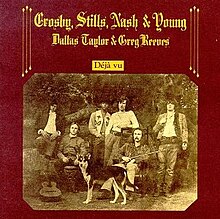
3/11/70: CSNY – Déjà Vu

Continuing with my makeup homework, this album has been a fan favorite since the day of its release 50 years ago. There was a great deal of anticipation for the group’s followup album after the Crosby, Stills & Nash release the year before earned the group a Grammy for Best New Artist. Neil Young’s addition to the group only increased expectations. Certified gold 14 days after its release, Déjà Vu eventually attained septuple platinum status.

Neil Young News: NO MORE SECOND BILLING: CSN&Y Bass Player Greg ...

All four produced it, but Neil is only on half the tracks. His addition to the group might be looked at as a blessing and a curse. There’s no doubt he was, and still is, a prolific songwriter. But things were, and perhaps always have been with this quartet, a little off. Nash has stated Young recorded his songs alone in L.A., then brought them to the band in San Francisco for their contributions. Additionally, there was a dark undercurrent at the time: Nash and Joni Mitchell had split, as had Stills and Judy Collins. Much worse, Crosby was mourning the loss of his girlfriend Christine Hinton, who had recently been killed in a car accident. The stress of their personal lives spilled over into the studio, and as a result of all of these factors it took six months to record the album.

Why It Mattered: Crosby, Stills, Nash & Young's 'Déjà Vu'

Though I think it’s a great album, I can feel that separation between Neil and the others when listening to it. Helpless and the Country Girl suite sound like they should be on solo Neil records despite the harmonies from the other three, much like Neil’s contributions to the third Buffalo Springfield album were basically solo efforts. Déjà Vu spawned three Top 40 singles: Woodstock, Teach Your Children, and Our House. While I don’t dislike these tracks, they are probably my least favorites. I’m partial to Stills’ 4+20 and Carry On, Neil’s Helpless and Country Girl, and Crosby’s title track. All four would take advantage of this album’s commercial success by following it with fantastic solo albums very soon after.

Last fall I visited a friend in L.A., and we took a drive up into Laurel Canyon so I could play shameless tourist. Laurel Canyon Blvd. has to be one of the more dangerous and busy roads I’ve been on, and by the time we pulled into what was at one time Joni Mitchell’s driveway I felt so conspicuous that I jumped out of the car and quickly had my friend snap a picture before we split in a bit of a rush. The result was a photo of me standing in front of the gate, but without the house, a.k.a. Our House, in the frame. A palm to forehead moment.

Crosby, Stills, Nash & Young - Deja Vu.jpg


March 1970: Delaney & Bonnie and Friends – On Tour with Eric Clapton

This live album encapsulates so much of what is, to me, good about music from 1970. It just sounds like everybody on stage is enjoying themselves to the hilt, which is why even George Harrison joined the tour for a few gigs. (His performances, credited under the pseudonym “L’Angelo Misterioso,” are available on the super-deluxe-crazy-expanded-four disc release from 2010 which contains multiple shows.) The album and tour may have received a boost from Clapton’s association with it, but the rock ‘n boogie ‘n Southern gospel blues on this recording stands on its own merits. It’s also quite amazing to think that this coming together of various musicians spawned much of Harrison’s All Things Must Pass as well as Clapton’s Derek and the Dominos lineup on Layla and Other Assorted Love Songs. Not to mention the cross-pollination with Joe Cocker’s Mad Dogs & Englishmen tour and Dave Mason’s solo debut, Alone Together.

Dbtour1970.jpg

Fun trivia: The photo used for the album cover is a Barry Feinstein pic from Dylan’s ’66 U.K. tour. Those are Bob’s feet sticking out the window of the Rolls-Royce.

Random fact that has nothing to do with this post: I’ve got music on YouTube playing as I write, letting it go to whatever is “Up next.” I had no idea the full-length version of Rare Earth’s Get Ready is over 21 minutes long. Or that there even was a full-length version other than what I’ve heard on the radio all my life.

-Stephen

https://en.wikipedia.org/wiki/D%C3%A9j%C3%A0_Vu_(Crosby,_Stills,_Nash_%26_Young_album)

https://en.wikipedia.org/wiki/Crosby,_Stills_%26_Nash_(album)

https://en.wikipedia.org/wiki/On_Tour_with_Eric_Clapton

Marching Backward to the Music – Leon, Jimi, Ginger, and Past-Due Homework

I was not frequently absent from school when I was a child. However, when I did miss school because of an illness, I tended to make it count. As in three or four days in a row. Not that I was always sick the entire time. I just didn’t want to go back once I’d settled into a cozy routine of morning cartoons and the afternoon B-movie on the independent channel before the usual after school lineup of reruns. There was a price to pay, however. By the third day or so my mom would return from work having visited my teacher at some point during the day and bestow upon me the dreaded stack of makeup schoolwork. What does that little anecdote have to do with my blog?

Time For Homework. Unhappy Nice Serious Boy Sitting At The Desk ...

Well, I’ve had some spells of absenteeism from this hobby over the past year. But unlike grade school, it really bothers me looking back at the album release 50th anniversaries I’ve missed. It’s as if I’ve disrespected these artists by not celebrating their albums properly. Indeed, it gets a little strange between my ears at times. Anyhoo, looking back at my notes from March and April there are a few albums I’d like to belatedly acknowledge as we move forward over the next month or two (and does anyone really know or care what month it is anymore?). Some titles I’ll address individually, others in clusters. Starting now.

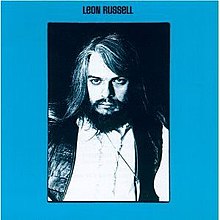
3/23/70 (April 24 U.K.): Leon Russell – Leon Russell

Leon’s solo debut was a classic out of the gate. It contains the oft-covered A Song for You, as well as Delta Lady. He also had a little help on the album from a cast of A-listers including Harrison, Starr, Jagger, Clapton, and too many others to list (see wiki link at the bottom). Leon Russell and the following two albums in this post all represent, in my mind, a shift in rock music around this time whereby artists were breaking free of stylistic constraints. Leon was a prolific songwriter and gifted musician, and like his friends Delaney and Bonnie he blended southern gospel elements, blues, and rock into a unique sound that his English musician friends fit right into.

LeonRussellAlbum.jpg

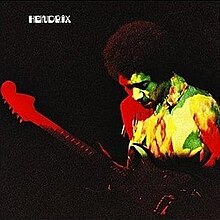
3/25/70: Jimi Hendrix – Band of Gypsies

Like many of my generation (X) who became Jimi Hendrix fans, it was due to his famous three studio albums augmented by whatever film we could view of the man, either in the Woodstock and Monterey documentaries or on VH1 (remember when VH1 was presented as sort of an MTV for Baby Boomers?). When I explored Jimi’s other commercially available music at the time (early 90’s) it was obvious he had been broadening his musical horizons before his death. Cry of Love and Band of Gypsies were in my collection, but they weren’t played often. It took a few more years and perhaps a little more musical maturity on my part to “get it.” Now I enjoy First Rays of the New Rising Sun (comprising most of the first three posthumous Hendrix releases) and the funk/R&B fused rock of Band of Gypsies as much as any of the original three. If only he’d lived long enough to make that album with Miles Davis.

A photo of Jimi Hendrix playing guitar

3/30/70: Ginger Baker’s Air Force – Ginger Baker’s Air Force

And now for something…completely different. On January 15, 1970, Ginger Baker assembled an eclectic group of musicians for a sold-out performance of Afro/jazz/rock fusion at the Royal Albert Hall. Band members included early Baker influences Graham Bond and Phil Seamen, plus Winwood, Gretch, and Wood of Traffic, post-Moody Blues/pre-Wings Denny Laine, and Remi Kabaka, who would also add flavors of Afro-fusion to music by other British music luminaries of the era. Critics, of course, hated the subsequent album, Ginger Baker’s Air Force. They aren’t too fond of albums produced by drummers, as they tend to be heavily, uh, drummer-centric. I find it to be an interesting and listenable album. Unfortunately I’m limited to listens on YouTube, as the CD issue readily available for purchase these days is a vinyl rip, and a poor one at that. (A better quality release from ’98 containing both Air Force albums and a solo Baker album currently goes for $144 on Amazon – no thanks.) One of these days I’ll have my turntable set up again and I’ll find a used vinyl copy. One of these days.

Ginger Baker's Air Force-album cover.jpg

-Stephen

https://en.wikipedia.org/wiki/Leon_Russell_(album)
https://en.wikipedia.org/wiki/Band_of_Gypsys

https://en.wikipedia.org/wiki/Ginger_Baker%27s_Air_Force_(album)
https://en.wikipedia.org/wiki/Ginger_Baker%27s_Air_Force


May 1970 – Music Release Wrap-Up

It’s been quite a while since I’ve written one of these “odd ‘n ends,” end of the month posts. As usual it’s a mixed bag.

May: Country Joe and the Fish – CJ Fish

Country Joe and the Fish released their fifth and final album until 1977’s Reunion in May of 1970. I own this one and the debut, and once had a solo McDonald album titled Superstitious Blues (1991) which I liked but for some reason is no longer in my collection. There are days when that mid-late 60’s San Francisco sound and vibe hits the spot, such as last weekend when C.J. & the Fish’s first album, Electric Music for the Mind and Body, fit in nicely between the Grateful Dead and the Jefferson Airplane.

CJ Fish - Wikipedia

May: Hot Tuna – Hot Tuna

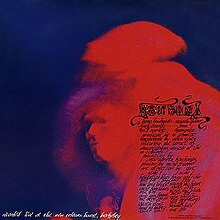
When I reach these end of the month roundups there’s inevitably at least one band and/or album I feel I should know much better but don’t, hence its relegation to this post. Hot Tuna is definitely one of those bands on my “need to explore” list. I’m certainly familiar with Jorma Kaukonen and Jack Casady from their time with the Airplane, and I even sat about ten feet away from Jorma at his solo show a couple of years ago. But as much as I enjoyed his performance, the only thing I could tell you about that show today is that he didn’t play Embryonic Journey. That, and some guy right in front of Jorma was wearing a Dave Mason t-shirt. Fans are so silly. Anyway, Hot Tuna released their debut this month 50 years ago. It’s a live performance in Berkeley from September ’69.

HotTunaCD.jpg

5/14/70: The Carpenters – Single: (They Long to Be) Close to You

That’s right, I’m including the Carpenters. There’s no Carpenters music in my collection. It’s not my thing. It’s beyond fluffy, soft MOR music. Karen looked ridiculous behind a drum kit. Et cetera. However, there is no denying this Burt Bacharach/Hal David penned track was a smash hit, topping the Billboard Hot 100 and Adult Contemporary charts. And just between you and me, I freely admit that Karen’s silky smooth vocals were in a different league. If that’s your kind of thing. Seriously though, this inclusion is a nod to my big sis. This is one of those “upstairs songs,” a favorite she often played on her aqua-green record player when we were growing up.

They Long to Be Close to You by The Carpenters 7-inch US vinyl single.jpg

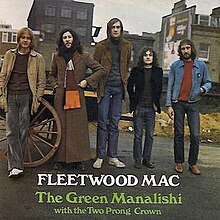
5/15/70: Fleetwood Mac – Single: The Green Manalishi (with the Two Prong Crown)

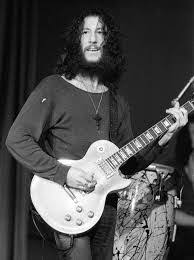
Now we’re talkin’. While I prefer live versions of this song, such as the epic 12 minute jam on the Live in Boston, any version will do. The Green Manalishi was Peter Green’s final song with Fleetwood Mac.

The Green Manalishi (Fleetwood Mac single - cover art).jpg

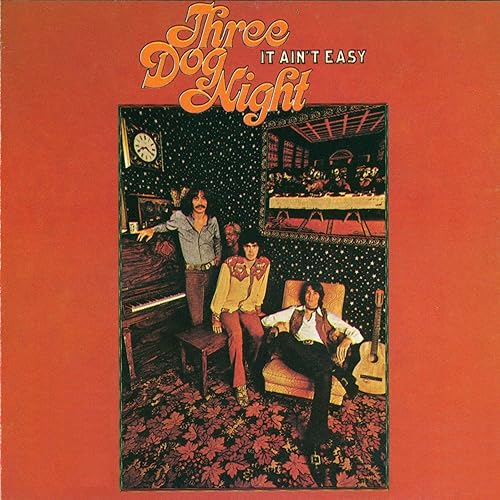
May: Three Dog Night – Single: Mama Told Me Not to Come

One of Randy Newman’s hit songs, he originally wrote it for Eric Burdon who recorded it in 1967. Both Newman and Three Dog Night released versions in 1970. The latter’s version reached number one on the Billboard Hot 100, and was certified gold in July 1970.

Mama Told Me (Not To Come) (Single Version) by Three Dog Night on ...

May: Eric Burdon and War – Single: Spill the Wine

Spill the Wine was the first and only hit by Eric Burdon and War, and I’ve always liked it. As noted by our old friend Wiki, the song was inspired by an accident in which keyboardist Lonnie Jordan spilled wine on a mixing board. The song peaked at number three on the Billboard Hot 100.

Spill the Wine - Eric Burdon & War.jpg

-Stephen

https://en.wikipedia.org/wiki/CJ_Fish

https://en.wikipedia.org/wiki/Hot_Tuna_(album)

https://en.wikipedia.org/wiki/(They_Long_to_Be)_Close_to_You

https://en.wikipedia.org/wiki/The_Green_Manalishi_(With_the_Two_Prong_Crown)

https://en.wikipedia.org/wiki/Mama_Told_Me_Not_to_Come

https://en.wikipedia.org/wiki/Spill_the_Wine

May 1970, Pt. 4 – The Who and the Definitive Live Rock Album

5/23/70: The Who – Live at Leeds

Inching toward summer 1970, The Who released what is still widely considered the greatest live rock album of all time (with all due respect to fans of live albums by Humble Pie, the Stones, Frampton, Cheap Chick, Deep Purple, and others), and one of the best rock albums, period. The band recorded several shows on tour supporting 1969’s Tommy, but 2,100 capacity Leeds University Refectory and Hull City Hall were booked in February specifically to record a live album.

The Who - Live At Leeds [LP] - Amazon.com Music

Live at Leeds was originally planned as a double album to include the Tommy set, but of the 33 songs performed in the show, Pete Townshend decided on a single, six-song release, with snippets of See Me, Feel Me and Sparks from the 1969 rock opera heard in the stretched out version of My Generation at the beginning of side two. Clocking in at just over 37 minutes as originally released, Live at Leeds captures the frenetic energy and violence of The Who’s live performances arguably at the band’s live peak.

The Vinyl Issue: The Who's Live At Leeds | Louder

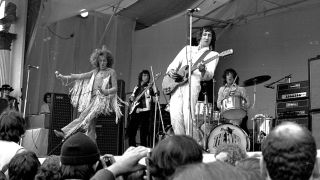
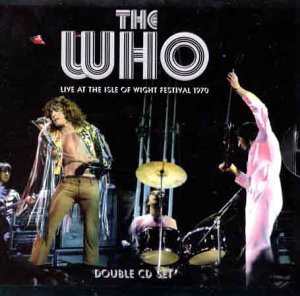
Over the course of four reissues in the following 40 years, Leeds went on to include the Tommy set, the complete Hull show from the following night, and finally the entire Leeds show in correct running order for the first time. I actually owned the Live at the Isle of Wight Festival 1970 release from 1996 before I ever gave a serious listen to Leeds, and without wading into the audiophile muck of production pros and cons that largely don’t interest me, I don’t feel there’s too much difference in the feel of the album aside from the fact that the Isle of Wight release contains Tommy.

Live at the Isle of Wight Festival 1970 (The Who album) - Wikipedia

The trend over the years of adding previously unreleased material, live or studio, when reissuing albums is something that has been interesting, exciting, and maddening. I’ve reached the point where expanded reissues are no longer automatic must haves. I’ve come around on originals prior to the add-ons. Live at Leeds in its original form is great for those occasions when you want to crank up some live Who to get yer ya-ya’s out but don’t necessarily want to listen to Tommy, which has its time and place for me.

What’s your favorite live album of all time of any genre? Do you value expanded reissues?

Tracklist

Side A:

  1. Young Man Blues
  2. Substitute
  3. Summertime Blues
  4. Shakin’ All Over

Side B:

  1. My Generation
  2. Magic Bus

-Stephen

https://en.wikipedia.org/wiki/Live_at_Leeds

https://en.wikipedia.org/wiki/Live_at_the_Isle_of_Wight_Festival_1970_(The_Who_album)